All chronologies

Industry Timeline

General and Other Diving Companies — History

Histories of the wider field of North Sea and international diving contractors.

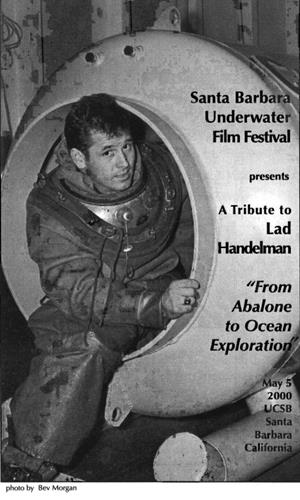
A tribute

Much of the pre-1952 record below is drawn — verbatim — from Chapter 65-X-3 Appendix, General History of Diving — Evolutionary Steps, Chronological Timeline. That research rests on the shoulders of Dutch diving historian Jan Willem Bech, whose The Rebreather Site — some 1,300 pages documenting the patents, prototypes, personalities and disasters that shaped atmospheric and rebreather diving — was made freely available to the public in 2019. Without that generosity the earlier chronology of armoured suits, self-contained apparatus and rigid dresses would be far poorer.

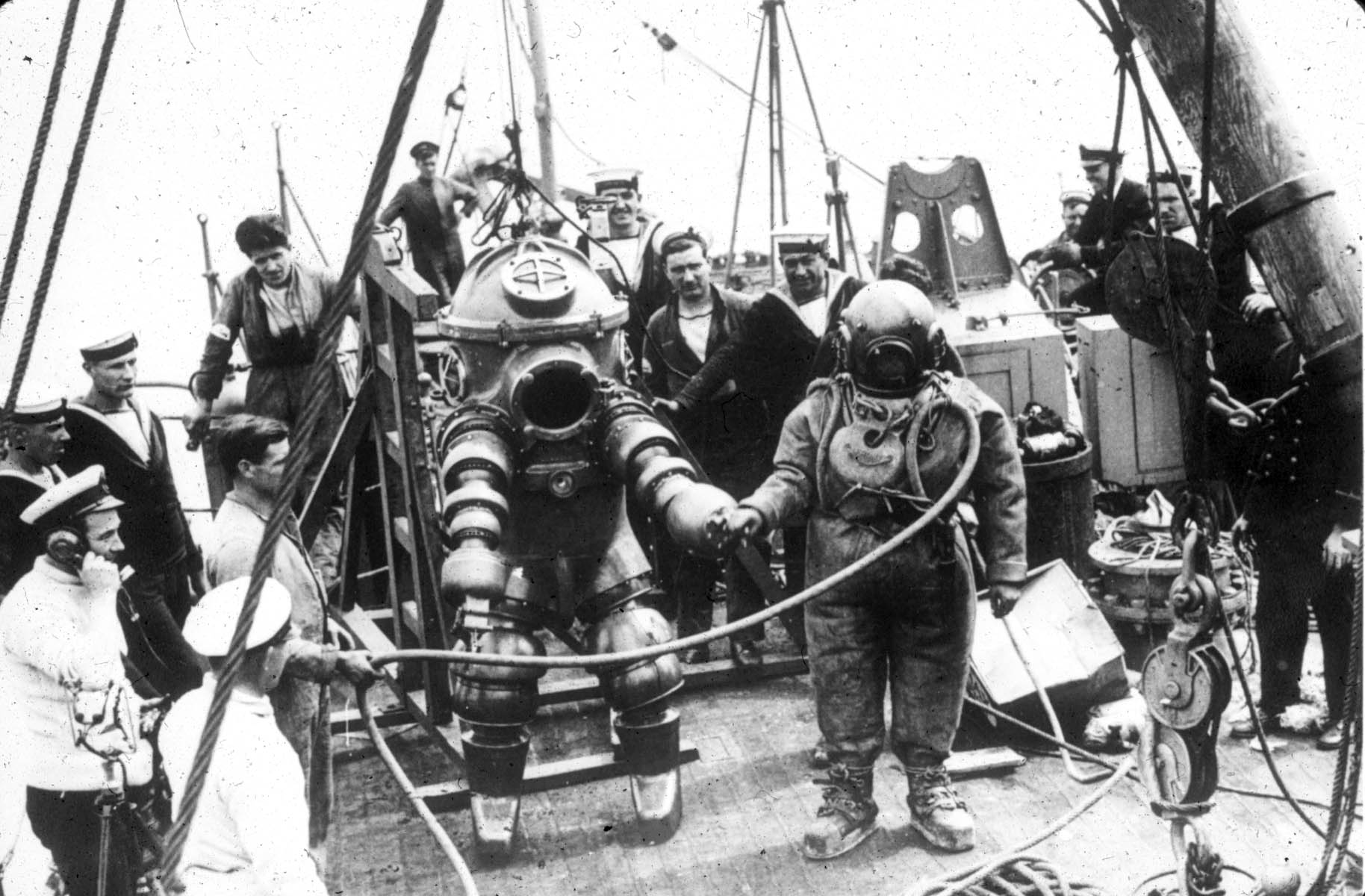
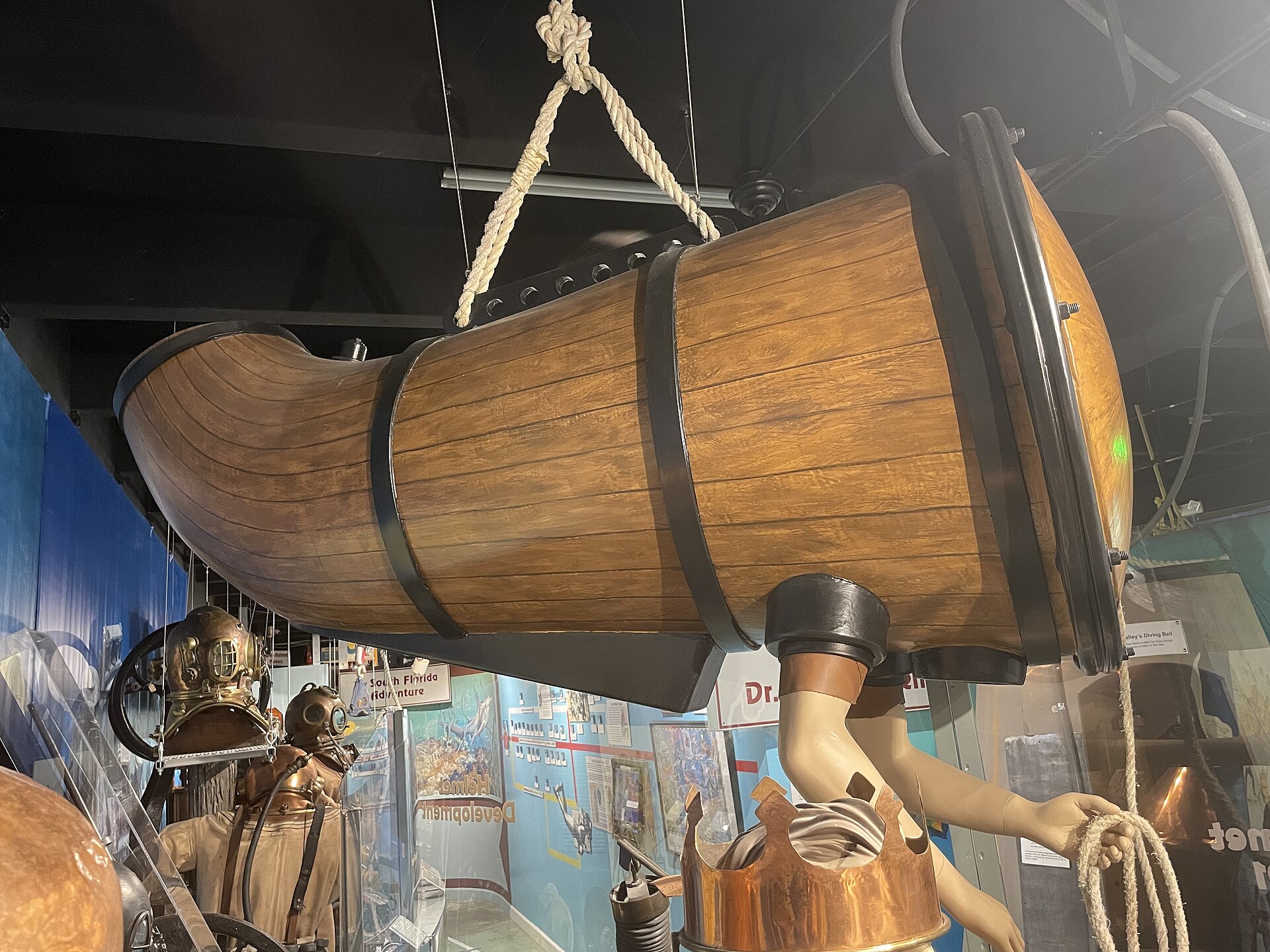
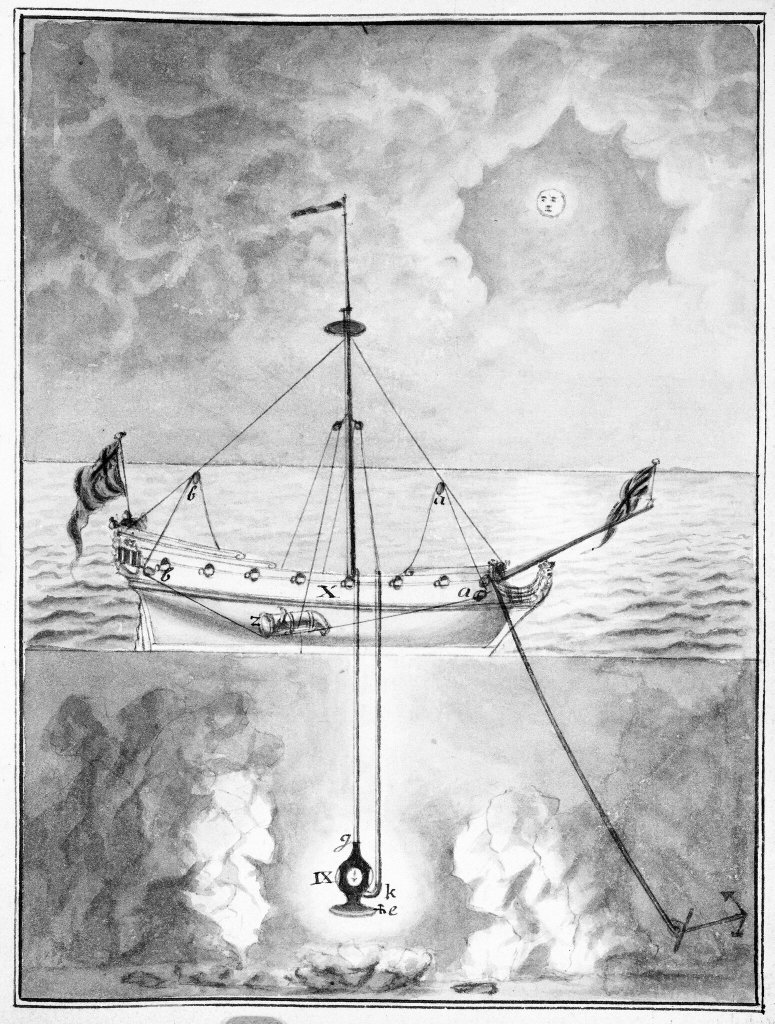
The entries span three intertwined threads: the slow evolution of the atmospheric diving suit from Lethbridge’s barrel of 1715 to Peress’ JIM and Wiley’s bell of the 1930s; the rise of the modern self-contained apparatus culminating in Cousteau and Gagnan’s Aqua-Lung of 1945; and the post-war industrial diving companies that took those tools to the North Sea and beyond.
The Chronology

Atmospheric Diving Suit, General and Other Diving Companies — History

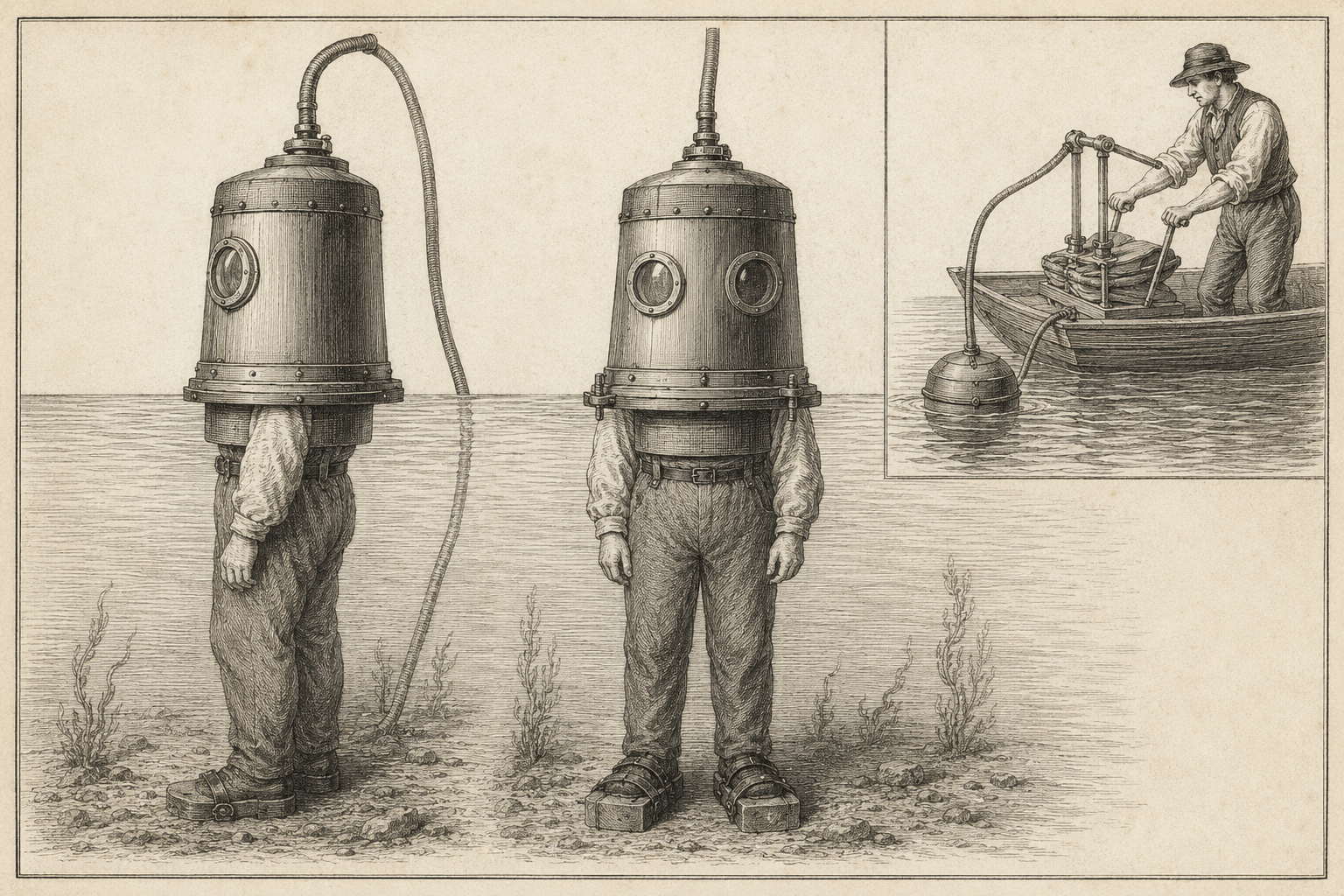
  1. Device of John Lethbridge
    1715

    Device of John Lethbridge

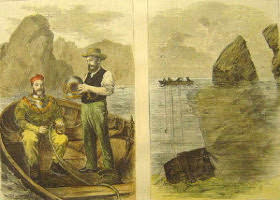
    Device of John Lethbridge, an English civil engineer, a wool merchant and inventor of Newton Abbot, a market town in Devon, England, with seventeen children, which presumably necessitated him to conjure an ingenious method of making money.

  2. Jacob Rowe
    1720

    Jacob Rowe

    Jacob Rowe, an Englishman of multiple talents, including bravery! He was a valiant sea captain, engineer, inventor, author and diver, recognised for designing and using a diving engine—a barrel-type diving bell—for salvage operations.

  3. John Smeaton
    1770

    John Smeaton

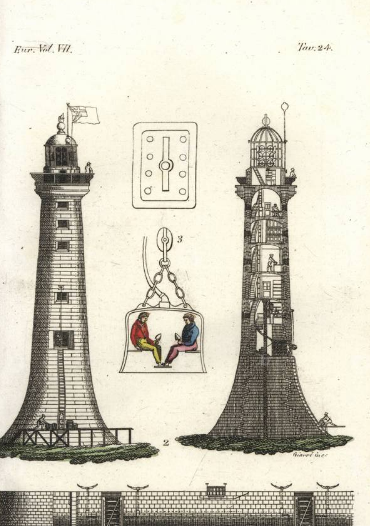
    John Smeaton, an English civil engineer often regarded as the "father of civil engineering", invented the first workable diving air pump in 1770.

  4. Device of the Frenchman Sieur Fréminet
    1771

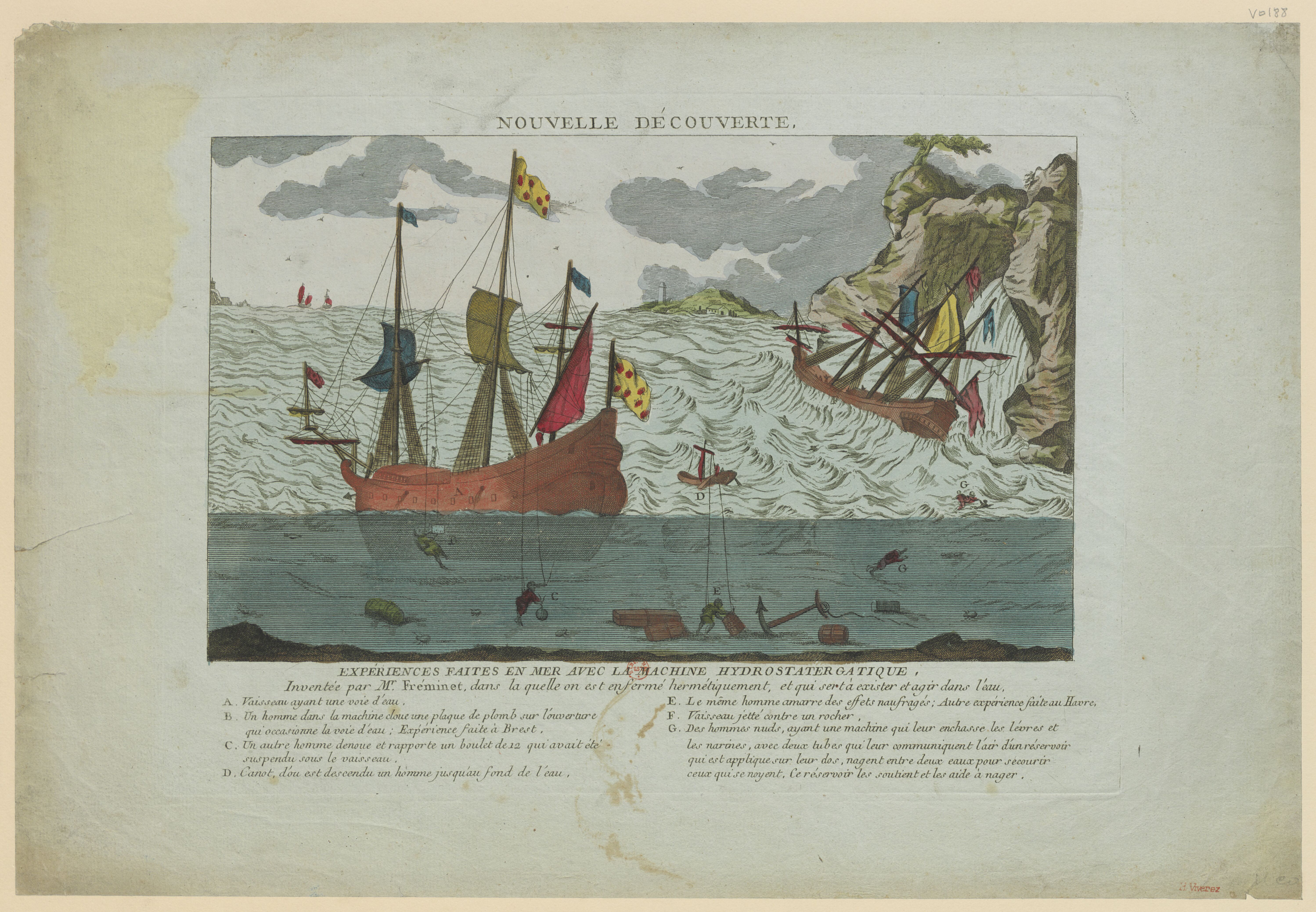
    Device of the Frenchman Sieur Fréminet

    Device of the Frenchman Sieur Fréminet, an early self-contained/recycling breathing apparatus known as machine hydrostatergatique.

  5. Charles Spalding
    1775

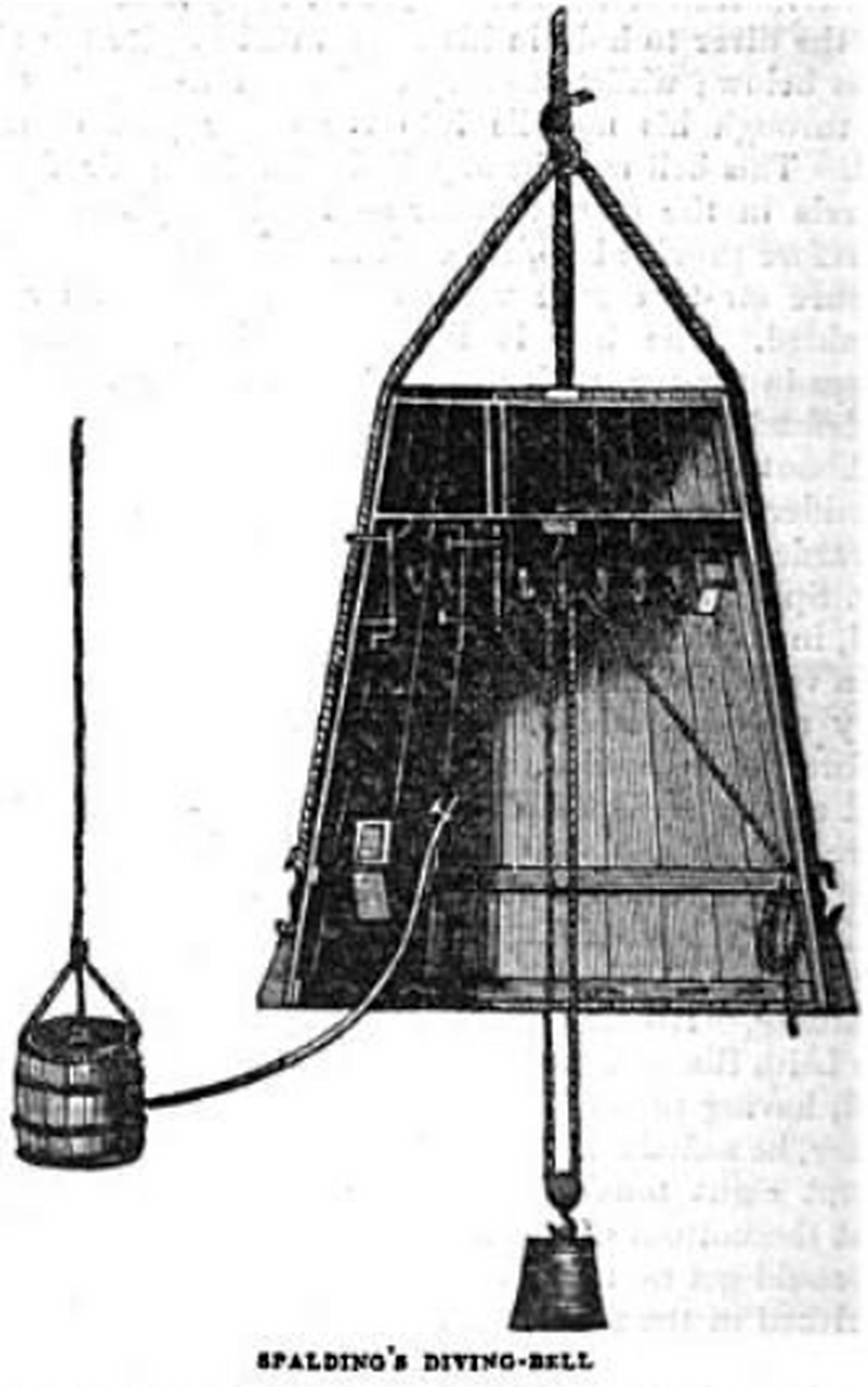
    Charles Spalding

    Charles Spalding, a Scottish confectioner, with assistance from his brother Thomas Spalding and his brother-in-law George Small, a cooper (wooden barrel maker), designed and built a wooden diving bell that the diver could raise or lower …

  6. Karl Heinrich Klingert
    1797

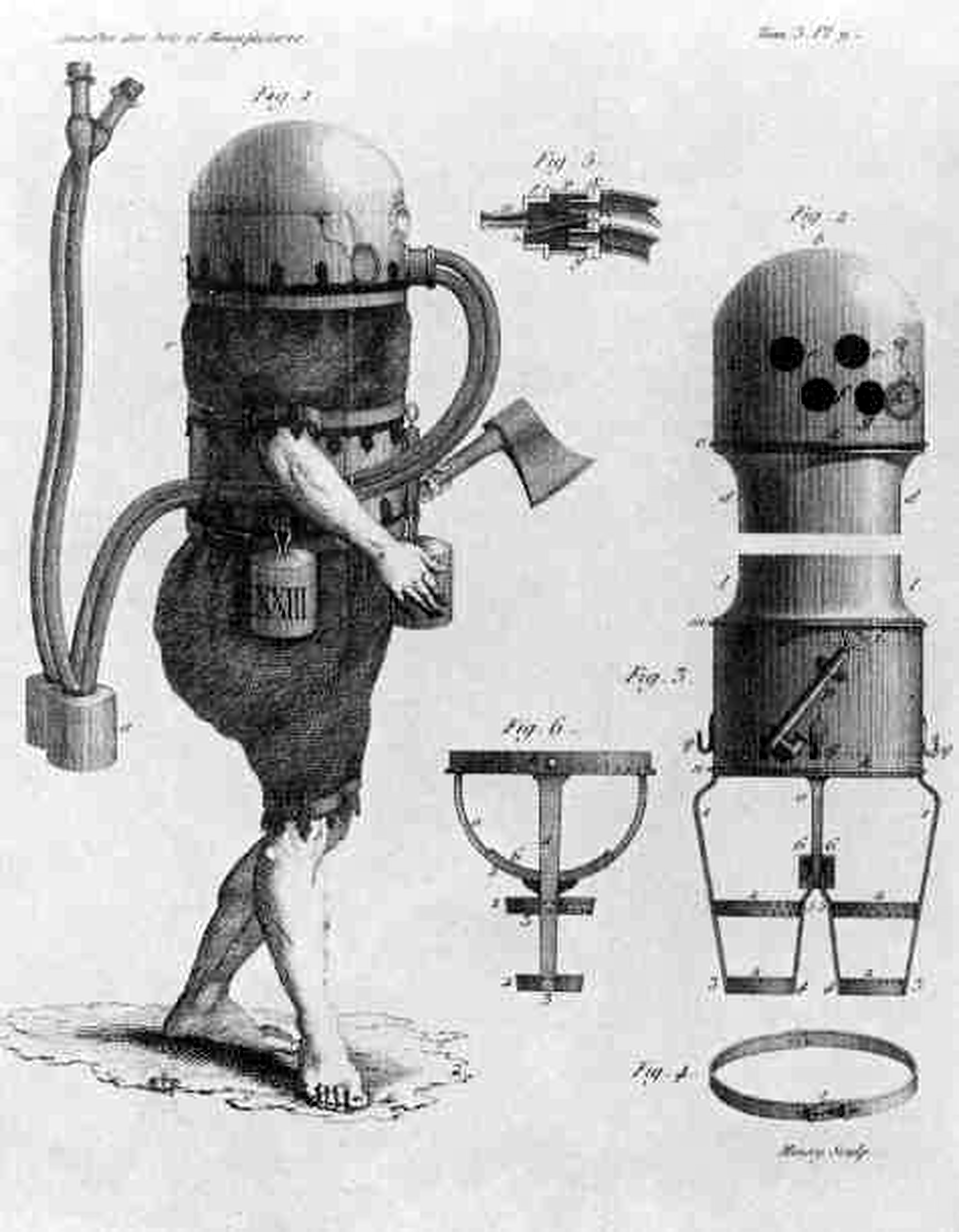
    Karl Heinrich Klingert

    Karl Heinrich Klingert, an inventor from Breslau, Silesia, Kingdom of Prussia, invented the Diving Machine of Klingert (an early form of a semi-atmospheric diving suit).

  7. Fullerton
    1805 – 1808

    Fullerton

    Fullerton, an English inventor, designed an "individual bell" that was essentially an early one-man helmet diving apparatus – a kind of personal diving bell or atmospheric suit for a single diver.

  8. Frédéric Johann von Drieberg
    1811

    Frédéric Johann von Drieberg

    Frédéric Johann von Drieberg, a German aristocrat, composer and inventor, published his design for an unusual diving apparatus called Le Triton in Paris in 1811, although he reportedly conceived it as early as 1805.

  9. Augustus Siebe
    1819

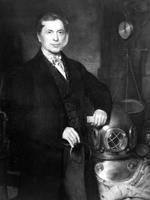
    Augustus Siebe

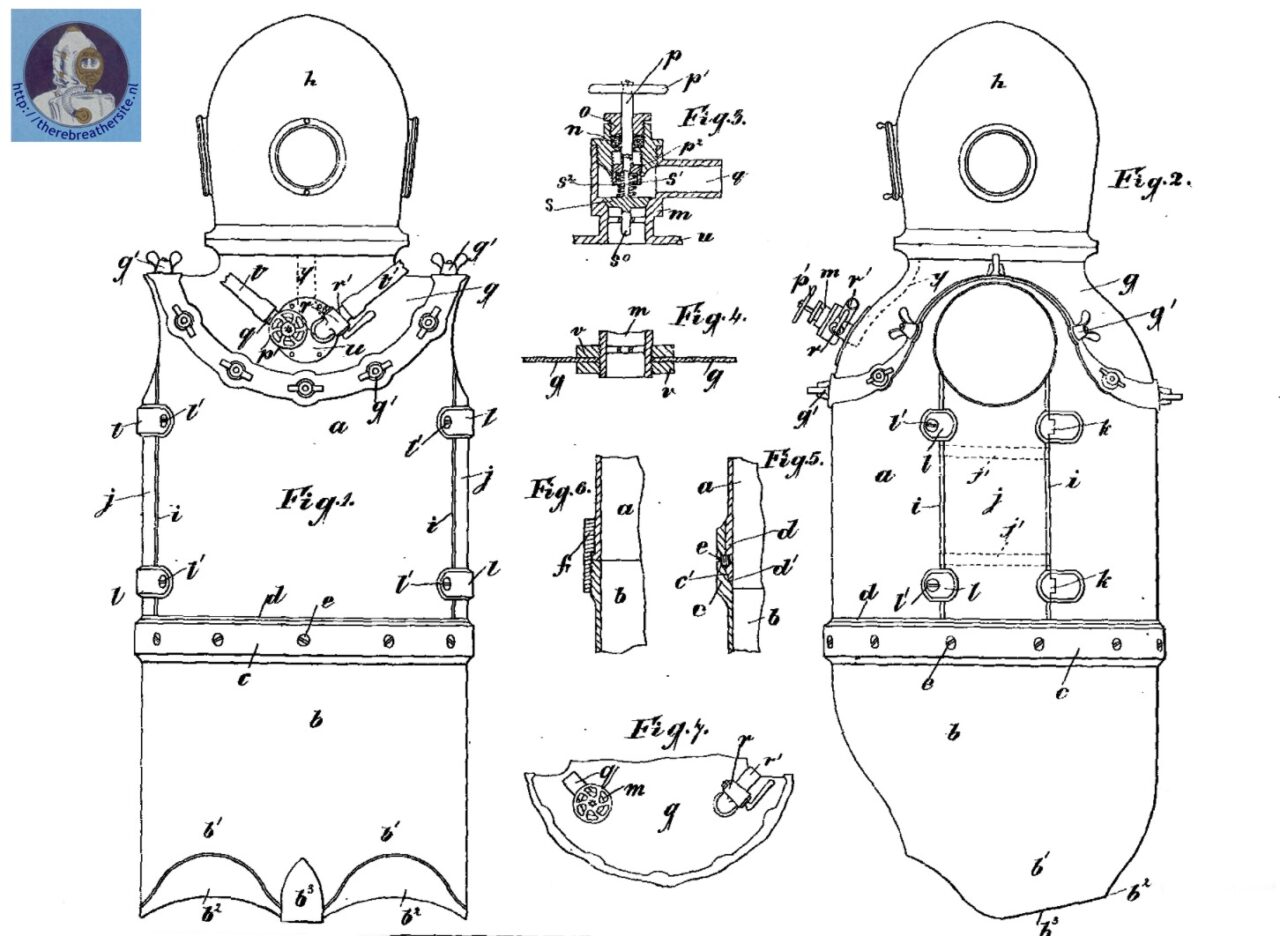
    Invented an open diving suit which only covered the top portion of the body. The suit included a metal helmet which was riveted to a waterproof jacket that ended below the diver's waist.

  10. 1829 – 1970

    The eight key evolutionary steps in arriving at todays technical advancement have been identified as:

    1829: The invention of the diving helmet and dress; Charles and John Deane

  11. Charles & John Deane
    1829

    Charles & John Deane

    Modified their smoke-diving apparatus into a diving helmet and dress in 1828. The following year, they carried out their first commercial dive when they salvaged the cargo of a beached East Indiaman, Carn Brea Castle, on the Isle of Wight.

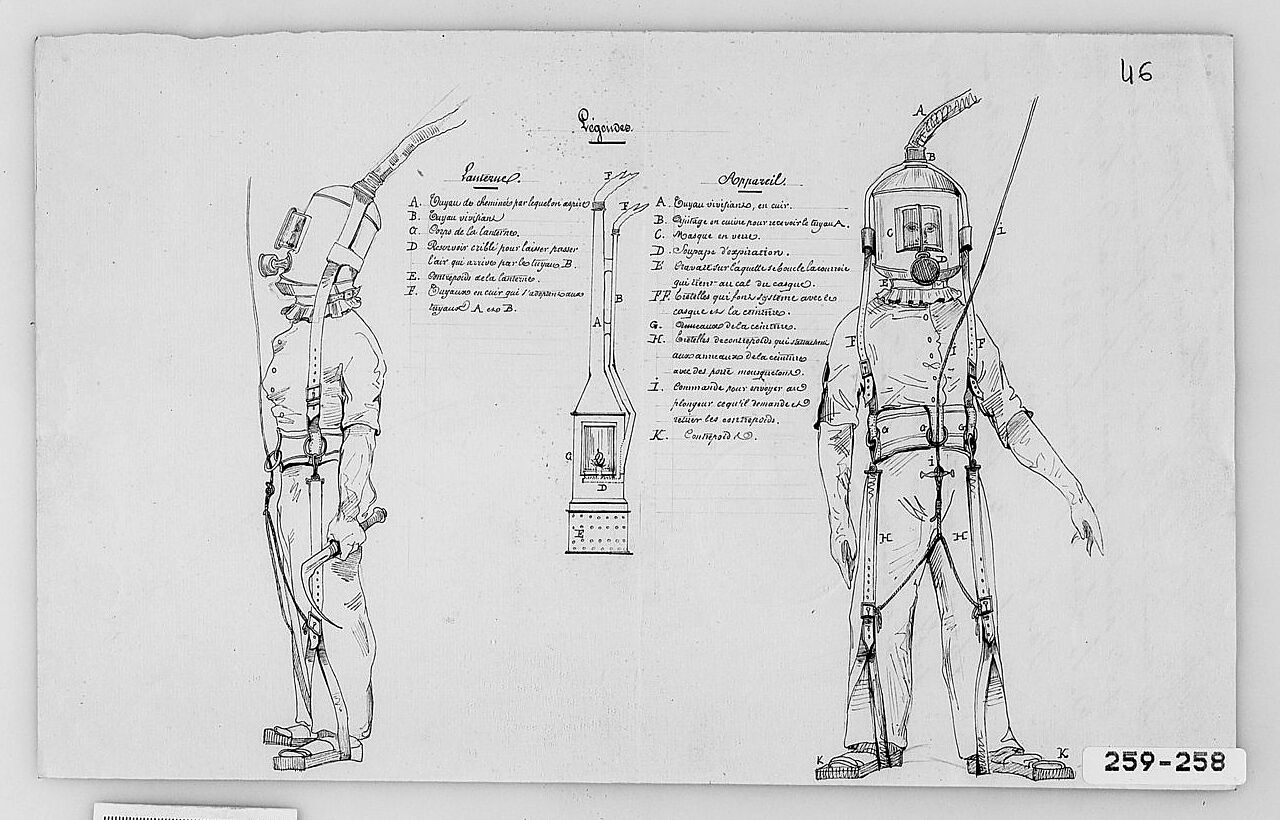
  12. Colonel Gustave Paulin
    1836 – 1838

    Colonel Gustave Paulin

    Colonel Gustave Paulin, commandant of one of the fire brigades in Paris, France, designed and built a smoke diving helmet after eight of his colleagues died in a warehouse fire.

  13. Augustus Siebe
    1837

    Augustus Siebe

    Designed the first completely sealed (watertight) diving dress. First used by the Royal Navy in 1840 to continue the salvage of the "Royal George", the "Siebe Improved Diving Dress" was then adopted as the standard diving equipment.

  14. William H. Taylor
    1838

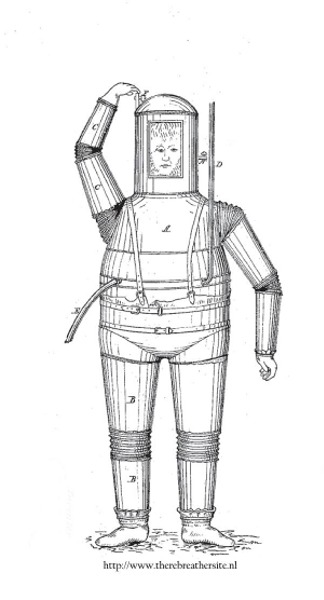
    William H. Taylor

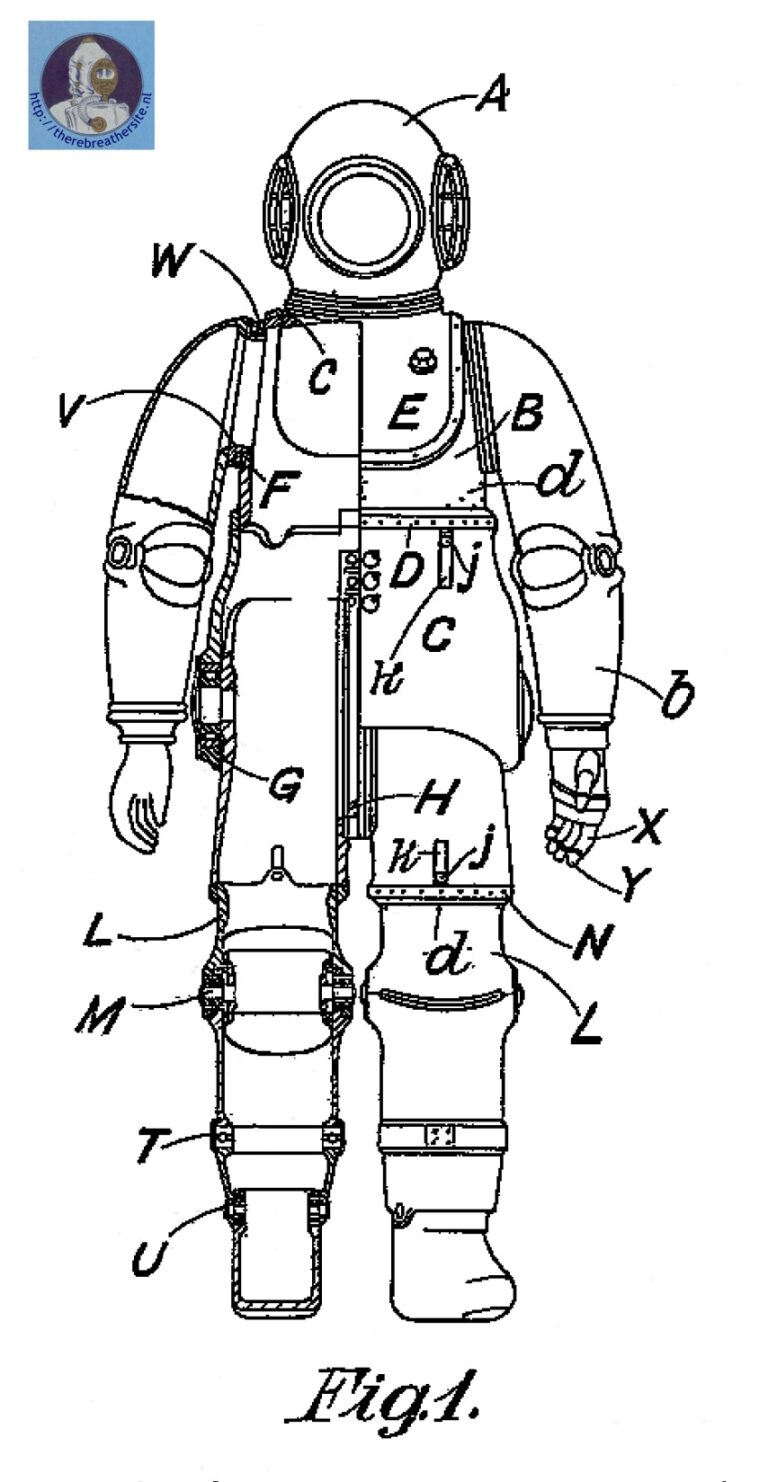
    William H. Taylor, English inventor of the Diving Machine of Taylor, an armoured, articulated diving suit that is considered an early predecessor to the modern atmospheric diving suit (ADS).

  15. Submarine fisher of Jules Le Batteux of Algérie
    1853

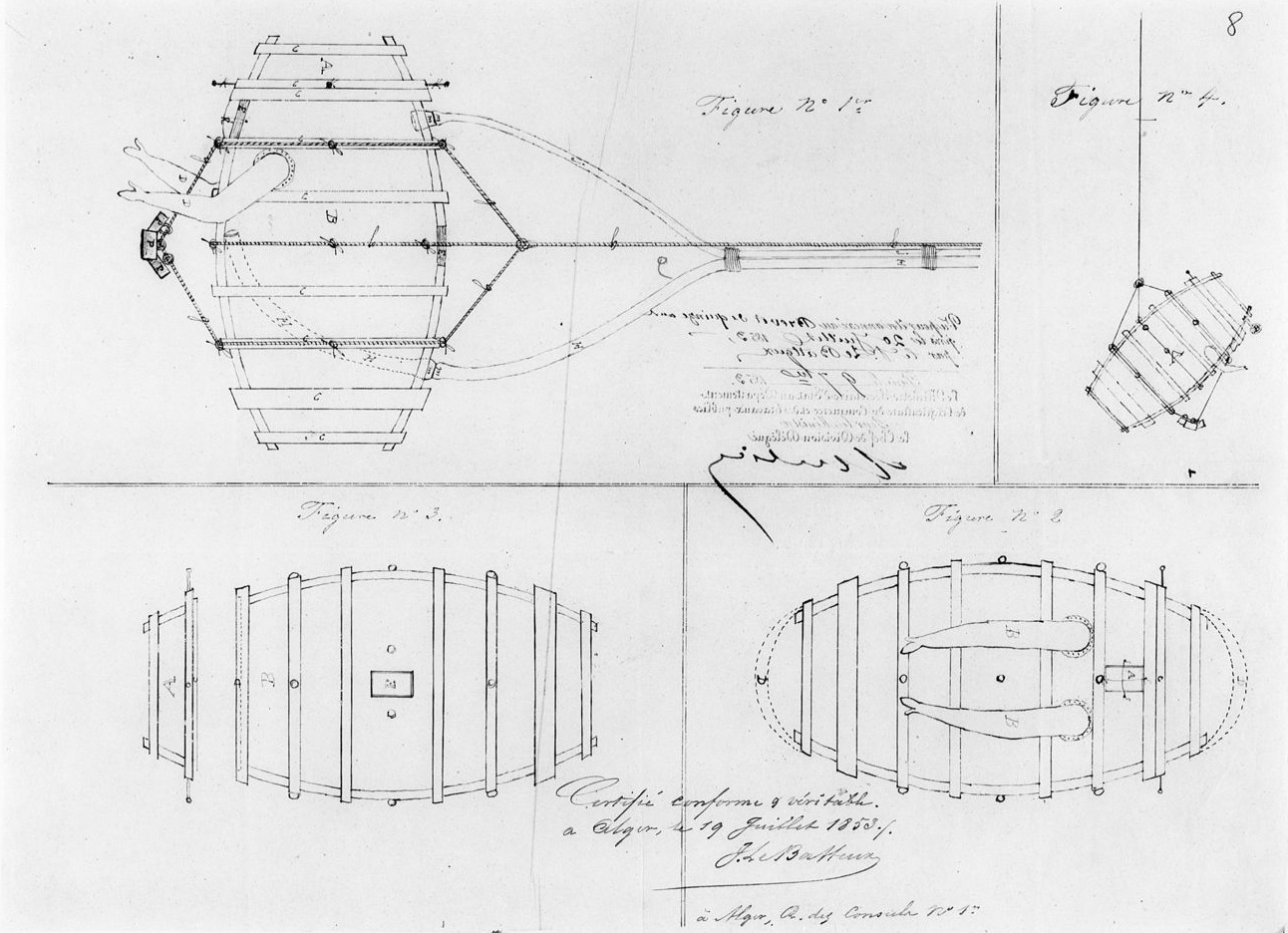
    Submarine fisher of Jules Le Batteux of Algérie

    Submarine fisher of Jules Le Batteux of Algérie, "Pêcheur sous-marin, appareil destiné à recueillir tous les produits sous-marins et à exécuter tous travaux dans les ports, les mers, les lacs et les rivières." An early form of standard …

  16. Pierre François ("Philippe") Bigard
    1853

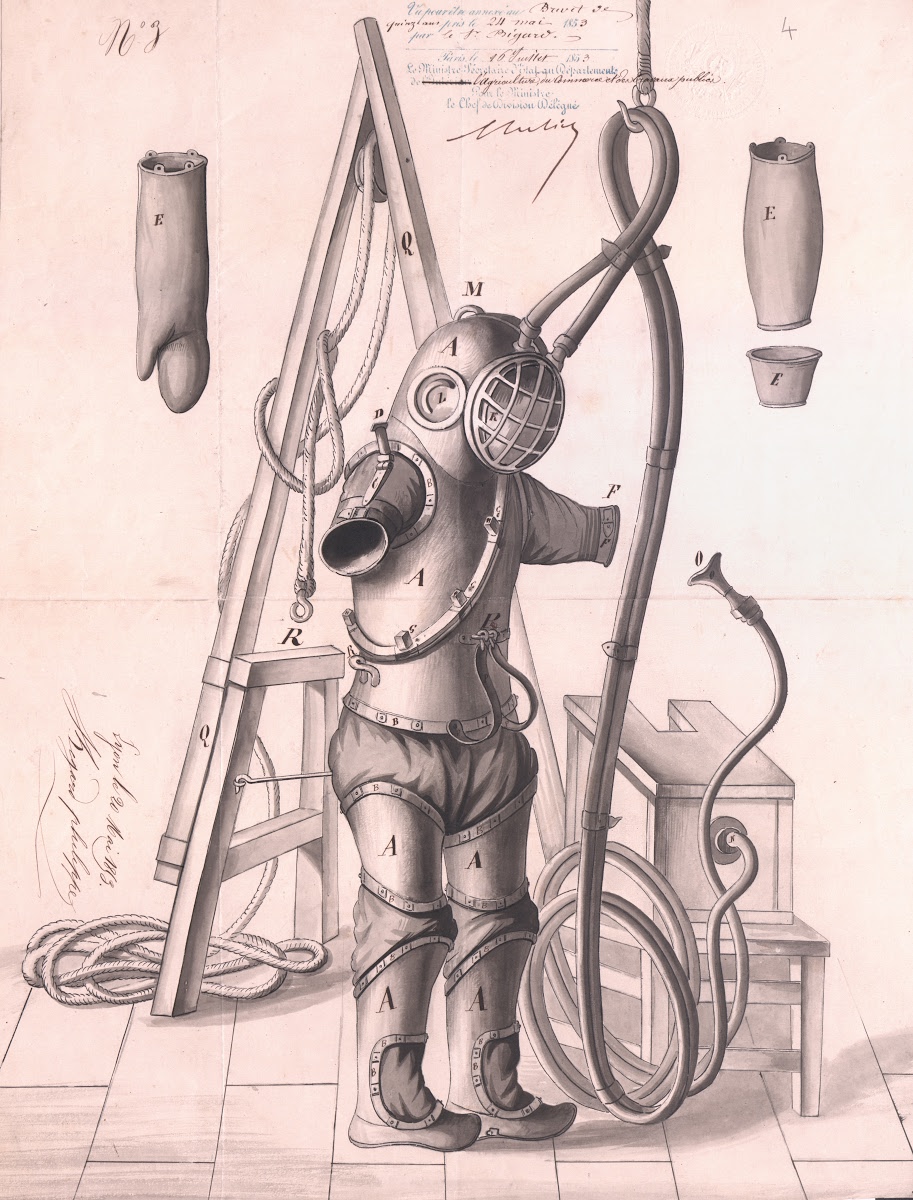
    Pierre François ("Philippe") Bigard

    Pierre François ("Philippe") Bigard, a French inventor, designed and patented the (appareil plongeur sous-marin) Bigard Diving Suit, a rigid armoured ensemble, an early atmospheric diving suit prototype, with breastplates, cuissards …

  17. Lodner D. Phillips
    1856

    Lodner D. Phillips

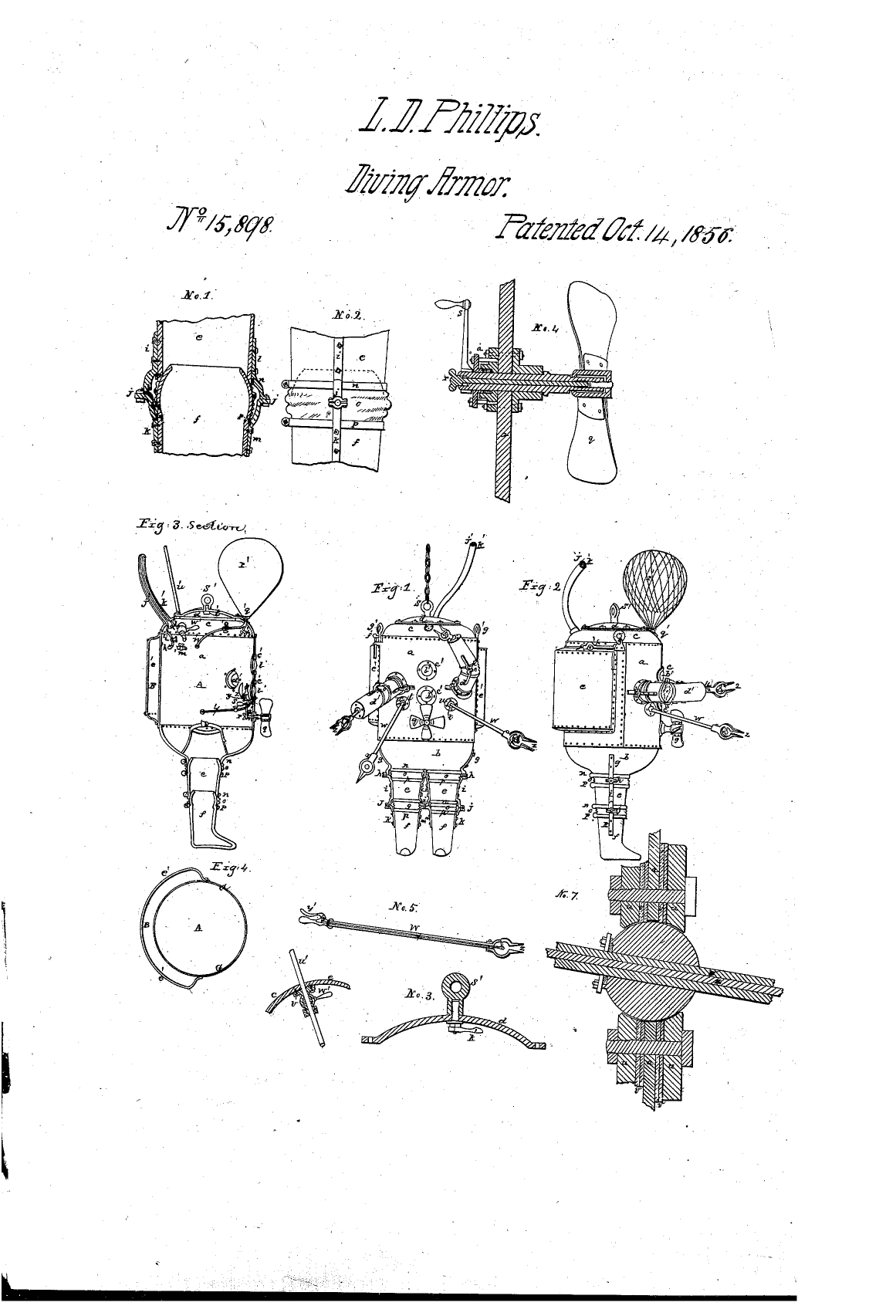
    Lodner D.

  18. Benoît Rouquayrol and Auguste Denayrouze
    1864

    Benoît Rouquayrol and Auguste Denayrouze

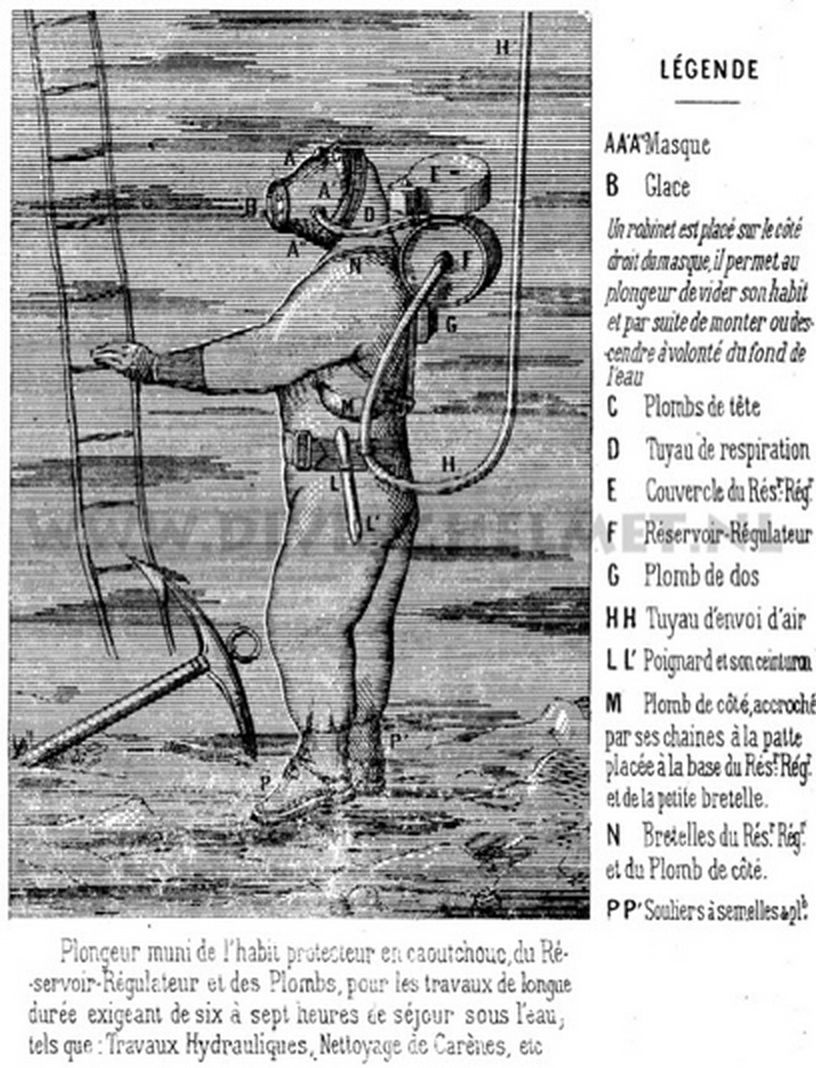
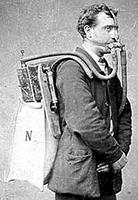
    Benoît Rouquayrol and Auguste Denayrouze, French inventors of the Aérophore, a pioneering two-stage demand-flow breathing apparatus that became the precursor to modern SCUBA diving regulators.

  19. Thomas Cato McKeen
    1867

    Thomas Cato McKeen

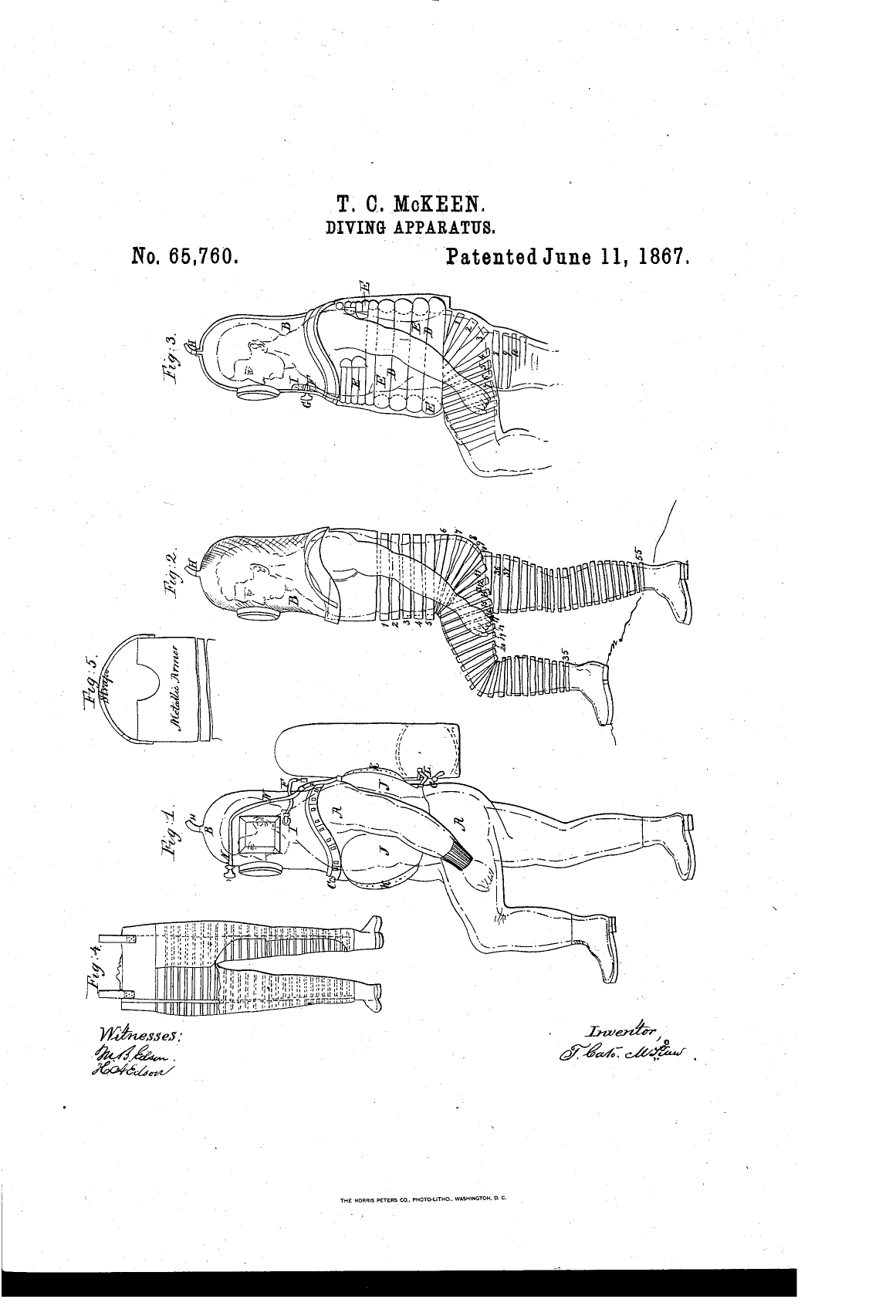
    Thomas Cato McKeen, an American inventor from Chautauqua, New York, added a large back-mounted air reservoir and fabricated a rubber suit.

  20. Charles Wilson and Charles F. Mudge
    1870

    Charles Wilson and Charles F. Mudge

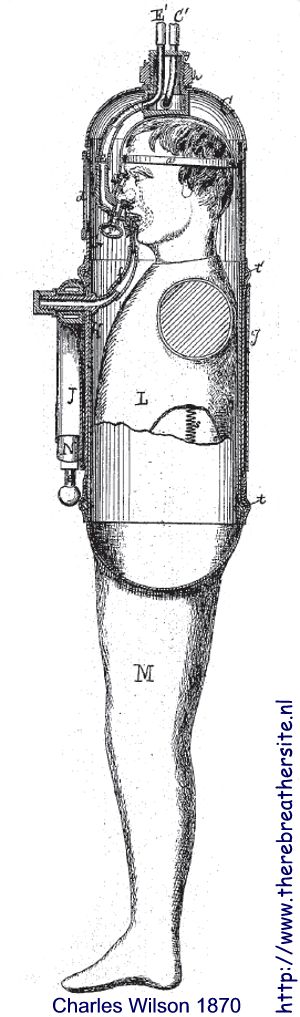
    Charles Wilson and Charles F. Mudge, both men from Bridgeport, Connecticut, USA, developed improvements to diving apparatus and armour and patented them in 1871.

  21. R. Ridyard and W. Penk from Liverpool
    August 1870

    R. Ridyard and W. Penk from Liverpool

    In August 1870, they were sent to China, where they recovered Mexican dollars valued at 180,000 US dollars from the wreck of the Hamilla Mitchell, sunk in 42 metres (137.8 ft) of water about 104 nautical miles southeast of Shanghai.

  22. Before 1873
    1873

    Before 1873

    The record depth was by a Liverpool diver named James Hooper.

  23. Lafayette
    1875

    Lafayette

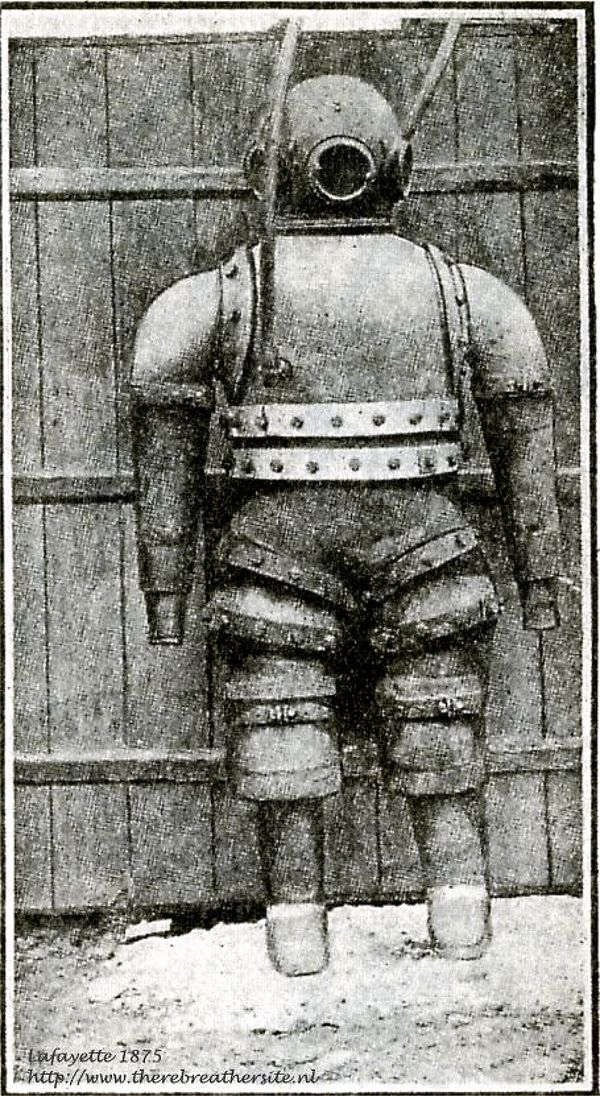
    Lafayette, presumed to be a Frenchman, designed diving armour combining metal and leather components in a human-shaped enclosure, named the Metallic dress of Lafayette, a rigid, watertight chamber in the shape of the Siebe closed …

  24. Henry Fleuss
    1876

    Henry Fleuss

    Henry Fleuss designed an early functional, self-contained oxygen rebreather in 1876 and patented it in 1878. The rebreather used compressed oxygen, a closed circuit and caustic potash to absorb CO₂.

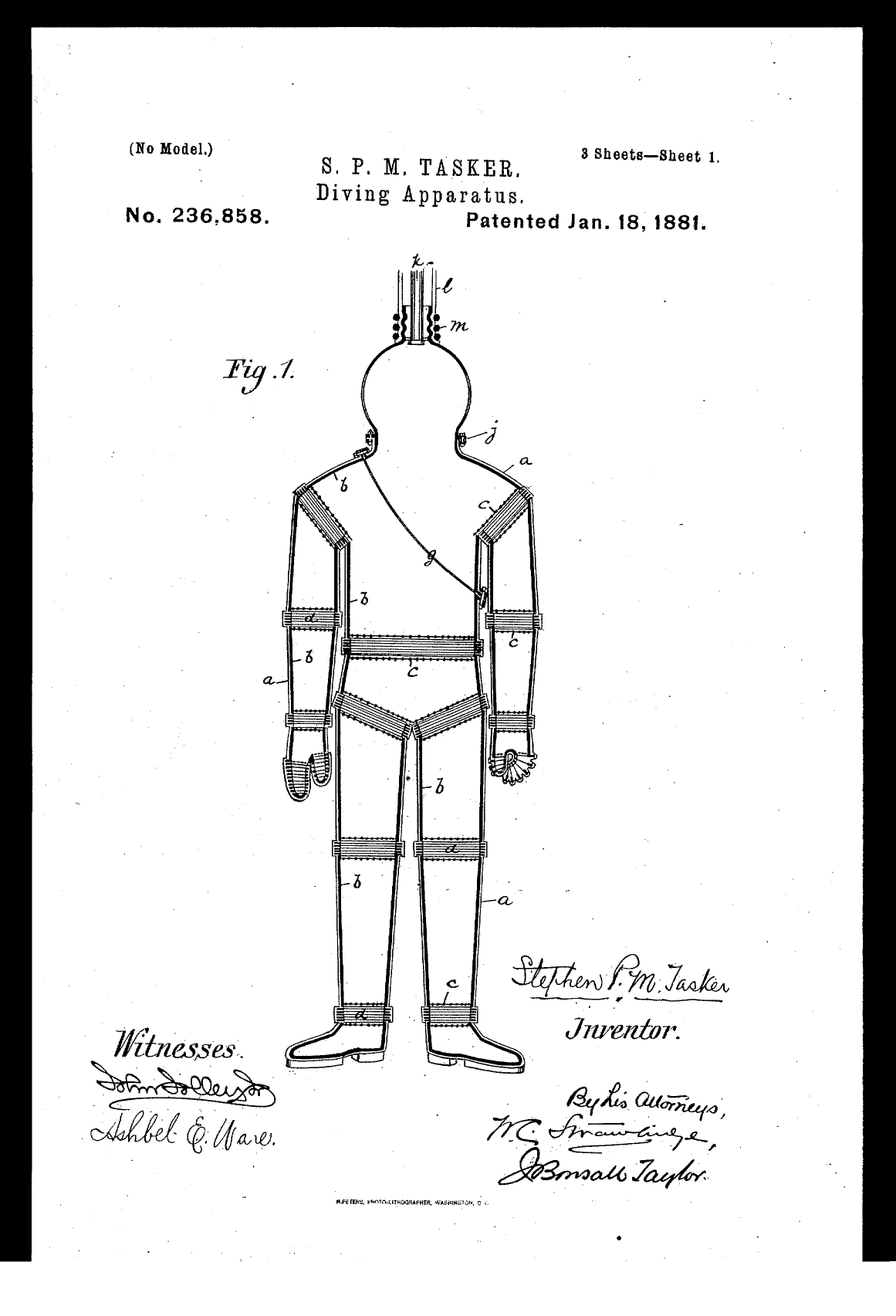
  25. Stephan P. M. Tasker
    1881

    Stephan P. M. Tasker

    Stephan P. M. Tasker, an American engineer and industrialist, proposed to use a metal dress articulated with bellows joints, and to cover the whole with an external waterproof flexible dress of the ordinary pattern.

  26. The Carmagnolle brothers (Messrs Alphonse and Theodore)
    1882

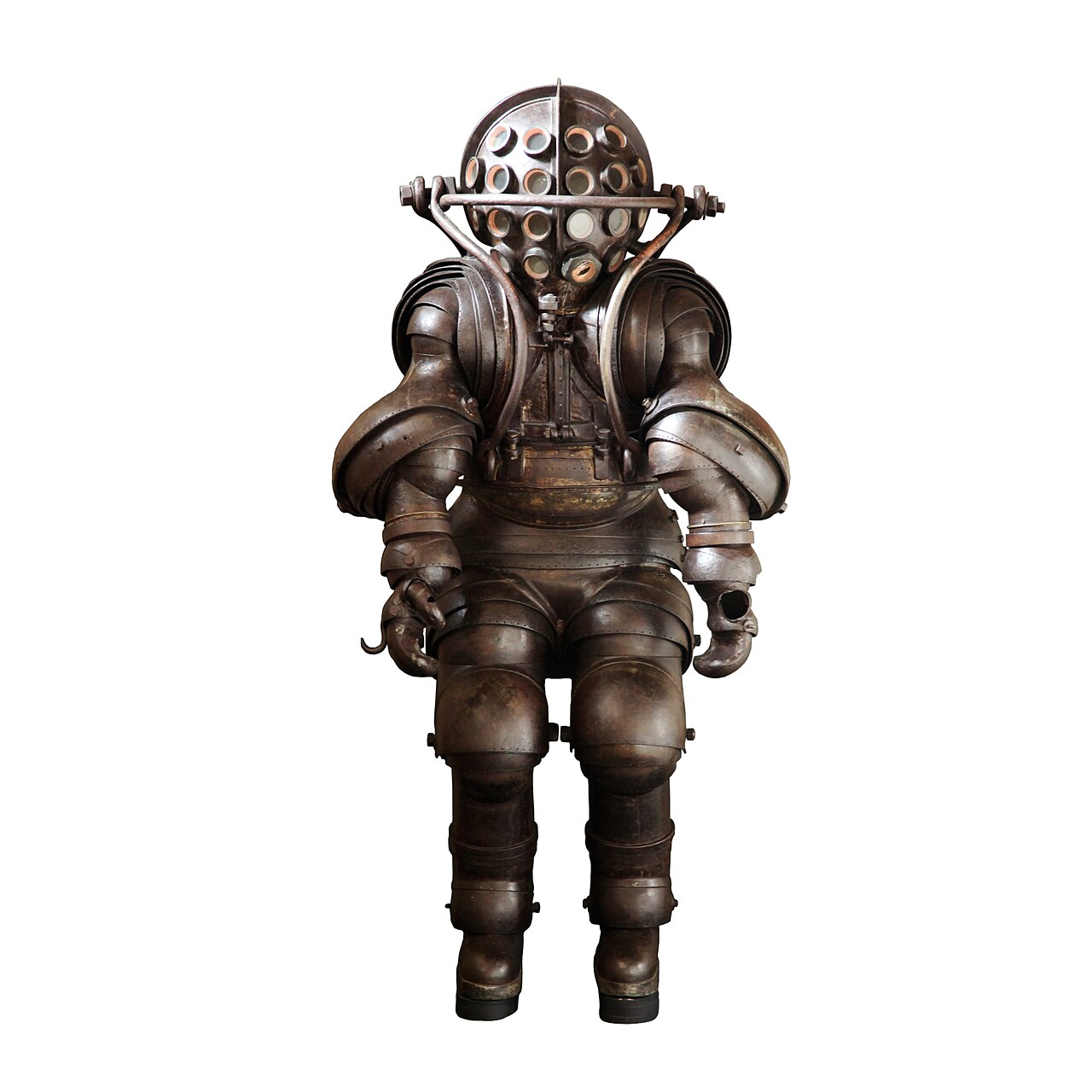
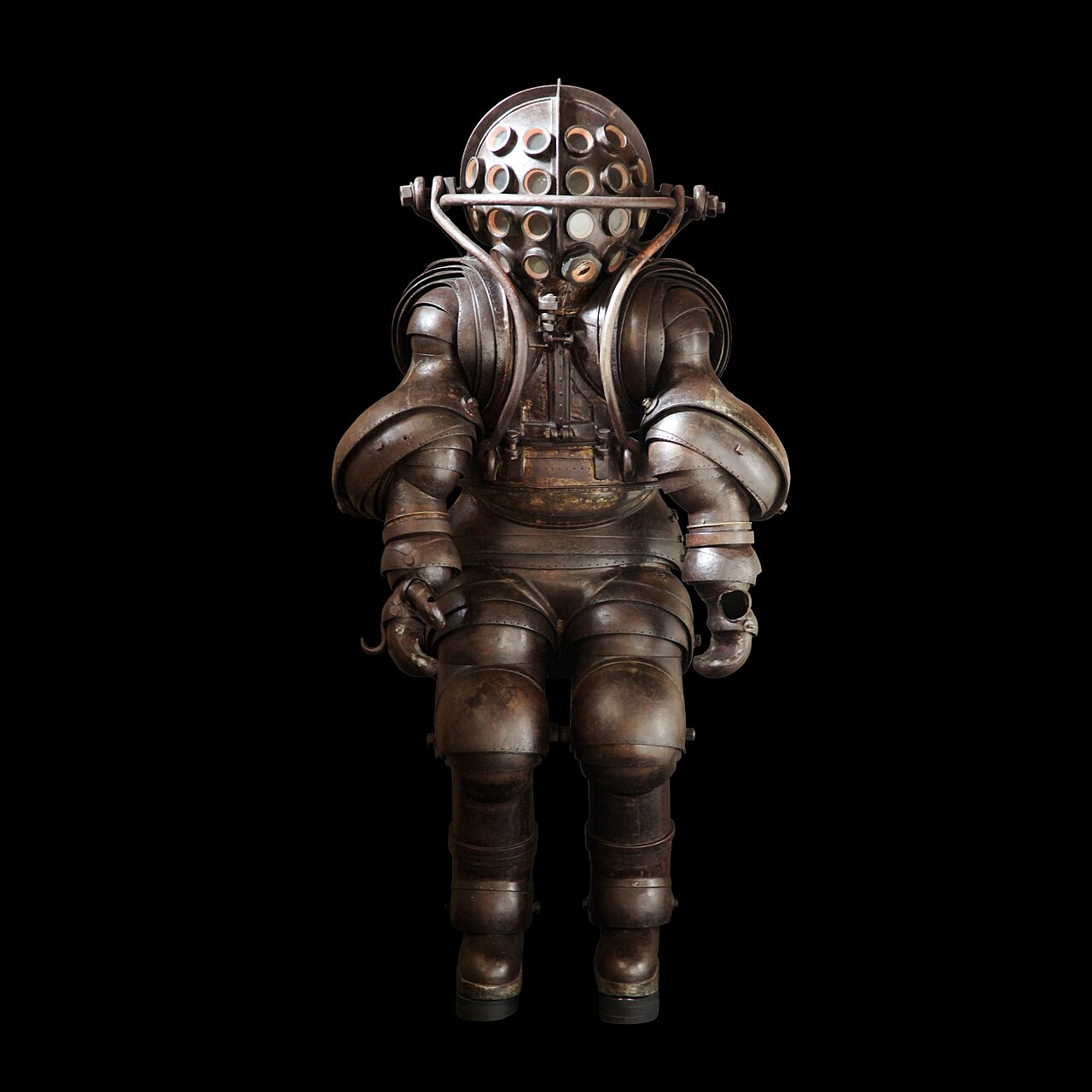
    The Carmagnolle brothers (Messrs Alphonse and Theodore)

    The Carmagnolle brothers (Messrs Alphonse and Theodore), French inventors and manufacturers, patented the Diving suit of the brothers Carmagnolle (scaphandre-cuirasse).

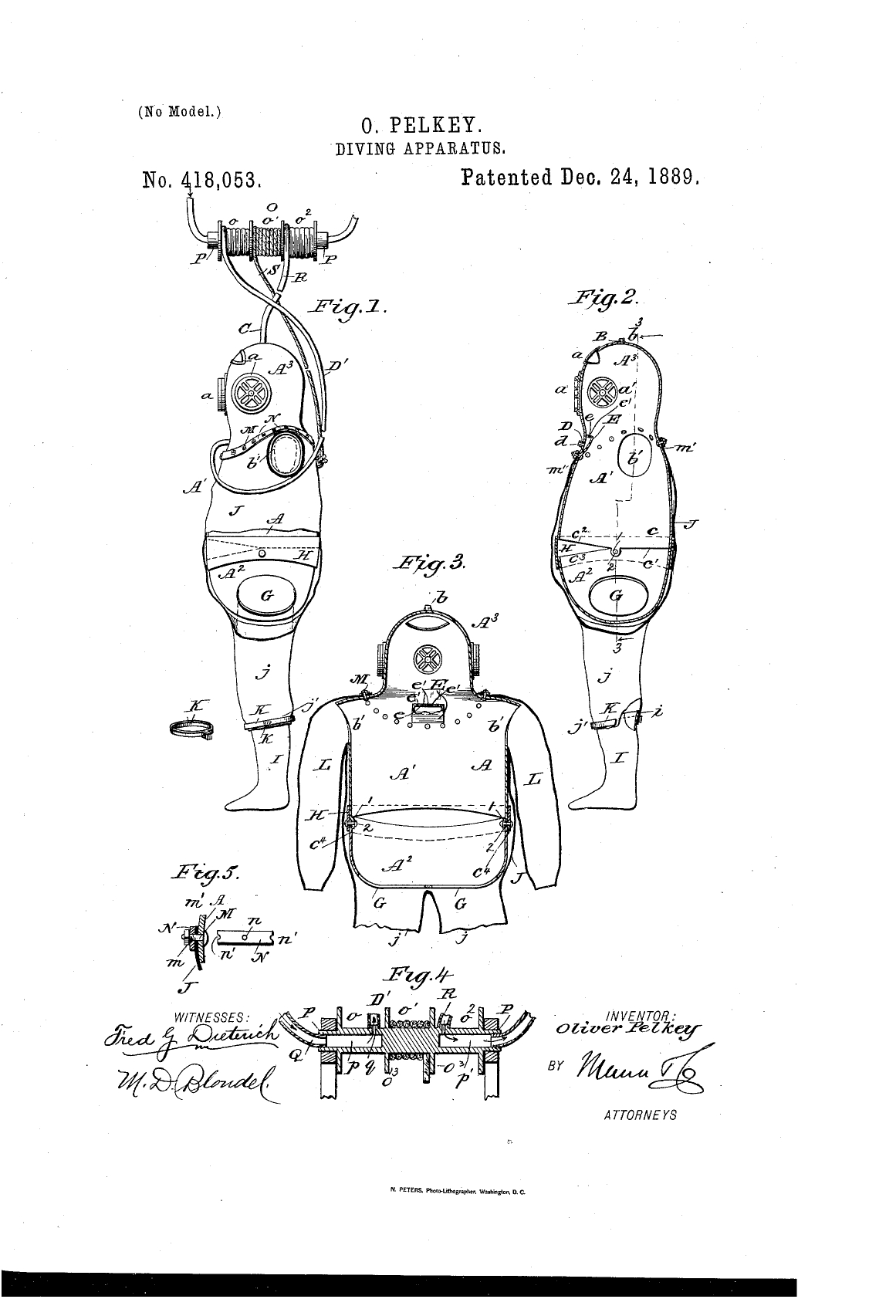
  27. Oliver Pelkey
    1889

    Oliver Pelkey

    Oliver Pelkey, an American inventor and diver from West Duluth, Minnesota, and co-assignee Timothy J.

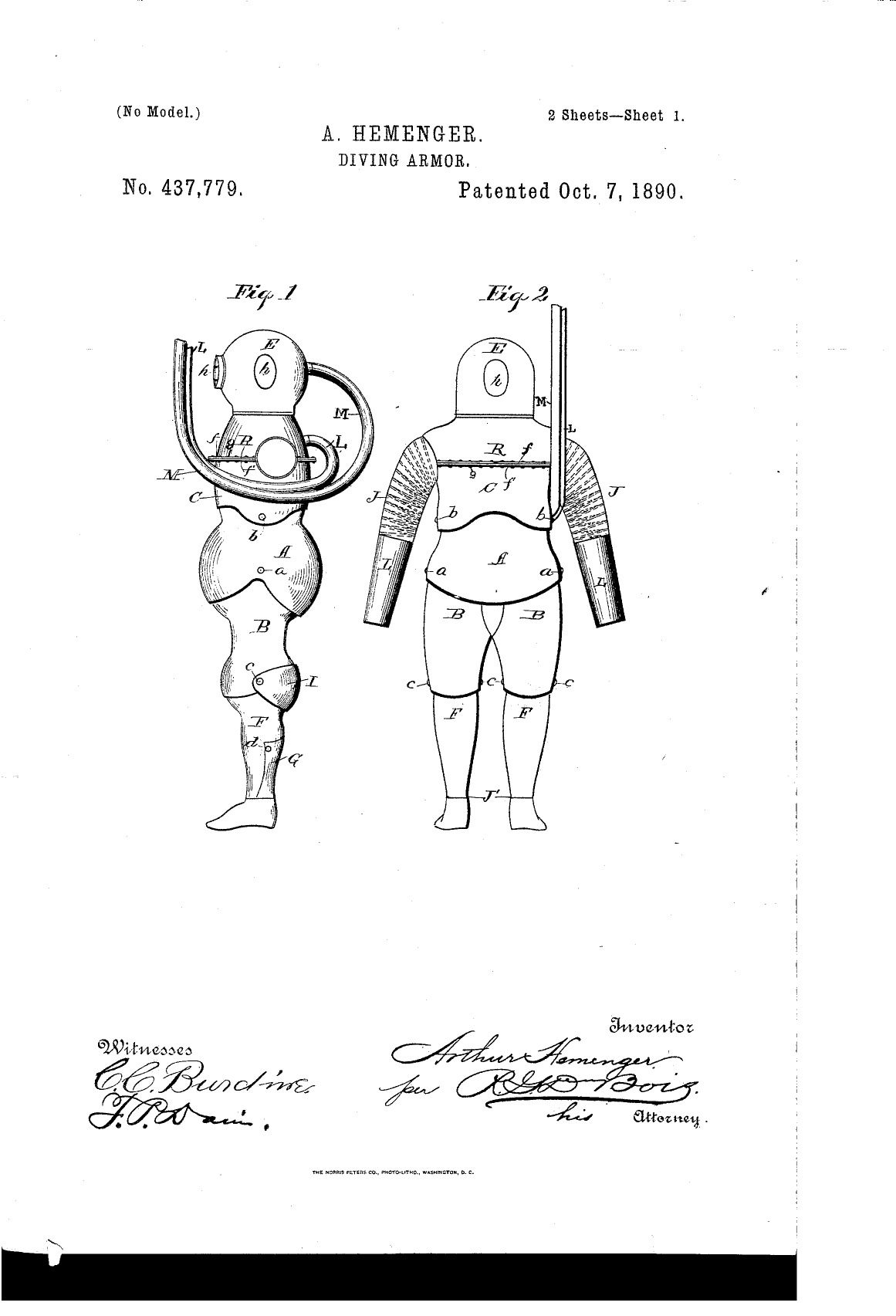
  28. Arthur Hemenger
    1890

    Arthur Hemenger

    Arthur Hemenger, an American inventor from Algonac, county of St.

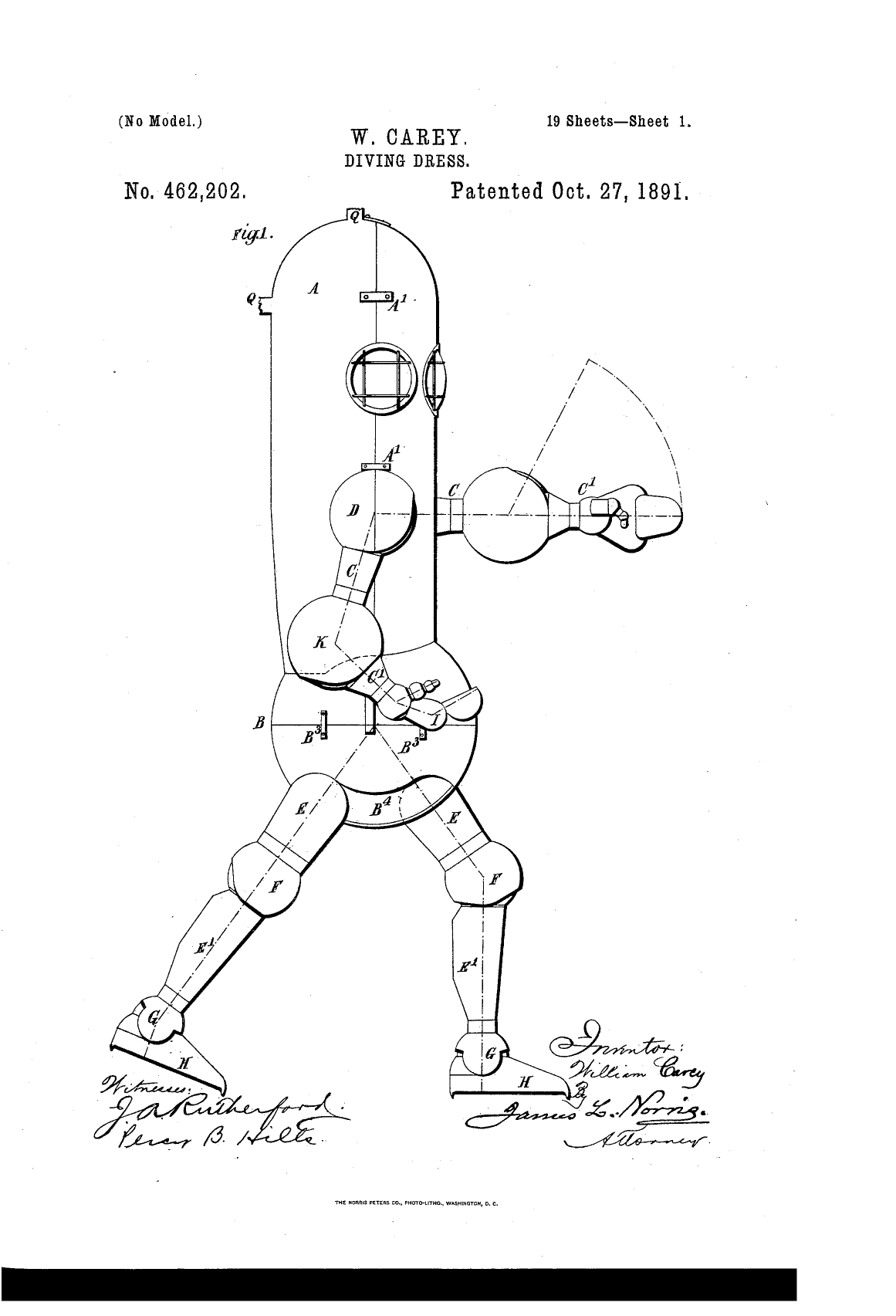
  29. William Dobree Carey
    1891-1892

    William Dobree Carey

    William Dobree Carey, from Southampton, an English Royal Artillery officer, retired as a lieutenant-colonel and later granted the honorary rank of major-general, who was appointed Companion of the Order of the Bath (CB), patented an …

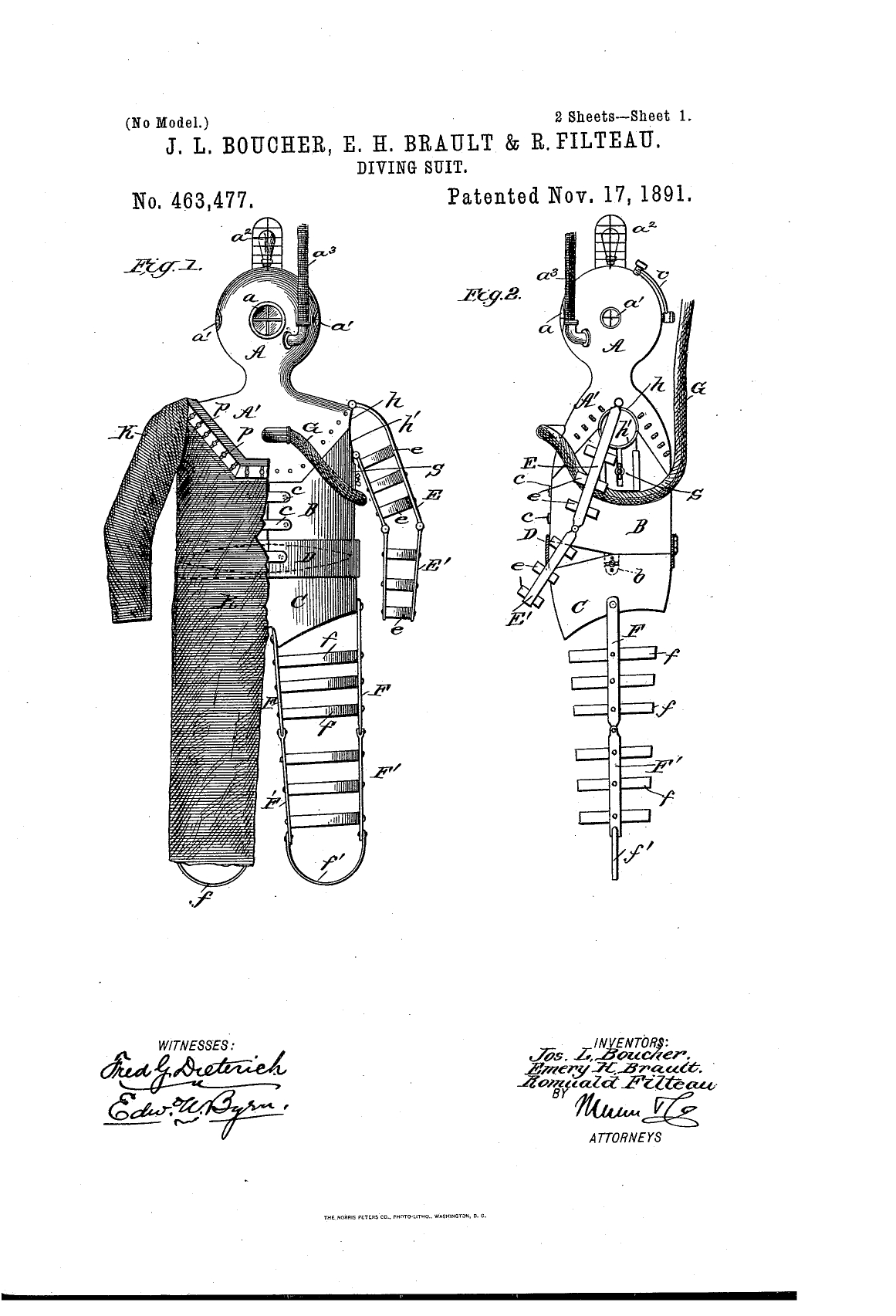
  30. Joseph L. Boucher
    1891

    Joseph L. Boucher

    Joseph L. Boucher, Emery H.

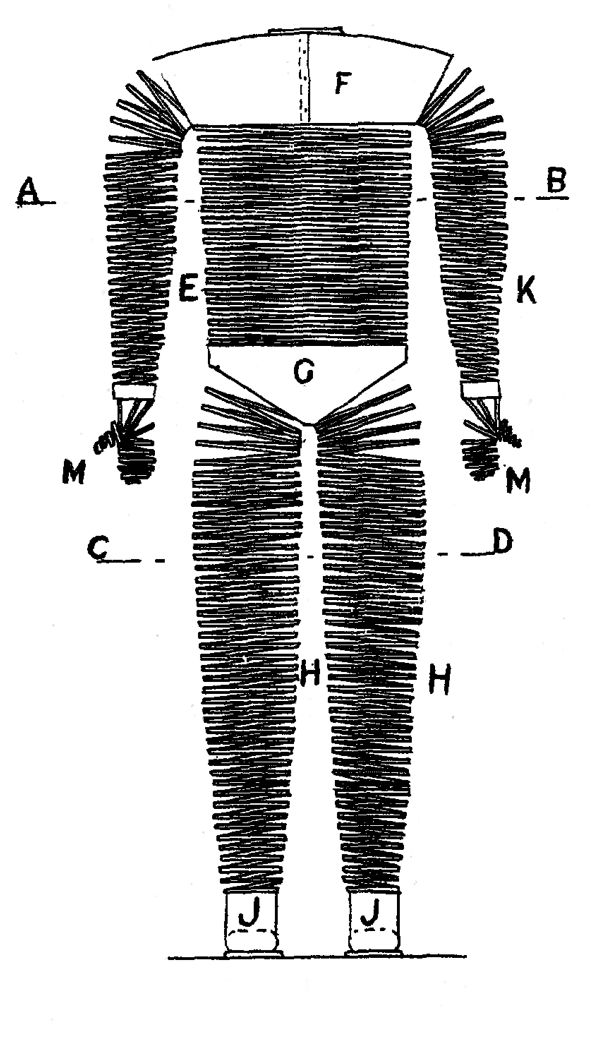
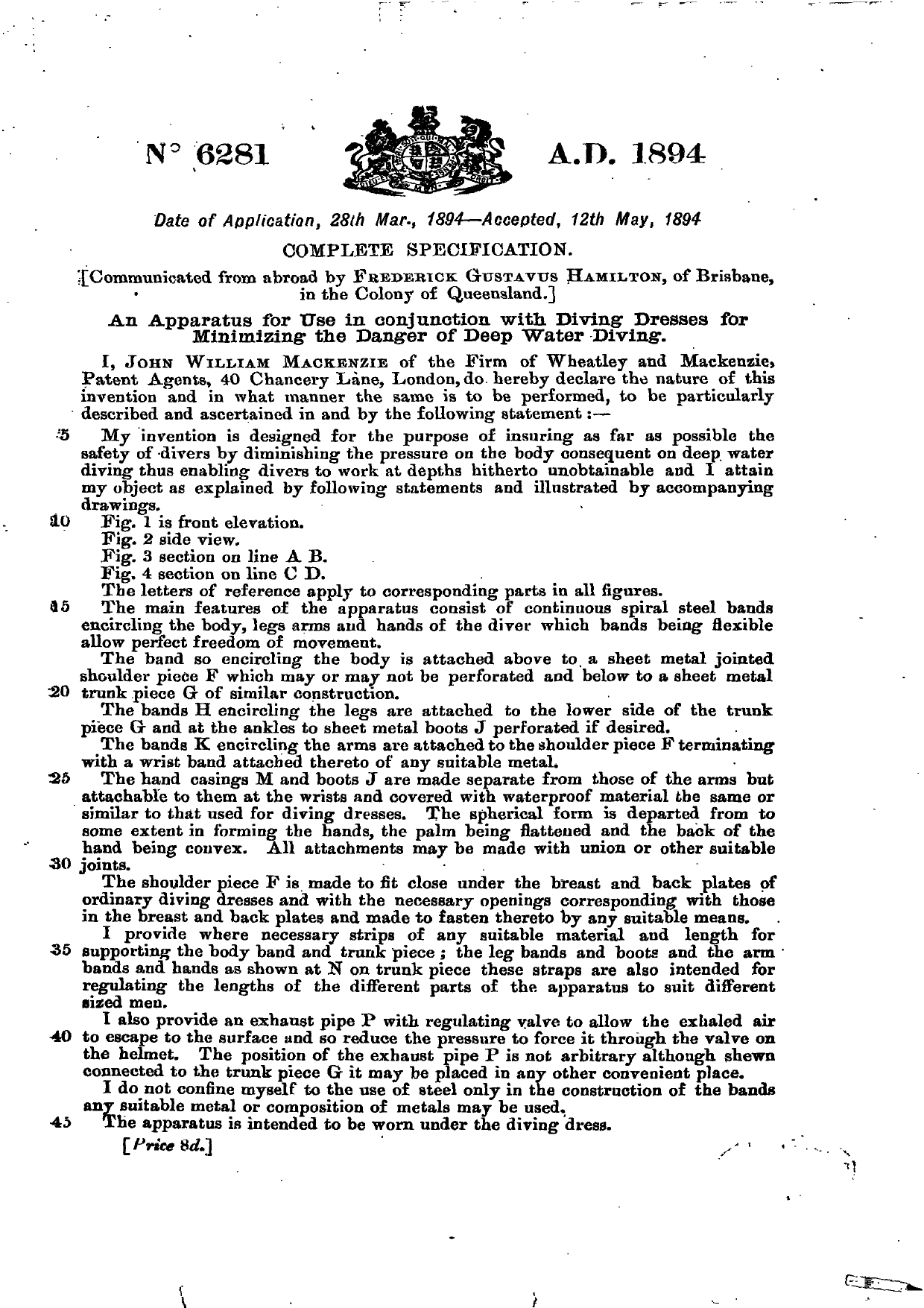
  31. Richard Alexander Hamilton
    1894

    Richard Alexander Hamilton

    Richard Alexander Hamilton, a civil engineer of Brisbane, Queensland, designed an apparatus for use with diving dresses intended to reduce the dangers of deep-water diving.

  32. John Buchanan and Alexander Gordon
    1894

    John Buchanan and Alexander Gordon

    John Buchanan and Alexander Gordon, two Australian inventors from Melbourne, developed their version of the Armoured diving suit in 1894.

  33. John MacLeod
    1895

    John MacLeod

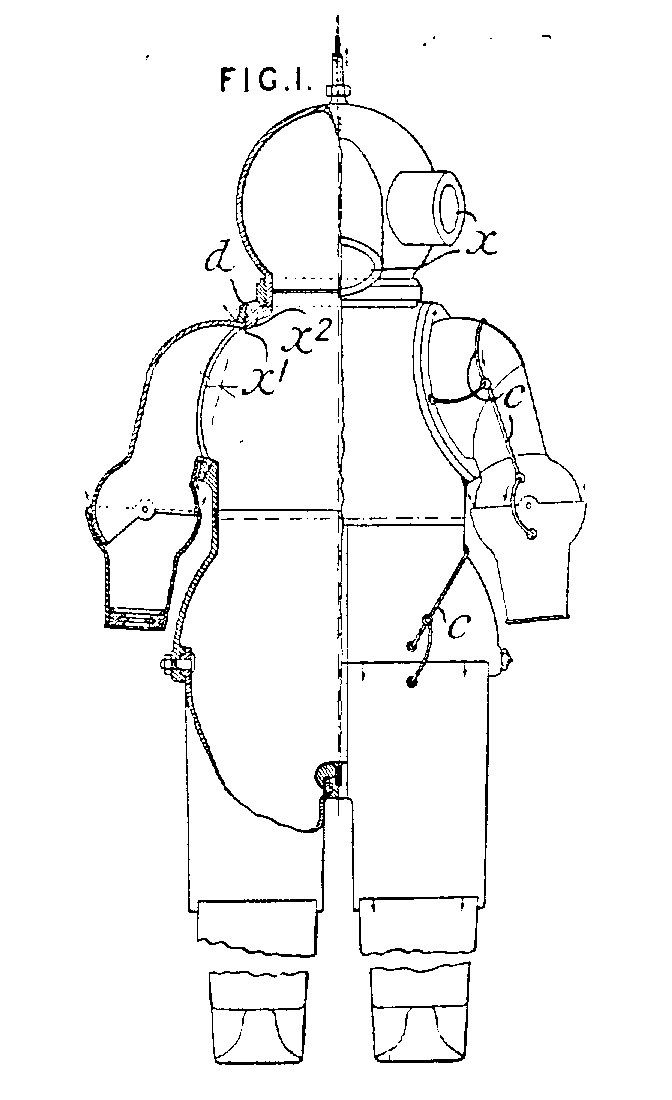
    John MacLeod, a diver/inventor from Glasgow, Scotland, patented his invention in 1895. The invention comprises a metal diving suit in which an upper part fits over the shoulders and to which the helmet bolts.

  34. James Baxter Murray and James Stuart
    1895

    James Baxter Murray and James Stuart

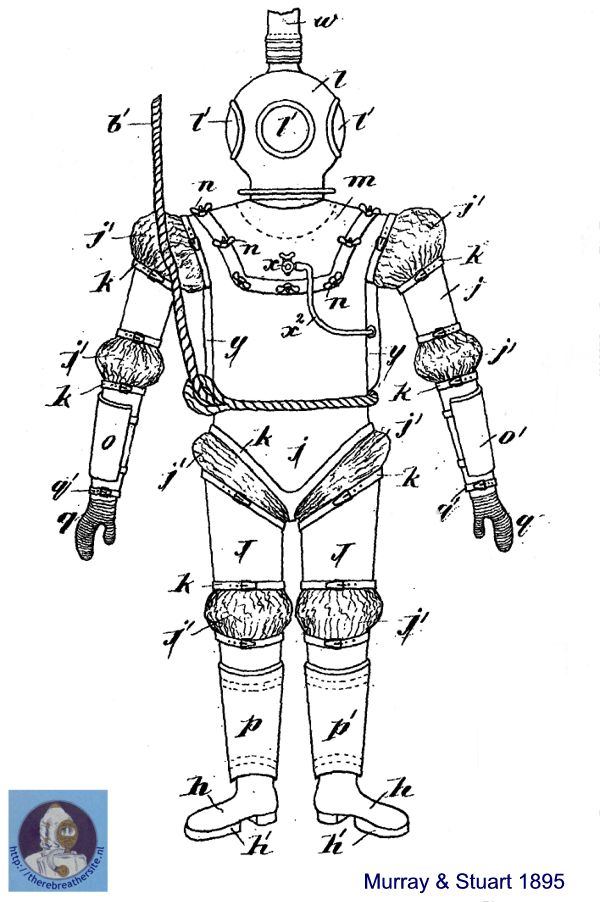
    James Baxter Murray and James Stuart submitted their patented suit application in 1895. Their suit used the old spiral technique and three layers to make it watertight.

  35. William Robert Fasey
    1896

    William Robert Fasey

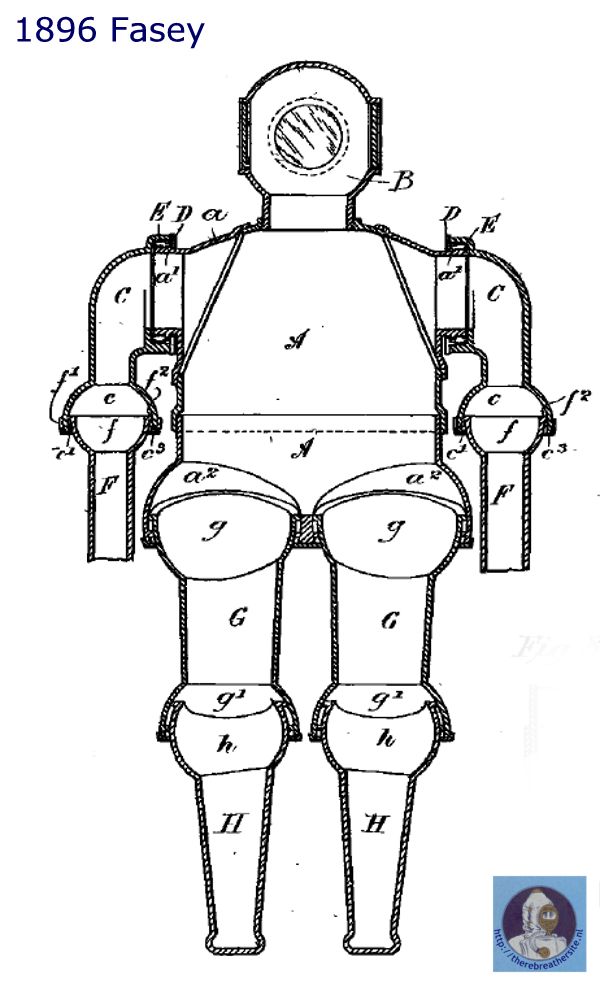
    William Robert Fasey, an English engineer from Leytonstone, England, designed and submitted a patent application which resembled the designs of the Carmagnolle brothers and Carey.

  36. Wilhelm Becker
    1896

    Wilhelm Becker

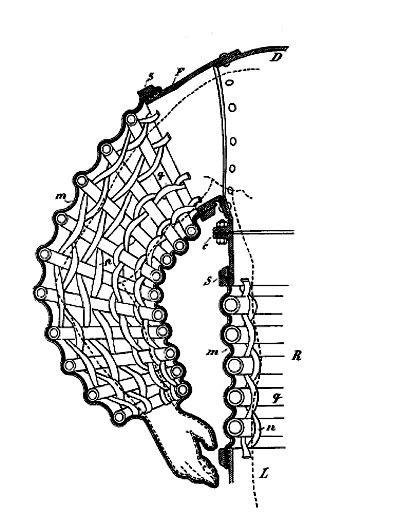
    Wilhelm Becker, a Prussian inventor from Paderborn, Kingdom of Prussia (in the Province of Westphalia, now part of North Rhine-Westphalia, Germany), designed a dress made of waterproof material, stiffened internally by metal rings and a …

  37. Henry H. Gorter
    1897

    Henry H. Gorter

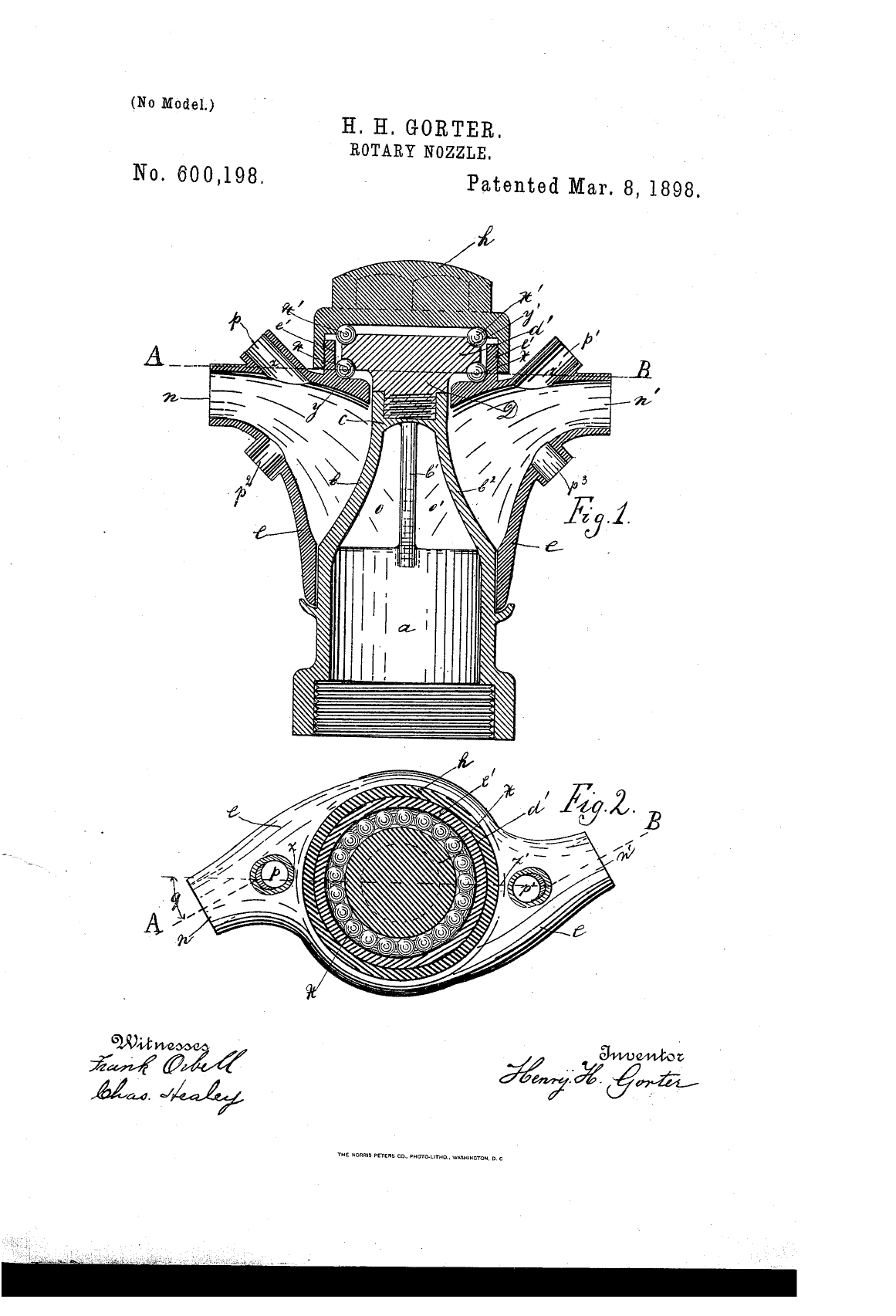
    Henry H. Gorter, an American inventor from San Francisco, California, patented an important ball-and-socket coupling/joint, which, over the following decades, was utilised in many atmospheric diving suits.

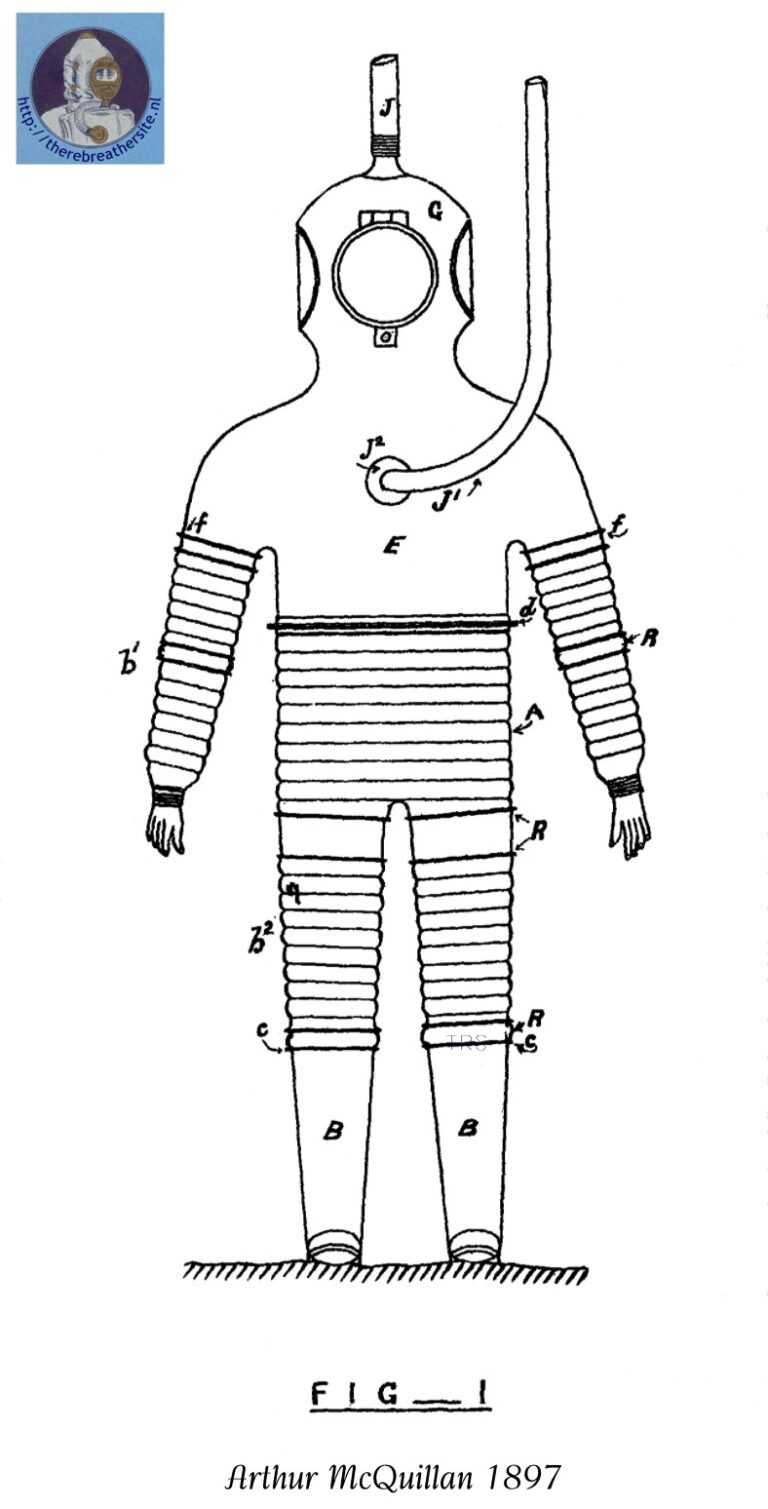
  38. Arthur ("William") McQuillan
    1897

    Arthur ("William") McQuillan

    Arthur ("William") McQuillan, an Australian miner and inventor living in Balmain, New South Wales (a suburb of Sydney), designed an atmospheric diving suit prototype intended to resist high underwater pressure.

  39. John Day and George Day
    1897

    John Day and George Day

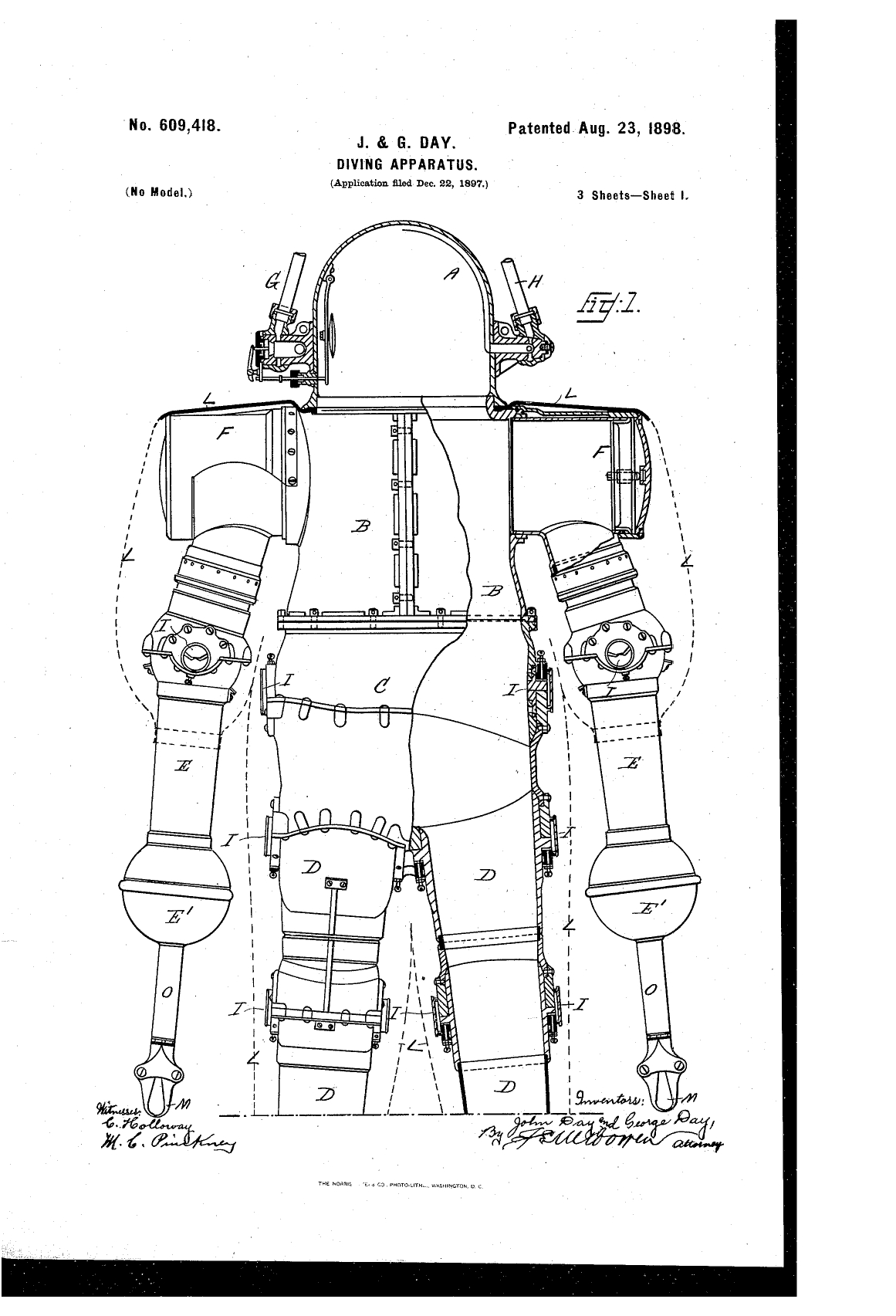
    John Day and George Day, British inventors from Maesteg, Glamorgan, South Wales, designed and patented in the United States a completely armoured dress with ball-and-socket joints, kept watertight by suitable packing.

  40. Deep Sea Diving Company Limited
    1897

    Deep Sea Diving Company Limited

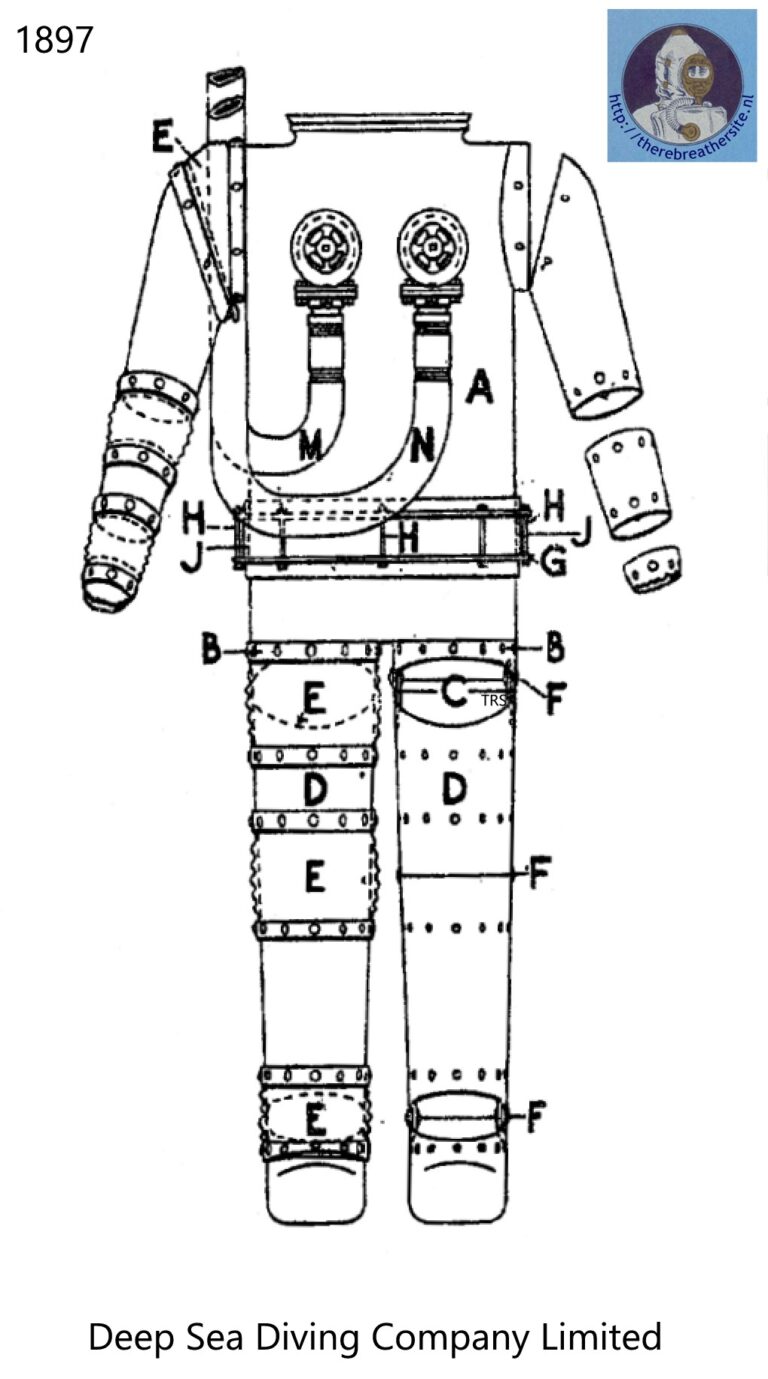
    Deep Sea Diving Company Limited, Australia, based in Brisbane, Queensland, patented a pressure-supported deep-diving-suit concept.

  41. James Baker Pollard
    1897

    James Baker Pollard

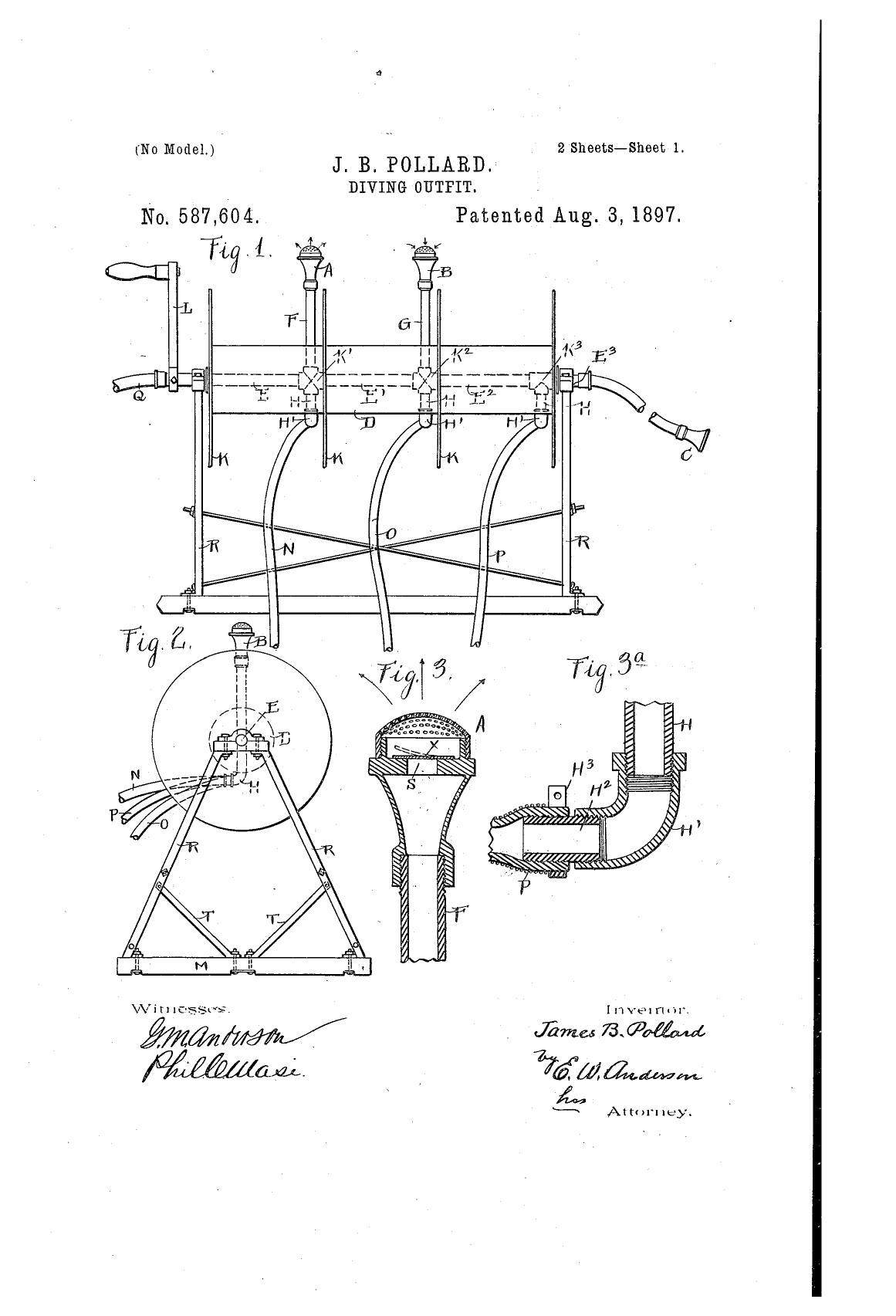
    James Baker Pollard, an American inventor from Roanoke, State of Virginia, patented a diving suit or armour with a metallic head

  42. James J. Devine
    1898

    James J. Devine

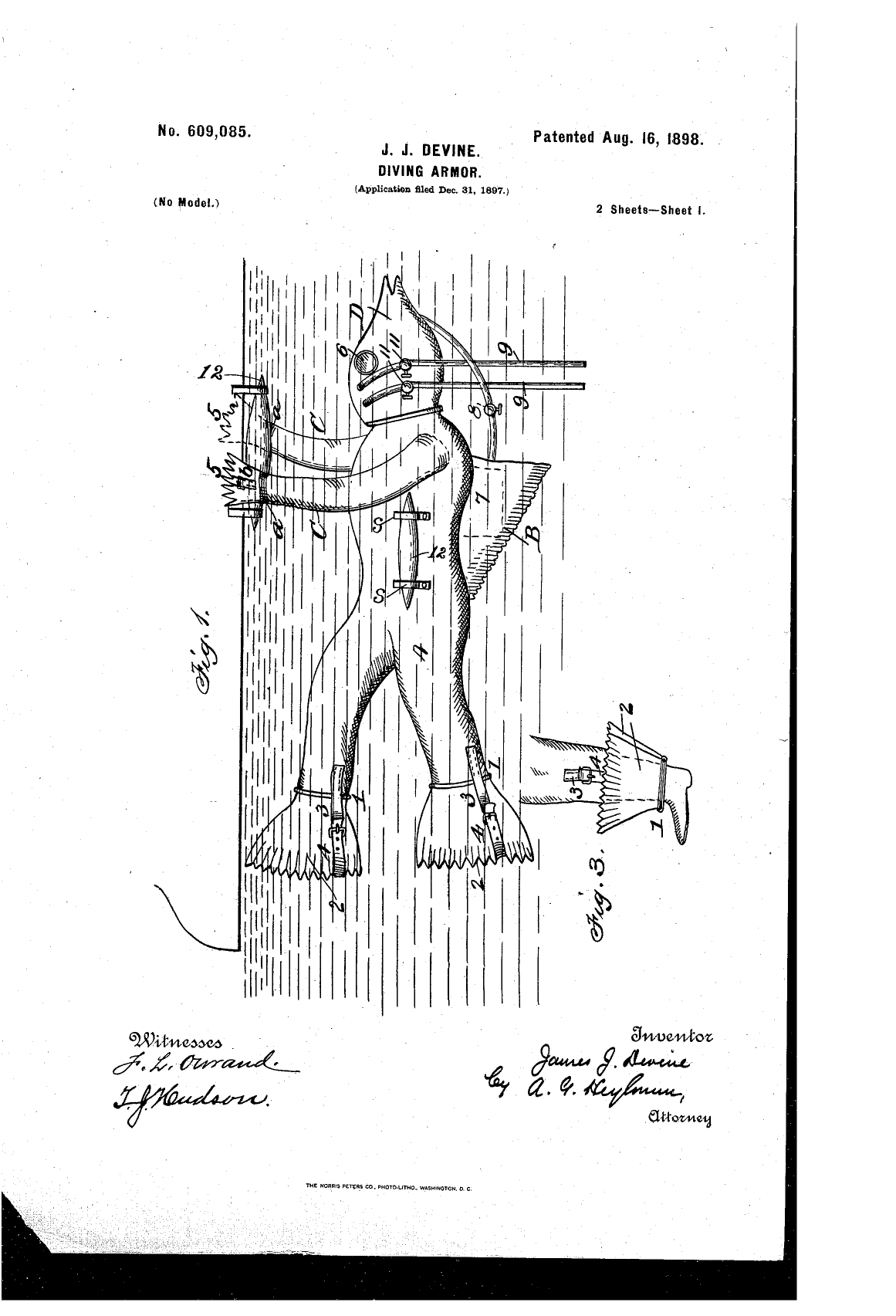
    James J. Devine, an American inventor from Clifton Heights, in the county of Delaware, State of Pennsylvania, patented a diving suit (not armoured) with a fish-like appearance.

  43. Captain Enos B. Petrie
    1902 – 1904

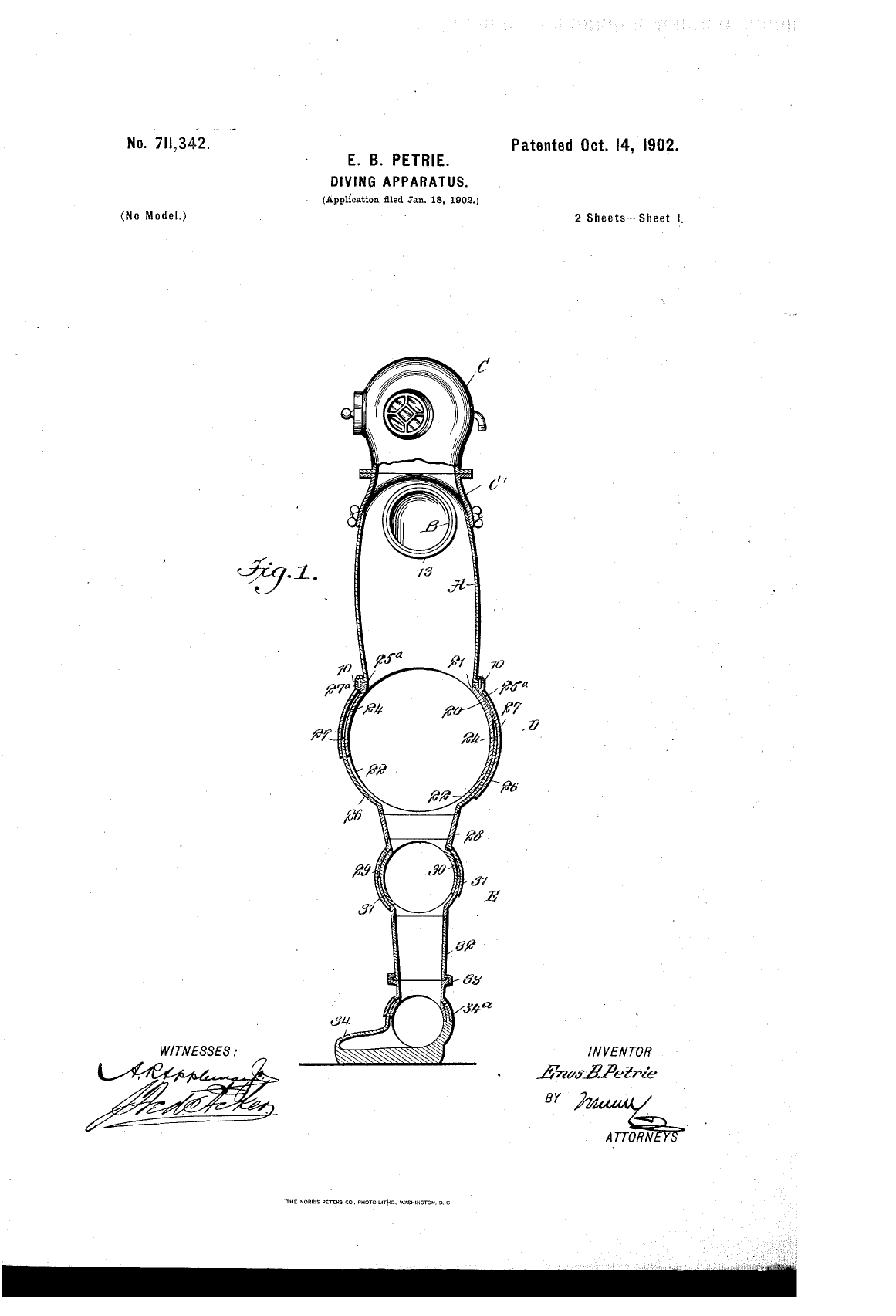
    Captain Enos B. Petrie

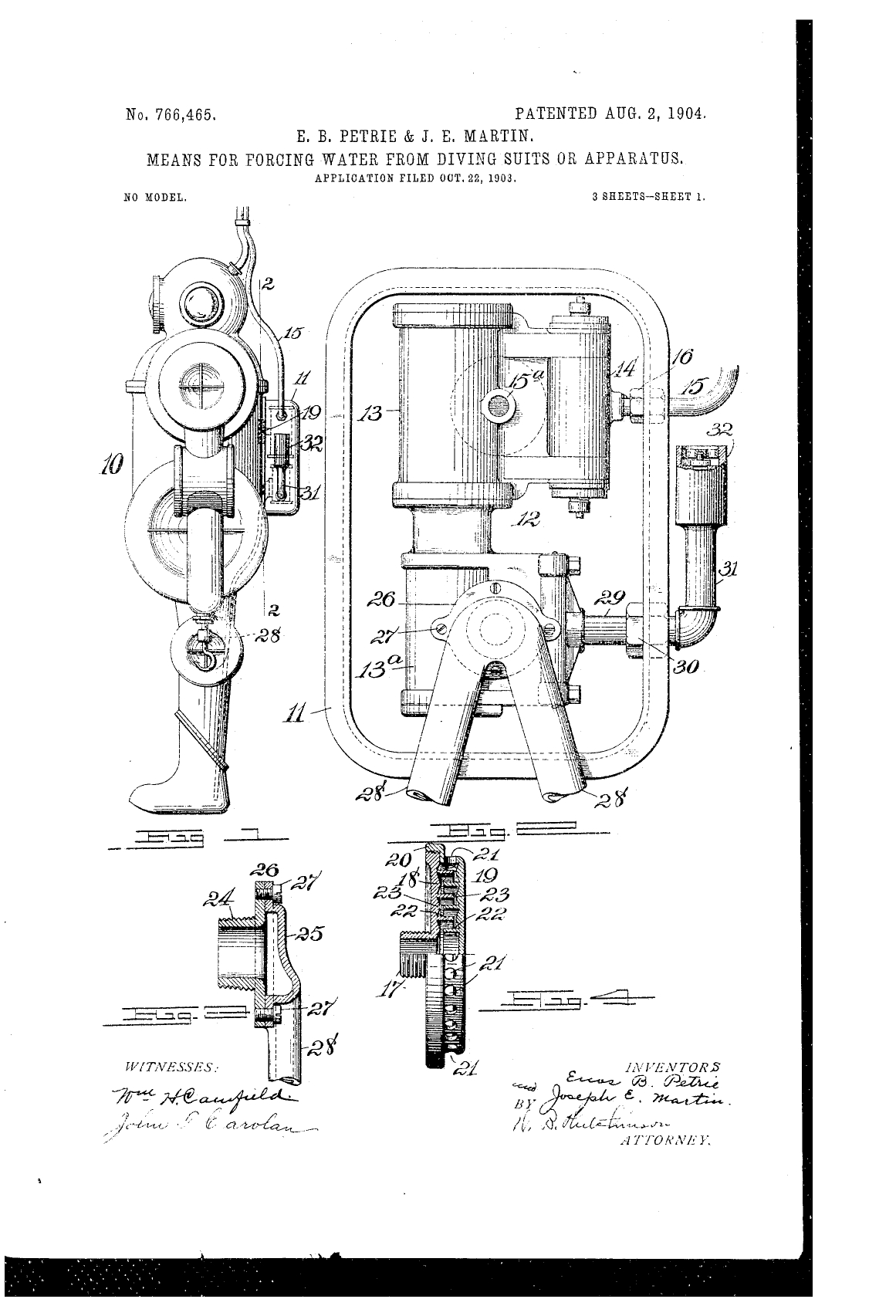
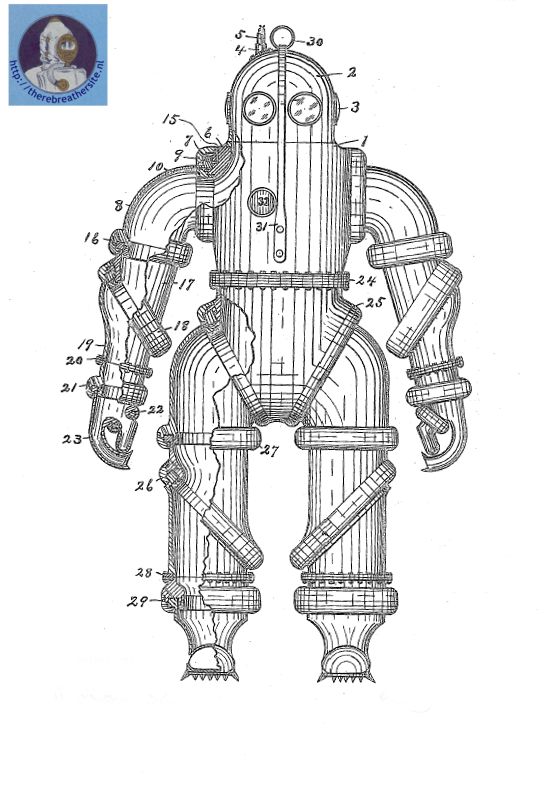
    Captain Enos B. Petrie, an American inventor, along with mechanical engineer Joseph E. Martin, patented a rigid full-body diving dress (atmospheric diving Suit) with an improved joint design.

  44. John L. Watson
    1903

    John L. Watson

    John L. Watson designed and patented a diving bell with some interesting features. The diving bell, really more a small diving bell than an armoured suit, was equipped with a toolbox on its exterior.

  45. Otto Wichmann and Hans Zopke
    1903

    Otto Wichmann and Hans Zopke

    The German inventors Otto Wichmann (associated with marine transport engineering in Hamburg) and Hans Zopke (a Regierungsbaumeister—government master builder—and Director of the Technical State Teaching Institutes in Hamburg) submitted a …

  46. Jean Claude Malatray
    1904

    Jean Claude Malatray

    Jean Claude Malatray, a French inventor, designed and tested an intricate, functional, all-metal atmospheric diving suit featuring articulated, truly effective, watertight joints.

  47. Jacques Franc and Eugène Galaup
    1904

    Jacques Franc and Eugène Galaup

    Jacques Franc and Eugène Galaup, French inventors, designed and patented an armoured, surface-supplied pressure suit that overcame the disadvantages of external pressure—a complete articulated armour (chromium steel body cuirass), covered …

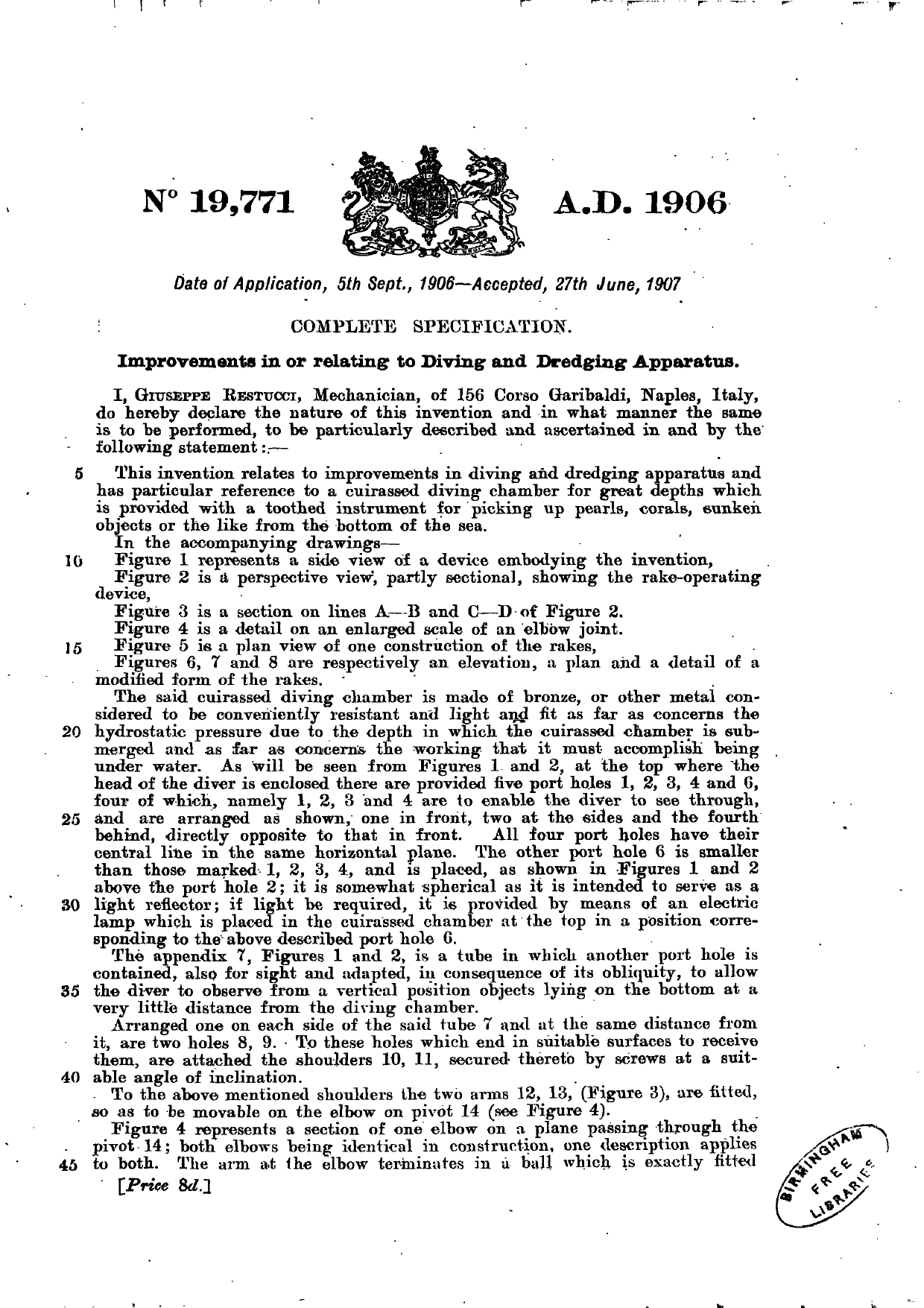
  48. Giuseppe Restucci
    1904

    Giuseppe Restucci

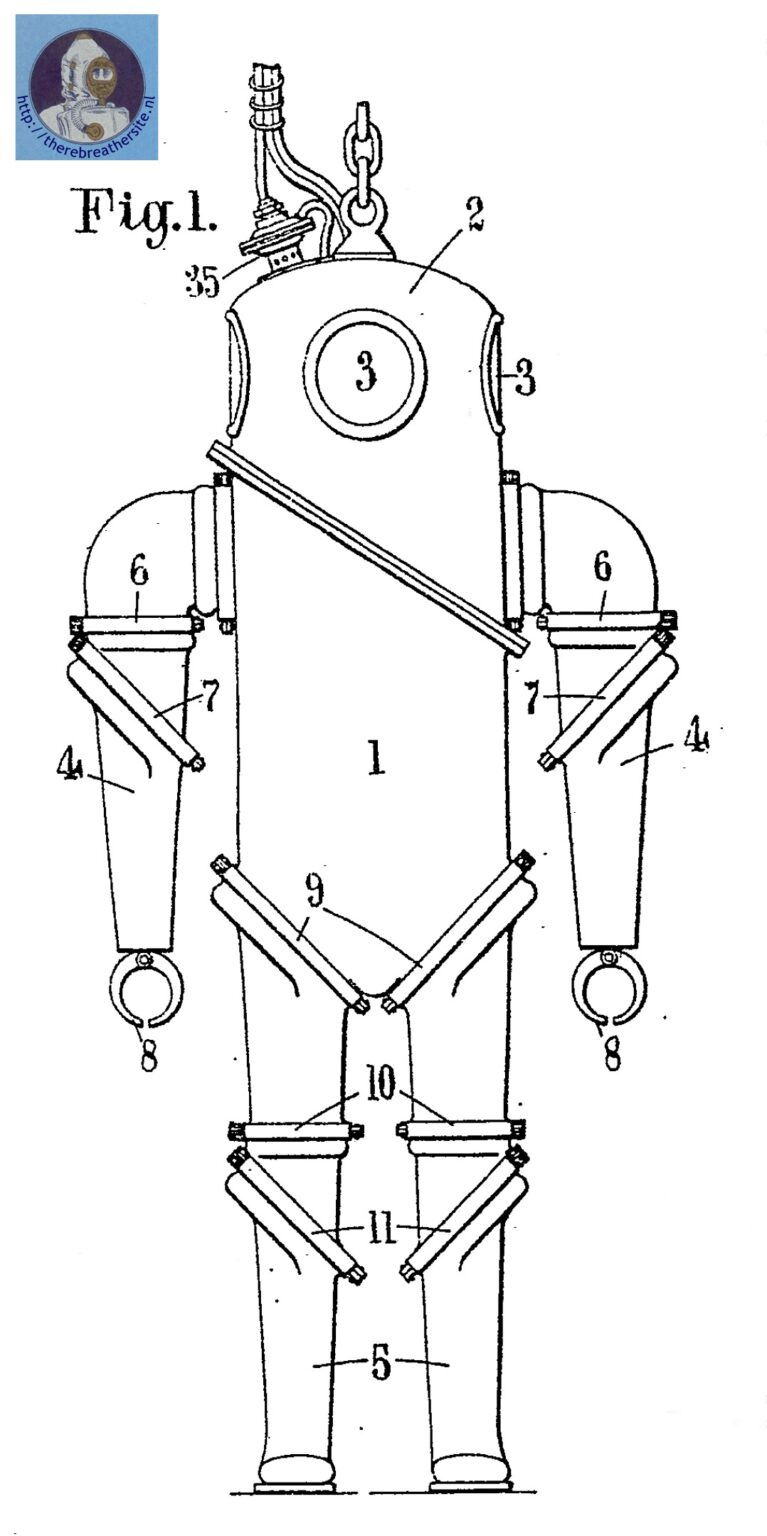
    Giuseppe Restucci, an inventor from Naples, Italy, designed his first atmospheric pressure suit in 1904. The articulated joints were watertight due to overpressure.

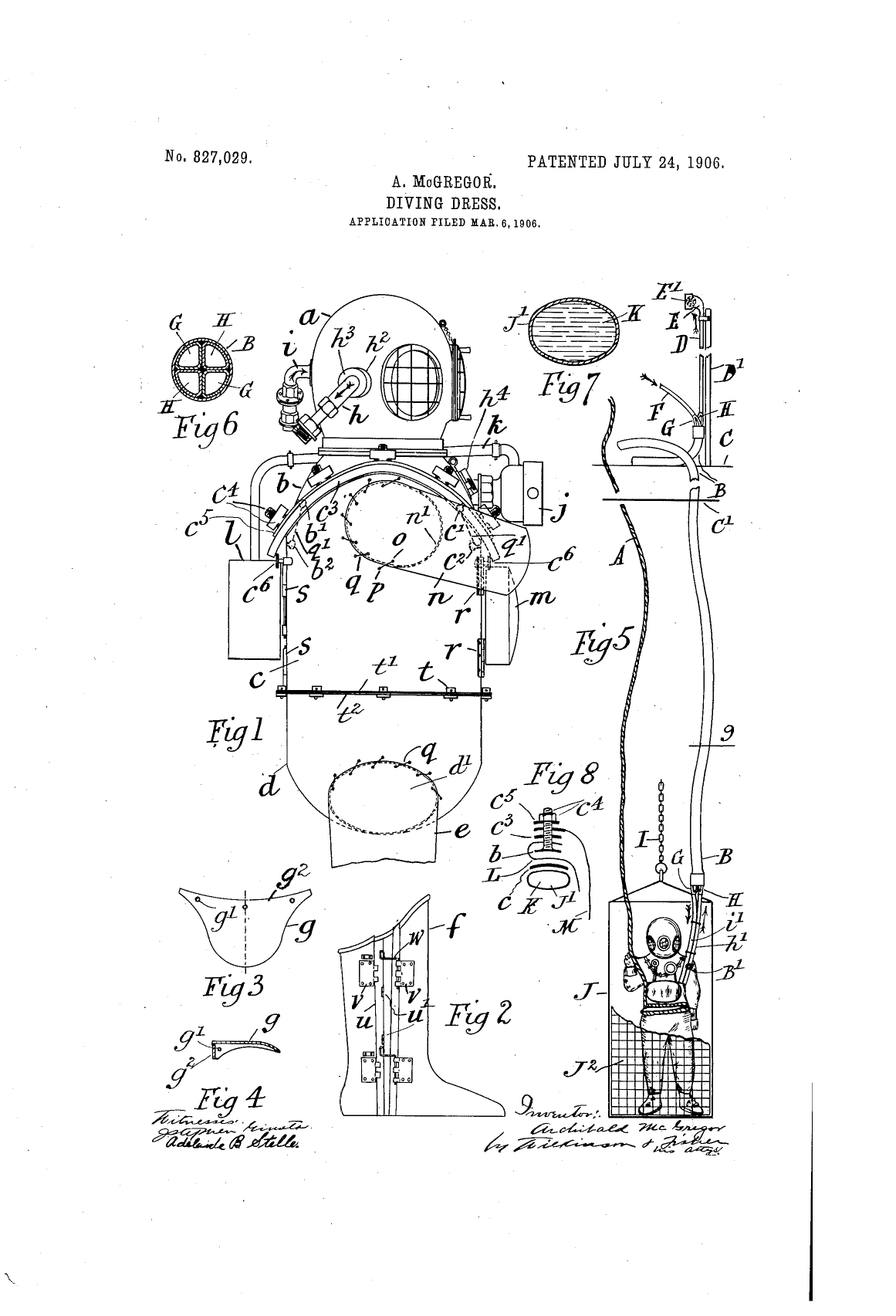
  49. Archibald McGregor
    1904-1906

    Archibald McGregor

    Archibald McGregor, of Queensland, Australia, patented an articulated armoured suit in 1906. The notable design required the diver to wear three separate dresses.

  50. John Scott Haldane
    1905 – 1908

    John Scott Haldane

    The second key evolutionary step in the development of today's diving technology. In 1907, John Scott Haldane made a decompression chamber to help make deep-sea divers safer.

  51. Heinrich Draeger and Drägerwerk
    1906 – 1912

    Heinrich Draeger and Drägerwerk

    Heinrich Dräger and Drägerwerk developed a self-contained diving apparatus during this period. In conjunction with his chief engineer, Hermann Selzner, he announced a project to develop diving equipment that could operate without a pump.

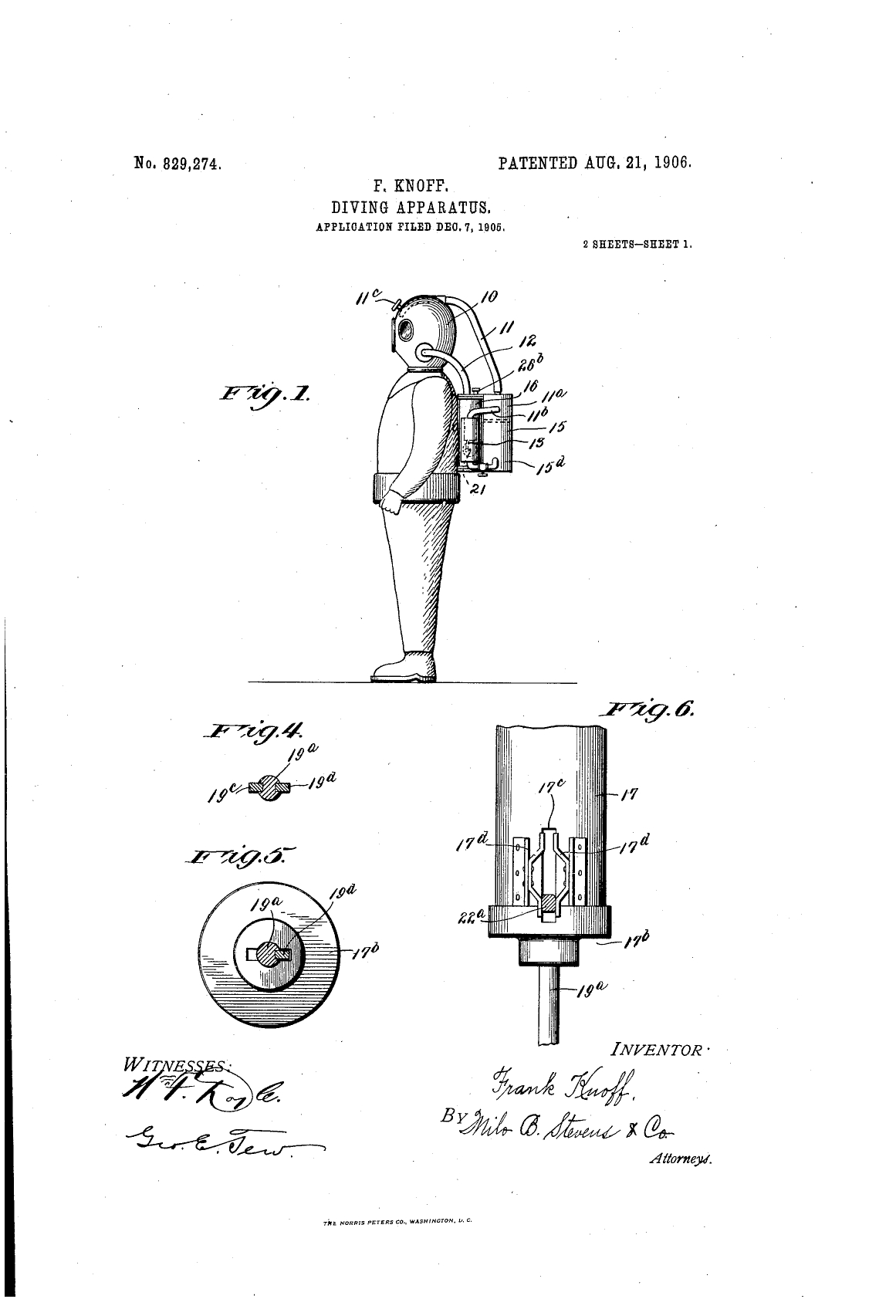
  52. Frank Knoff
    1906

    Frank Knoff

    Frank Knoff, an American inventor, patented a suit design that freed divers from relying on the surface above.

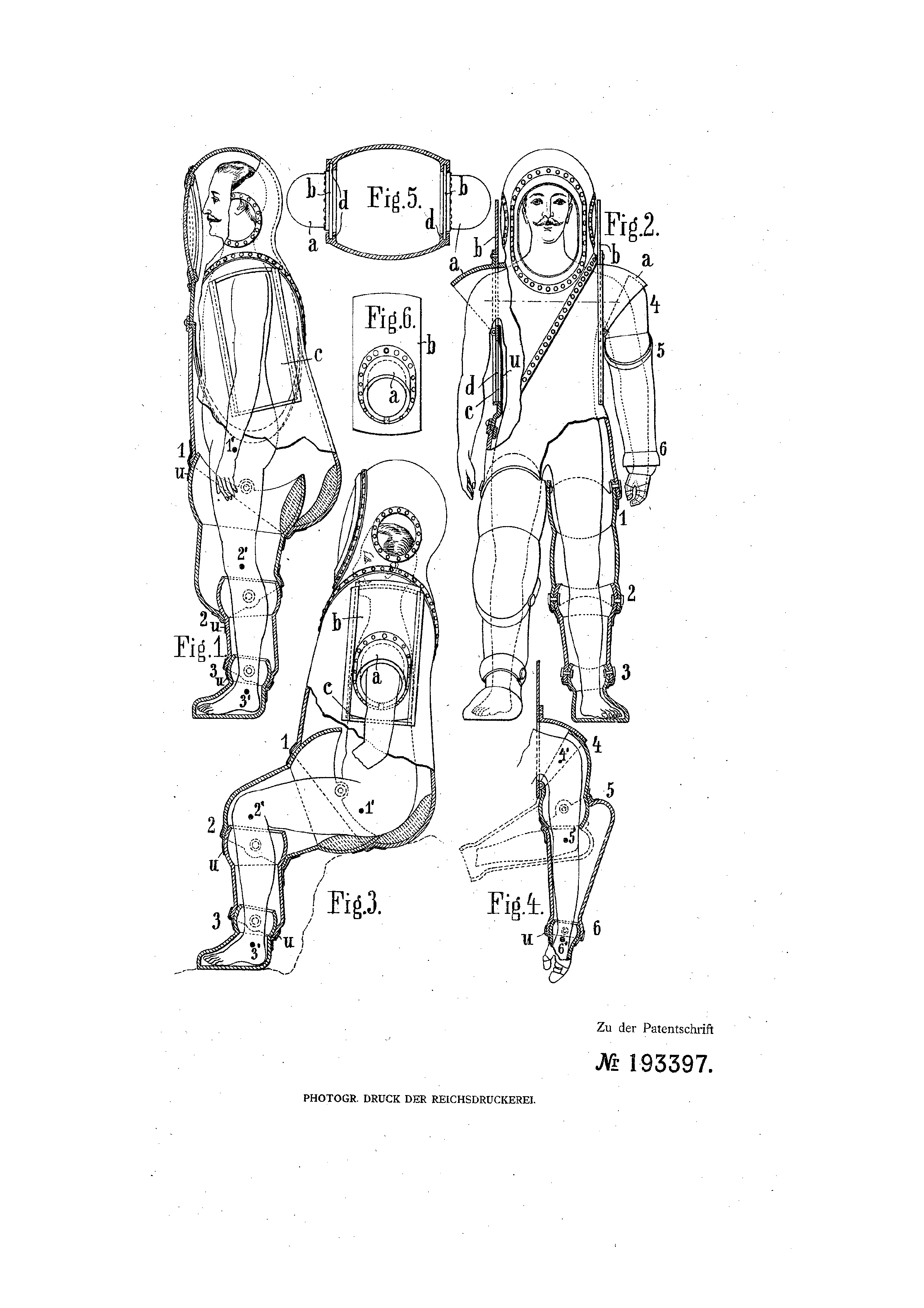
  53. Friedrich Gall
    1906

    Friedrich Gall

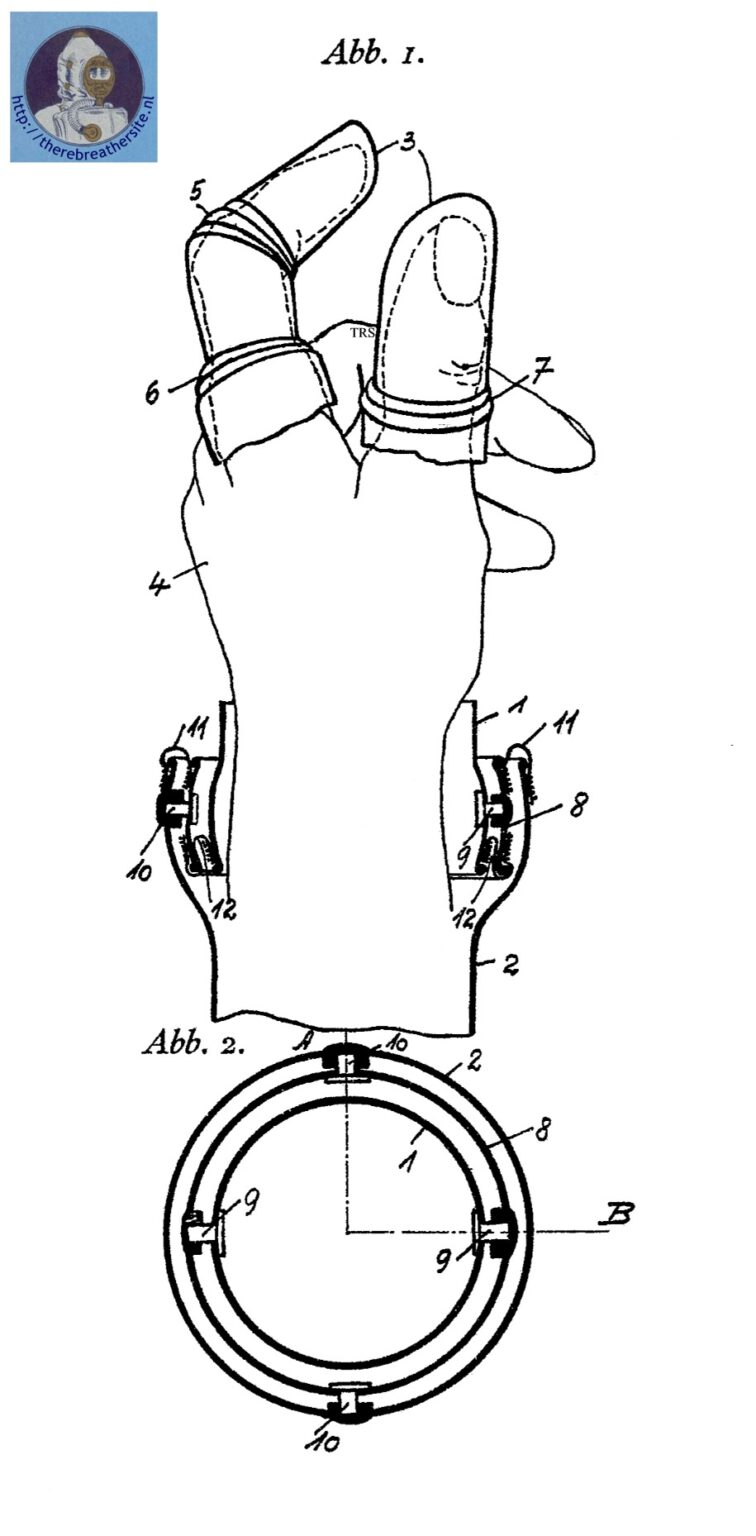
    Friedrich Gall, a German inventor, patented an articulated suit with ball-and-socket main joints and armoured, jointed gloves.

  54. Charles Pecourt de Pluvy
    1906

    Charles Pecourt de Pluvy

    Charles Pecourt de Pluvy, a French inventor, designed one of the first regenerative types of atmospheric diving suits. Pluvy claimed to have made several dives to 100 metres (328 ft) with his suit.

  55. Anton Reznicek
    1911

    Anton Reznicek

    Anton Reznicek, an Austrian engineer and inventor, patented several ways to prevent the rubber covering of diving armour from becoming trapped between the suit's joints, creating space in front of the joints, using springs and cover plates …

  56. Chester E. MacDuffee
    1911 – 1915

    Chester E. MacDuffee

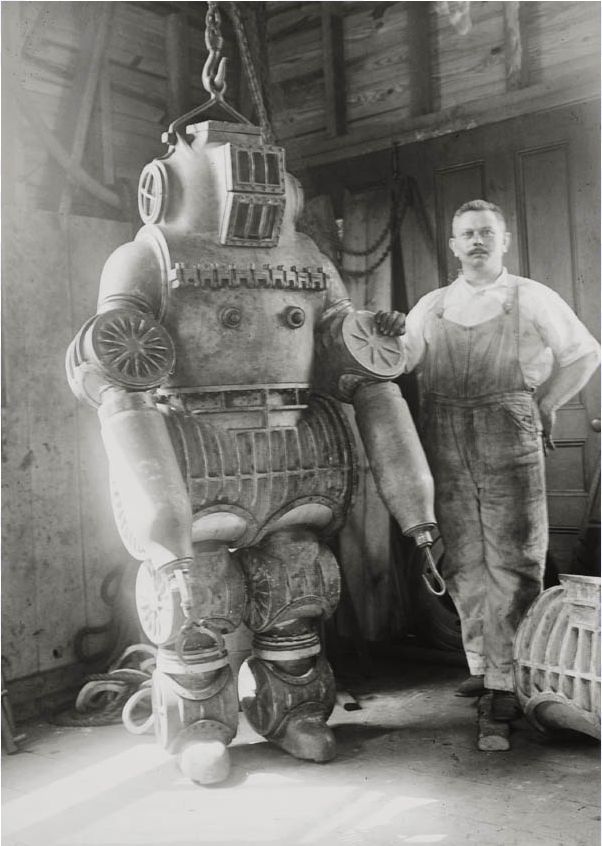
    Chester E. MacDuffee, an American inventor, is credited with inventing the first ball-bearing joint armoured suit.

  57. Clay Anderson
    1912

    Clay Anderson

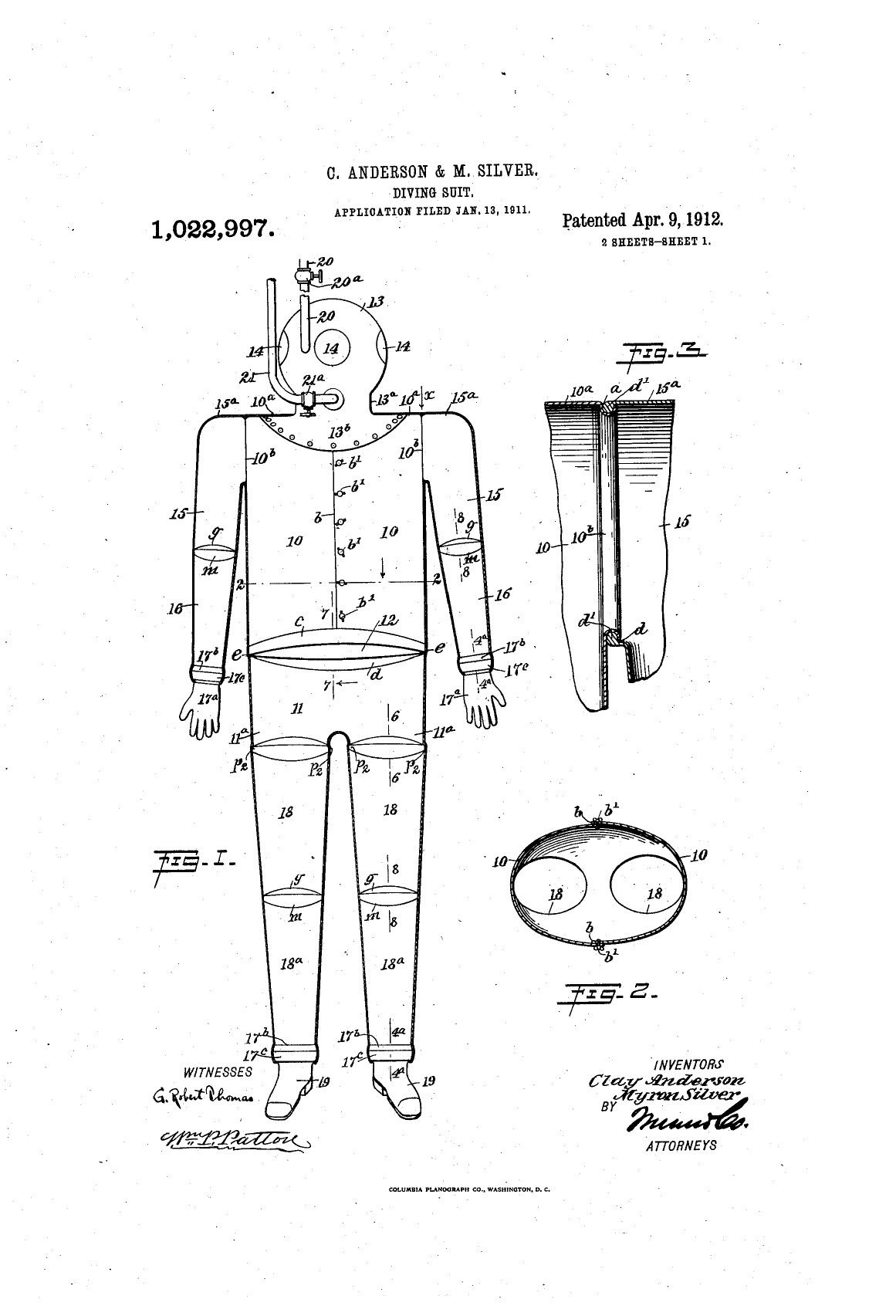
    Clay Anderson, a civil engineer, and Myron Silver, an entrepreneur, two American inventors based in Passi, Province of Iloilo, Philippines, patented an air-supplied, armoured, articulated suit made of metal, covered with an airtight …

  58. Leone Durand and Melchiorre Bembina
    1912

    Leone Durand and Melchiorre Bembina

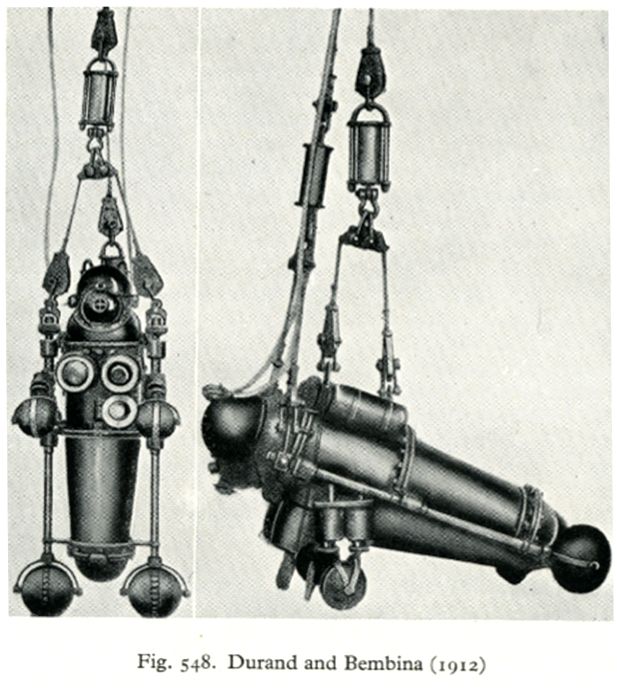
    Leone Durand and Melchiorre Bembina, inventors from Palermo, Italy, designed a dress that had four spherical oaken wheels.

  59. Hans Neufeldt
    1913-1940

    Hans Neufeldt

    Hans Neufeldt, a civil engineer, and Carl Kuhnke, a businessman, founded a German company based in Kiel, which was the first large-scale producer of atmospheric diving suits.

  60. Chester E. MacDuffee
    1914

    Chester E. MacDuffee

    Chester E. MacDuffee, an American inventor, is credited with inventing the first ball-bearing joint armoured suit.

  61. Jean F. Deray
    1914

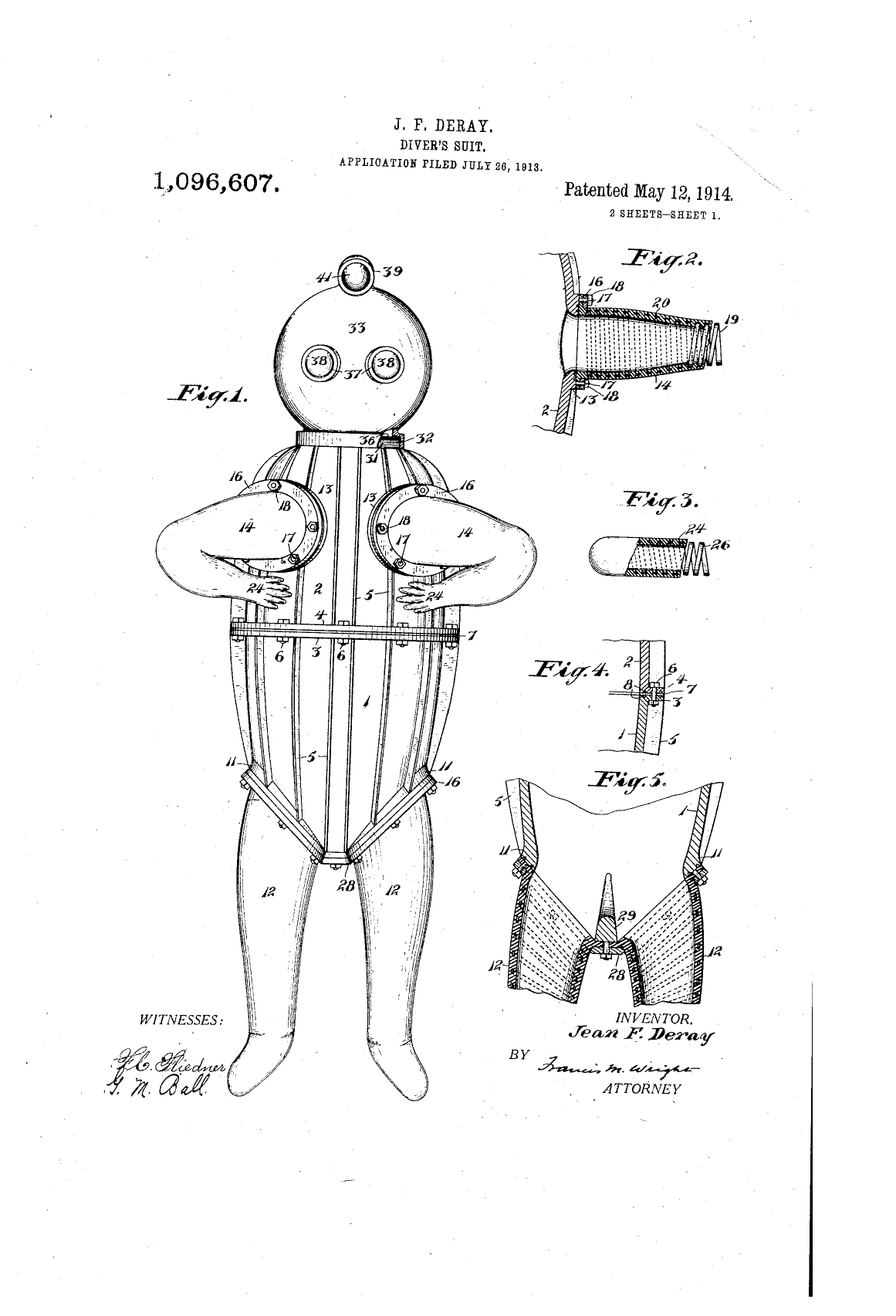
    Jean F. Deray

    Jean F. Deray, an American inventor from Sunnyvale, California, patented a suit that he claimed could operate to a depth of 45 metres (147.7 ft).

  62. Georg Stolle
    1914

    Georg Stolle

    Georg Stolle, a German from Kiel, designed a means to adjust the buoyancy of the suit. The patent was submitted and registered in 1917.

  63. Captain Benjamin Franklin Leavitt
    1915

    Captain Benjamin Franklin Leavitt

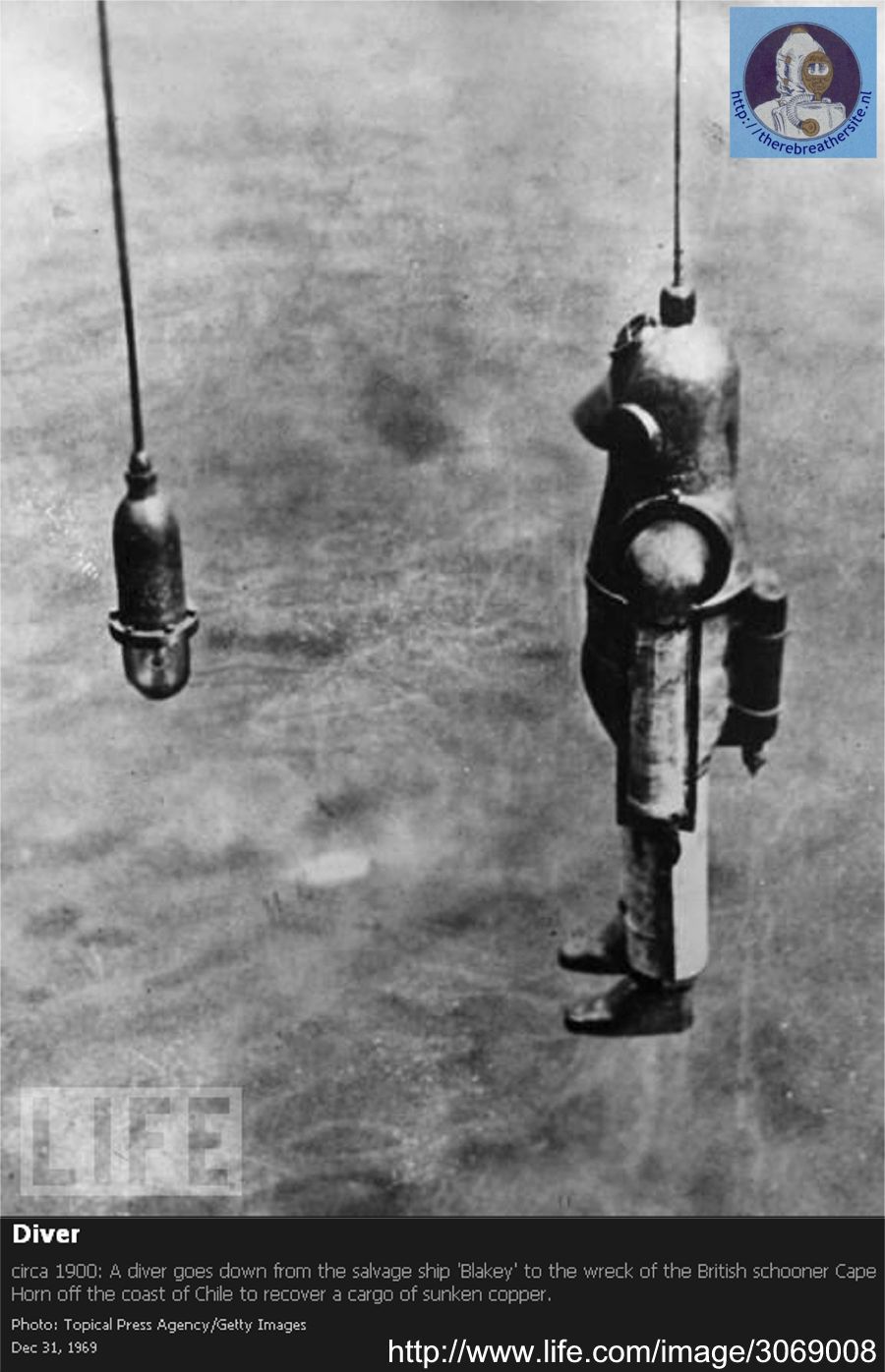
    Captain Benjamin Franklin Leavitt, an American inventor, developed another form of spiral armouring similar to the Buchanan and Gordon suit; however, the spirals formed both the armouring and the covering.

  64. Harry L. Bowdoin
    1915

    Harry L. Bowdoin

    Harry L. Bowdoin, an American inventor from Bayonne, New Jersey, patented a new type of oil-filled rotary-jointed armoured diving

  65. William Phillips Thompson
    1915

    William Phillips Thompson

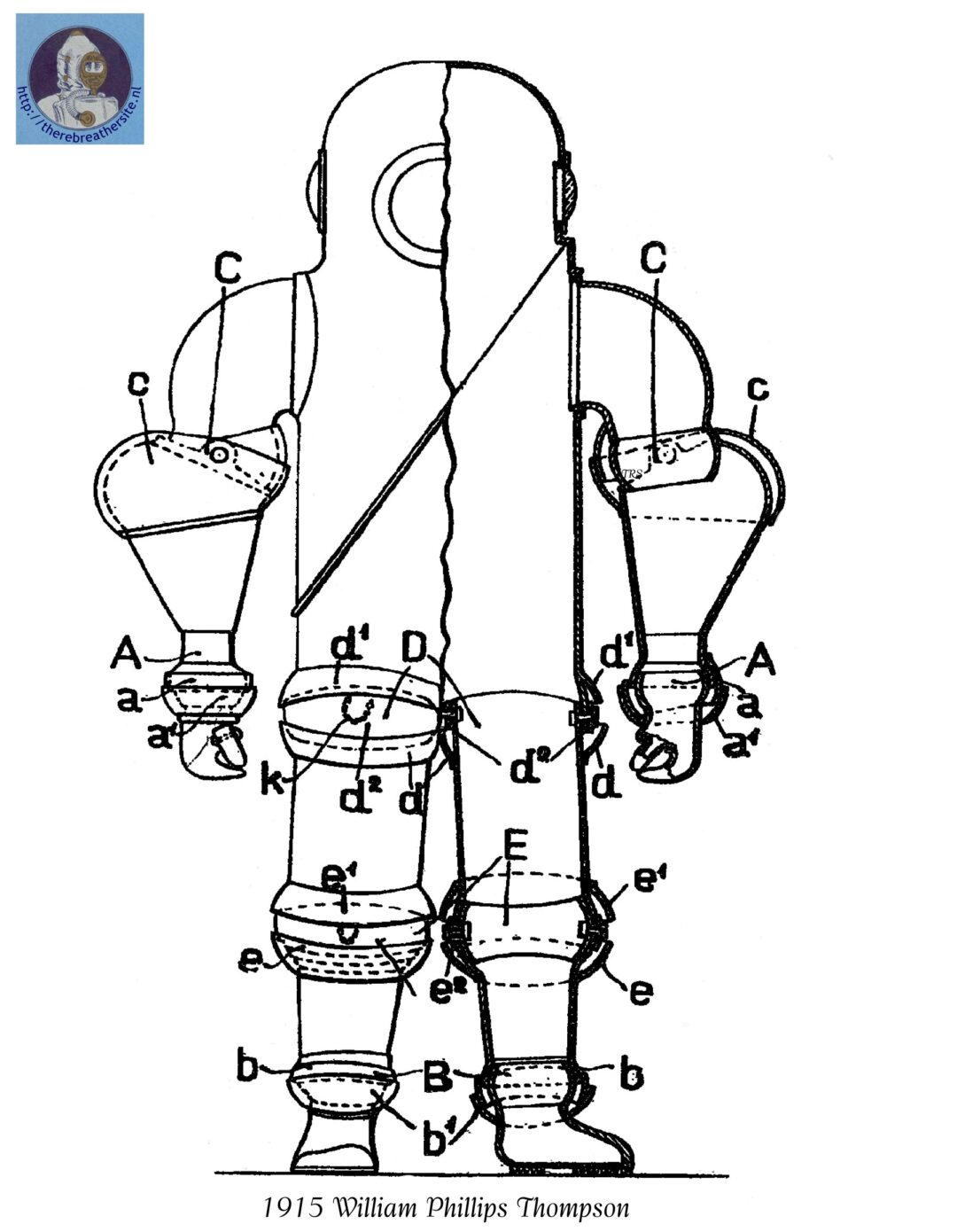
    William Phillips Thompson, an American inventor from Philadelphia, patented a protective spherical shell covering the waterproof closed ball joints of a diving suit.

  66. USN - USS F-4 (SS-23) sank off Honolulu, Hawaii
    25 March 1915

    USN - USS F-4 (SS-23) sank off Honolulu, Hawaii

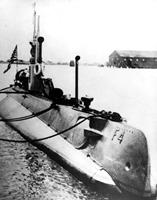
    During submarine manoeuvres off Honolulu, Hawaii, the USS F-4 (SS-23) sank at a depth of 93 metres (305.1 ft), 1.3 nautical miles (2.4 kilometres) from the harbour; tragically, all 21 sailors perished.

  67. William S. Boyd
    1916

    William S. Boyd

    William S. Boyd, an American inventor from Great Kills, Richmond, New York, patented a new type of watertight joint and tool.

  68. Frank William Walters
    1916

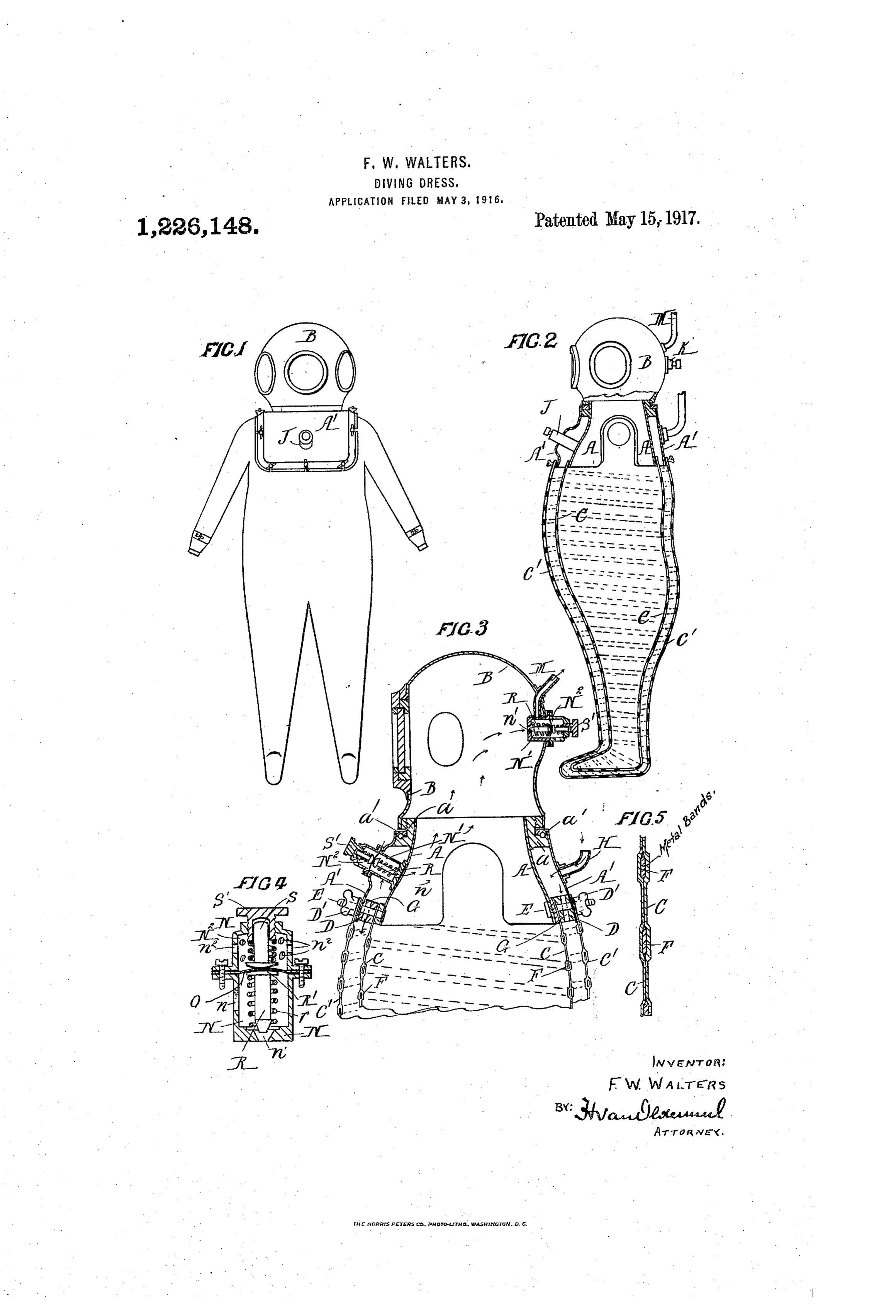
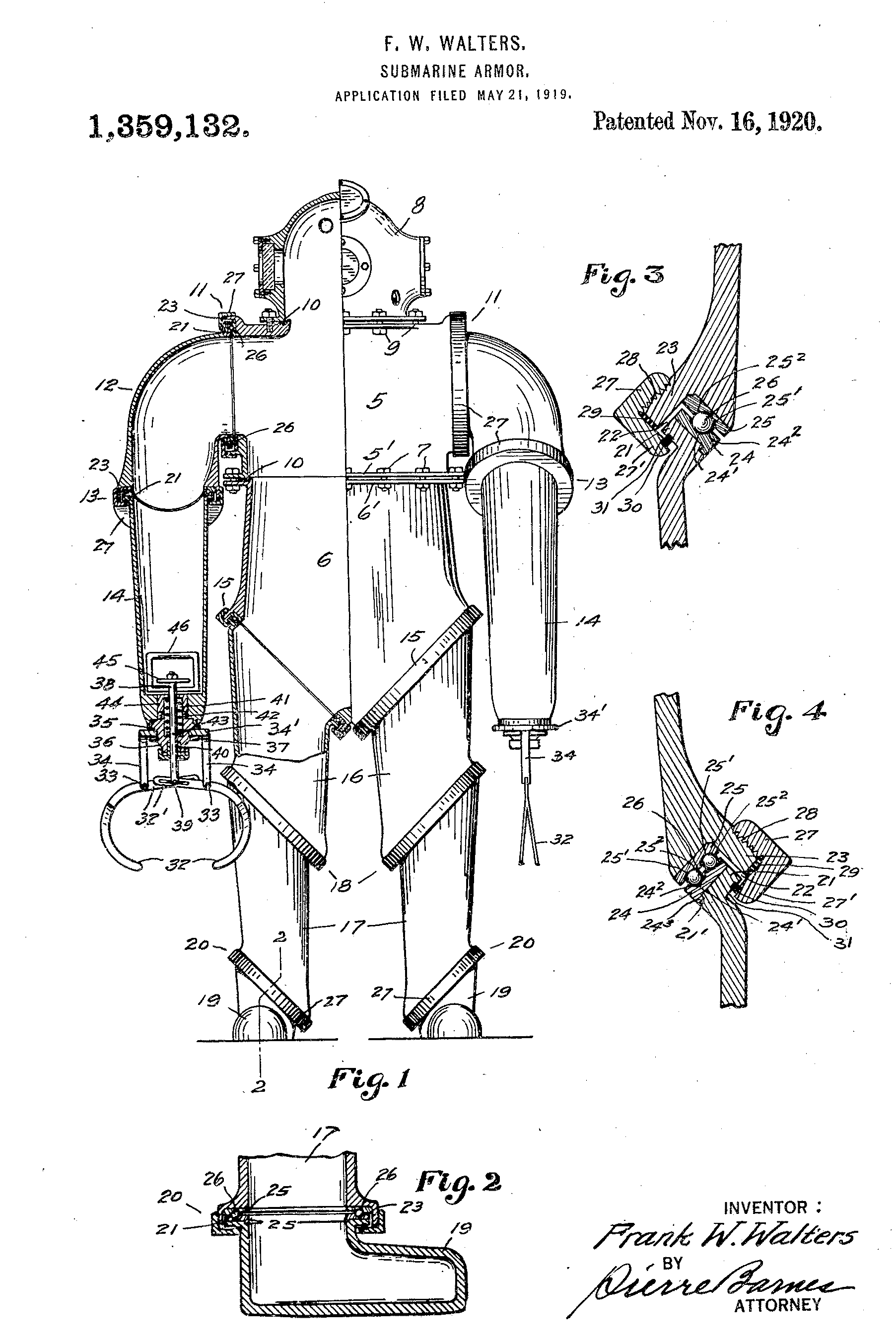
    Frank William Walters

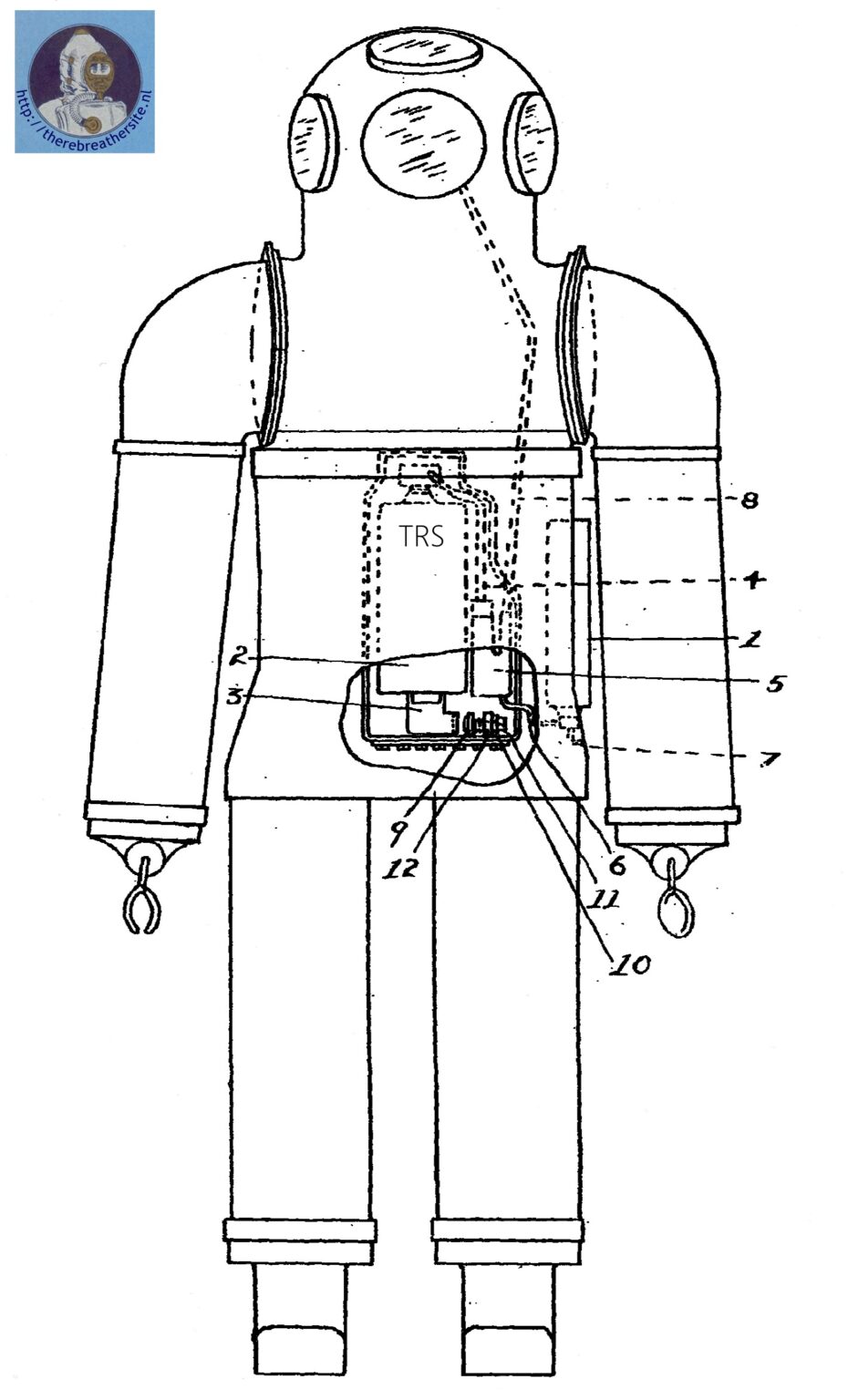
    Frank William Walters of Auckland, New Zealand, designed and patented an improved flexible diving dress intended to provide greater resistance to external water pressure.

  69. Benjamin Franklin Leavitt
    1917

    Benjamin Franklin Leavitt

    The invention patent filed 15 January 1917 (patented 13 January 1920), relates to improvements in diving apparatus, and its object is to provide a diving armour designed to permit a diver to descend to depths where the hydrostatic pressure …

  70. Rudi de Graff
    1917-1921

    Rudi de Graff

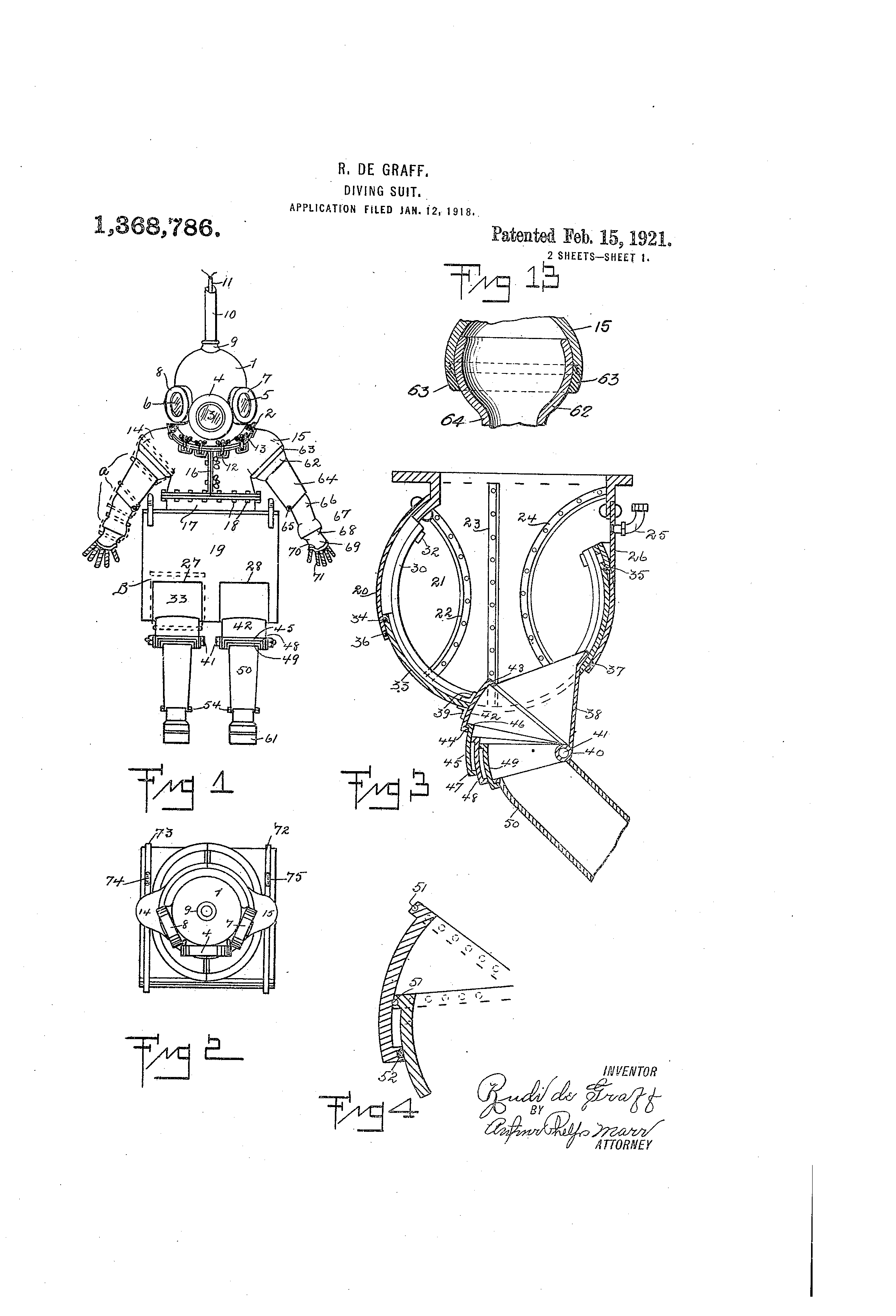
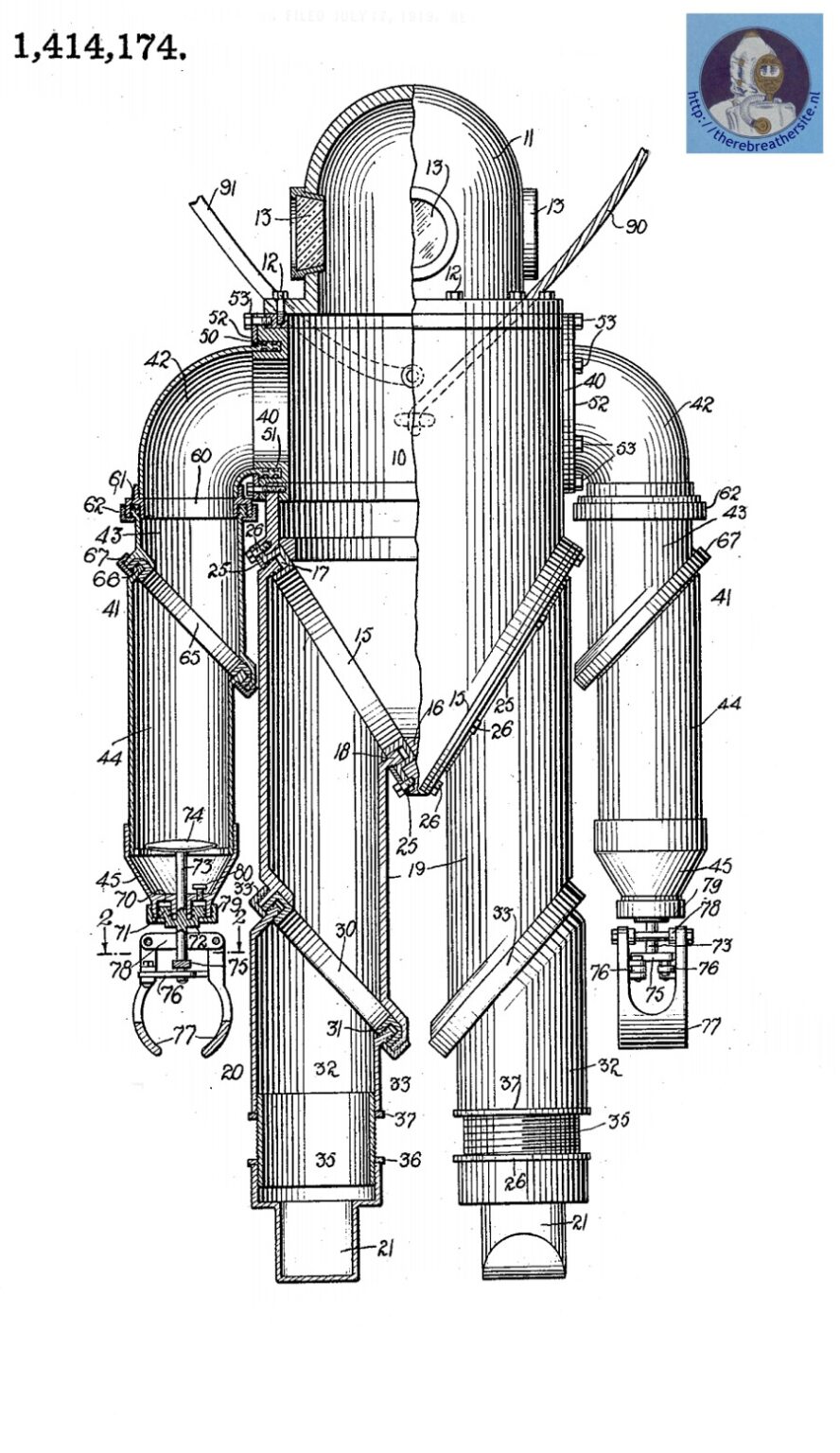
    Rudi de Graff, a citizen of the Republic of Russia and a resident of Manhattan, New York, submitted a signed patent application on 12 January 1918 for his diving armour; U.S.

  71. William John Mellersh-Jackson
    1918

    William John Mellersh-Jackson

    William John Mellersh-Jackson, from London, England, an English patent engineer and patent attorney and a partner of Haseltine Lake & Co., filed a patent application in his name for The Leavitt Diving Armour Co.

  72. James F. Long
    1919

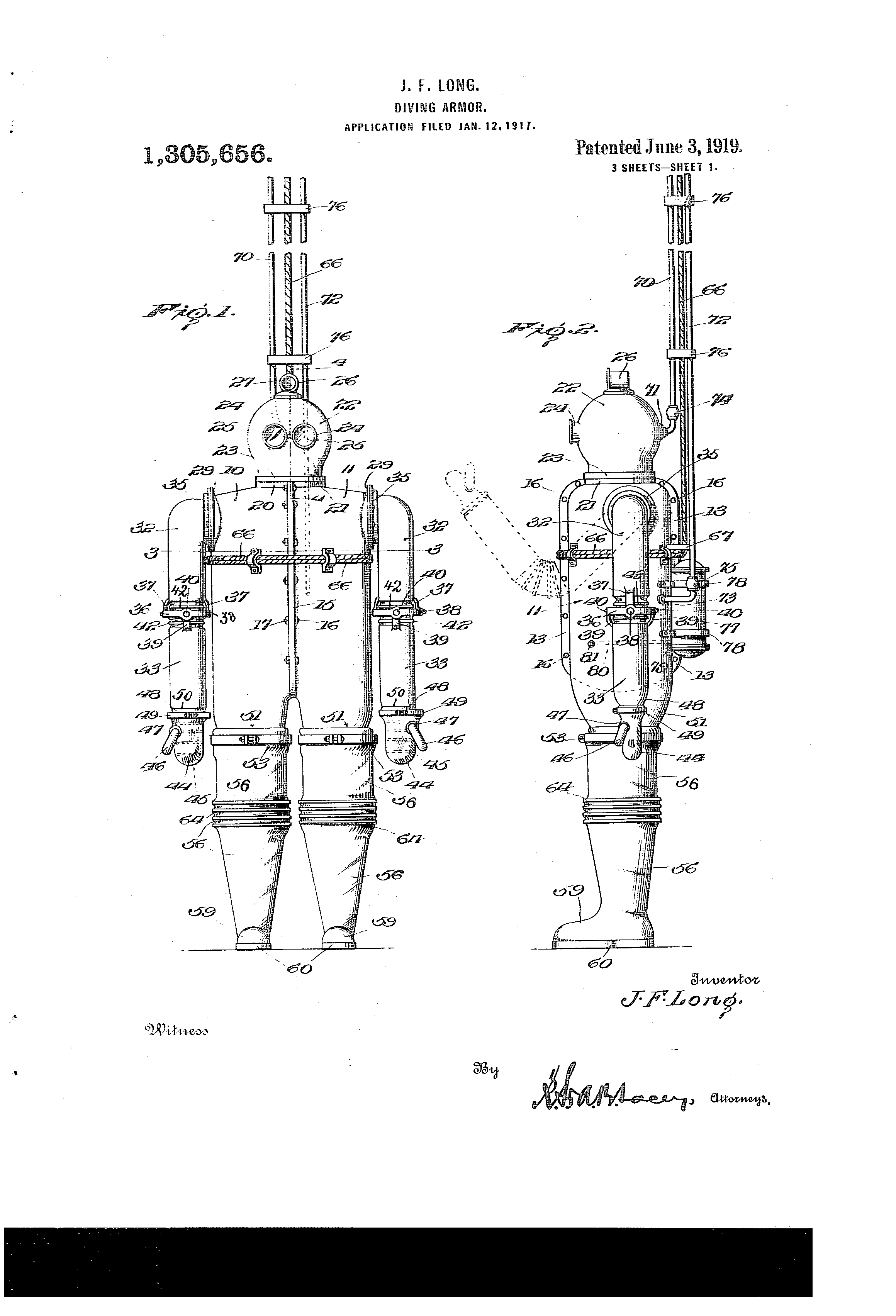
    James F. Long

    James F. Long, an inventor from Texas, USA, designed an ADS in which he achieved waterproofing by covering the metal suit with waterproof fabric.

  73. Frank William Walters
    1919 – 1920

    Frank William Walters

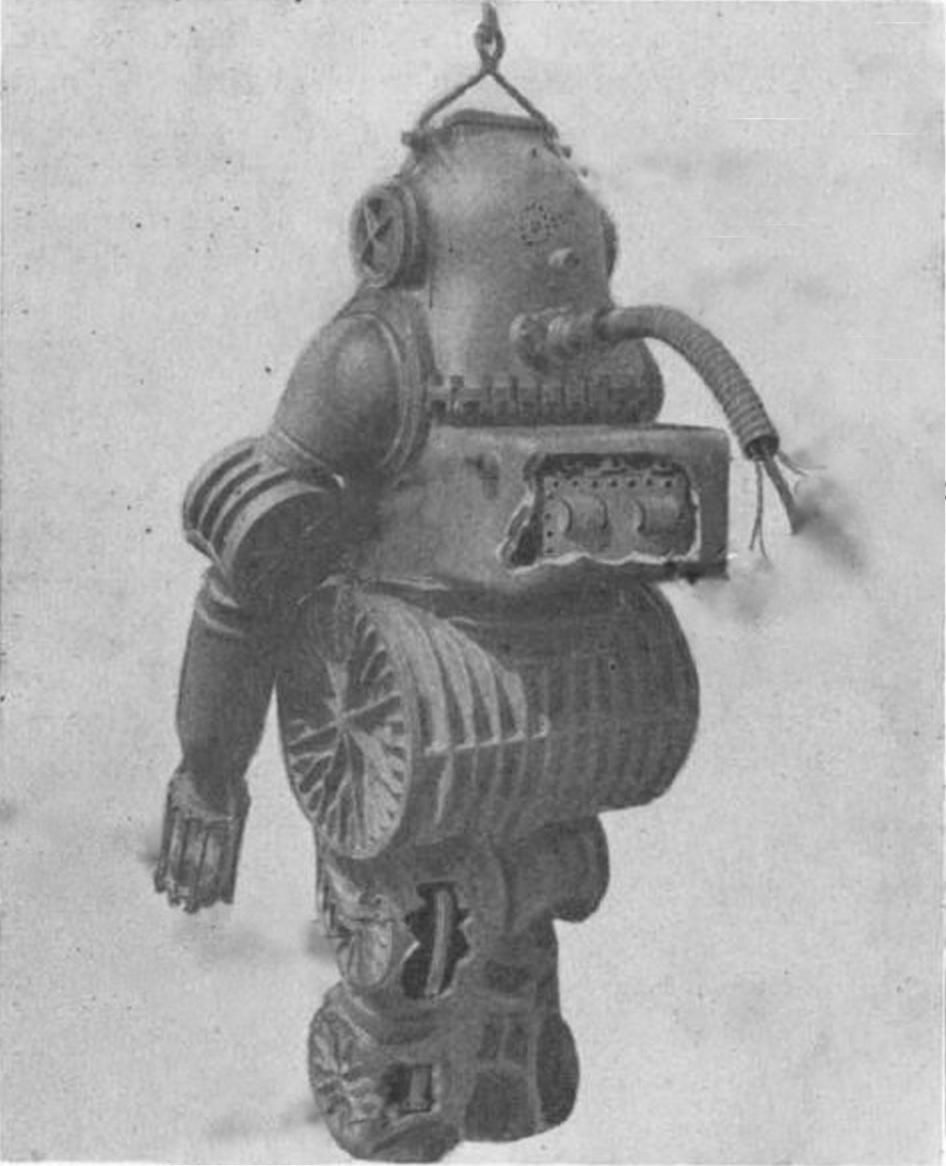
    Frank William Walters, a New Zealander, patented in Canada an improved diving suit of aluminium, rated to either 107 metres (351 ft) or possibly 120 metres (394 ft).

  74. J. Vaimel
    1920

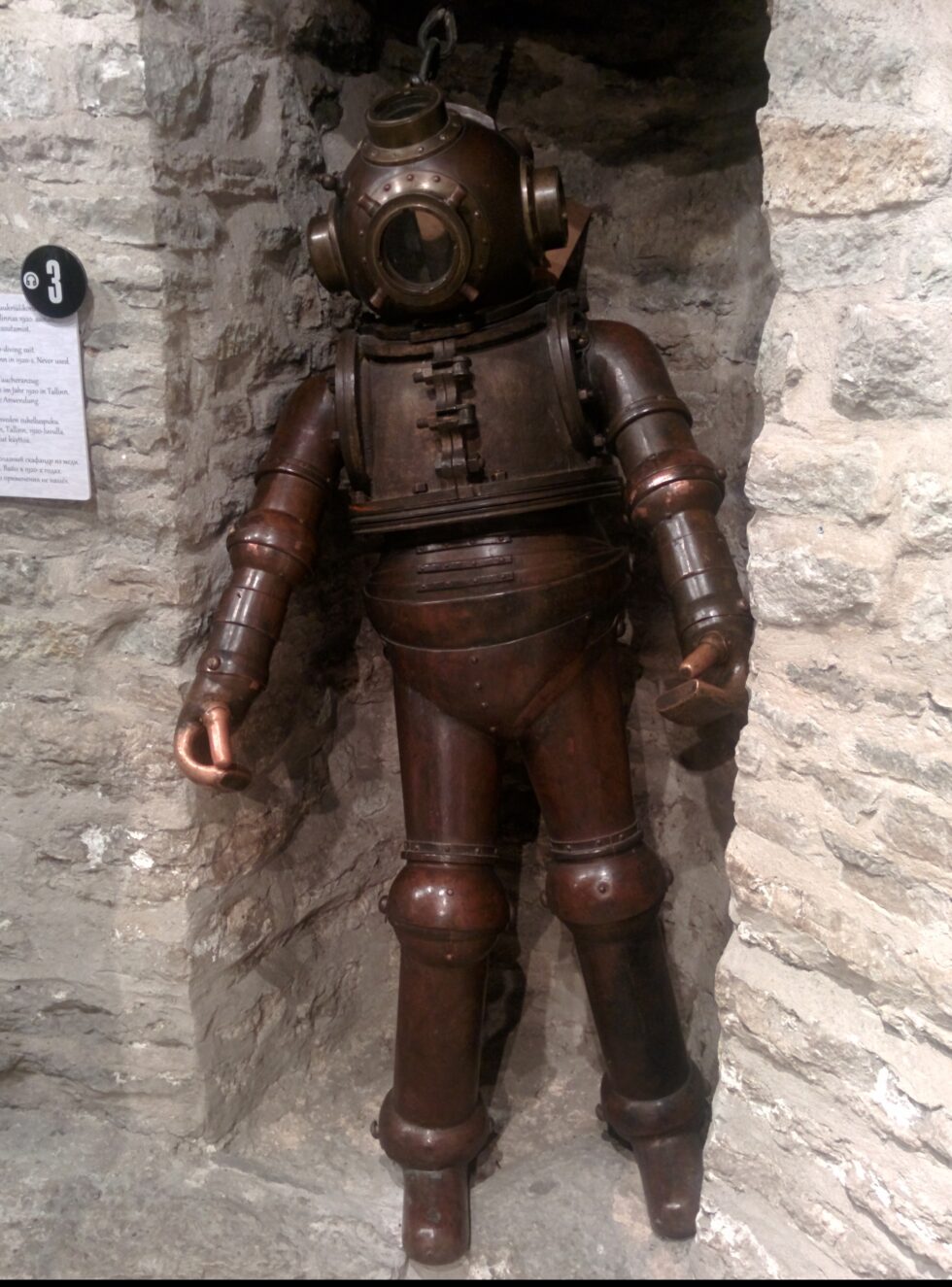
    J. Vaimel

    J. Vaimel, a professional diver from Tallinn, Estonia, designed a copper diving suit that weighed 240 kilograms (529.1 pounds).

  75. First efficient rigid suit combinations
    1920

    First efficient rigid suit combinations

    The first efficient rigid suit combinations began to appear.

  76. Joseph Salim Peress
    1921

    Joseph Salim Peress

    Joseph Salim Peress, a British marine engineer of Persian ancestry and birth who spent his youth in the Middle East, where he witnessed pearl diving in the Persian Gulf, relocated to the United Kingdom in 1914 at age 18 for employment.

  77. Arthur Phelps Marr
    1921

    Arthur Phelps Marr

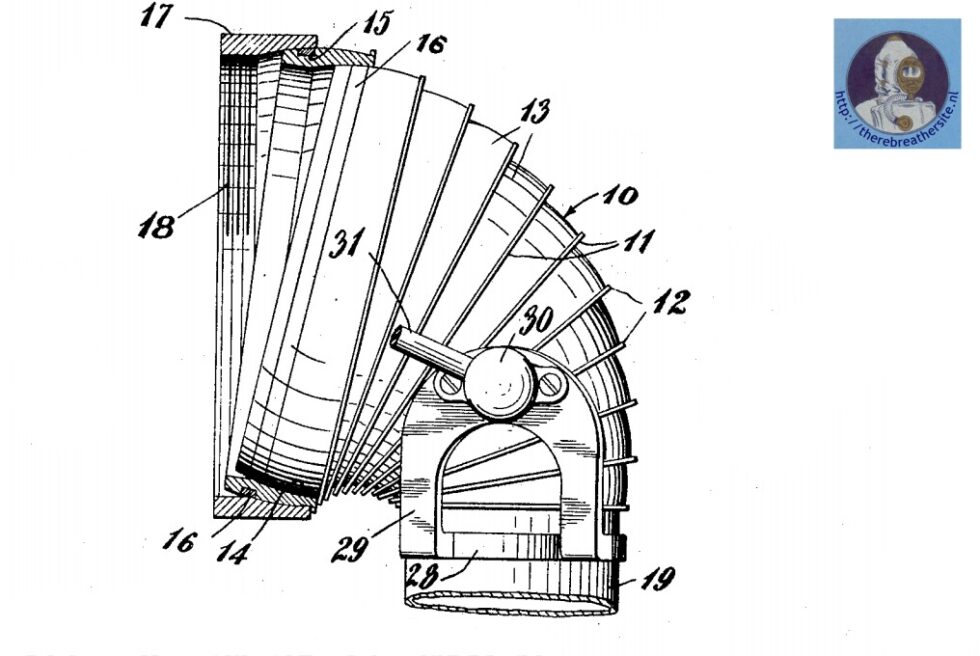
    Arthur Phelps Marr, an American inventor from Brooklyn, County of Kings, New York, patented an improved non-collapsible flexible joint for diving armour whose principal object was to provide a joint that permitted a limb to bend while …

  78. Manfred Carlon
    1921

    Manfred Carlon

    Manfred Carlon, a Swedish inventor from Stockholm, Sweden, patented a watertight device for jointed pipe connections, in which the organs jointed to one another are encompassed entirely by watertight flexible inner and outer walls attached …

  79. Henry D. Deam
    1921

    Henry D. Deam

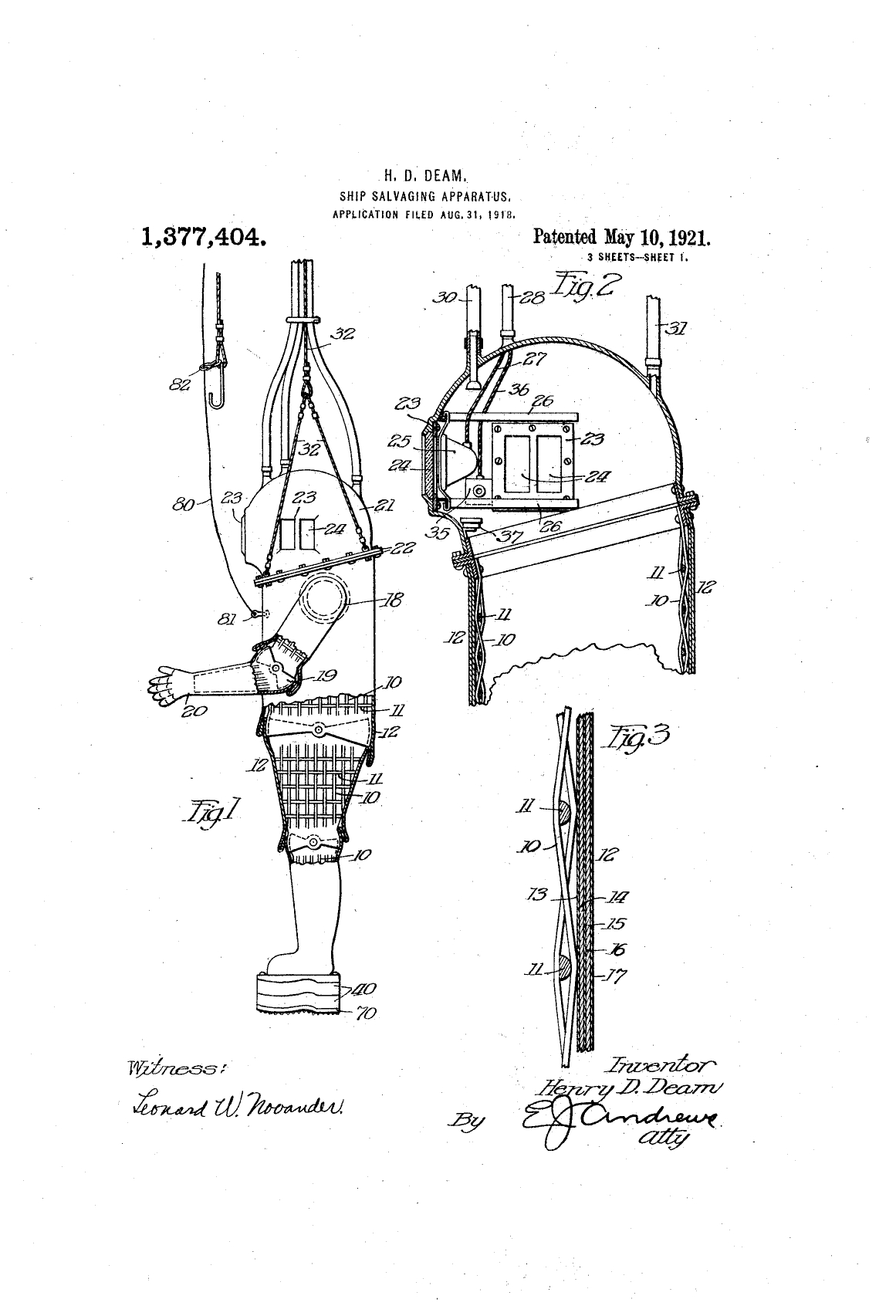
    Henry D. Deam, an American inventor from Benton Harbor, county of Berrien, State of Michigan, designed and patented an enclosed observation chamber/diving bell for ship salvaging at great depths.

  80. Josef Kamieniecki
    1921

    Josef Kamieniecki

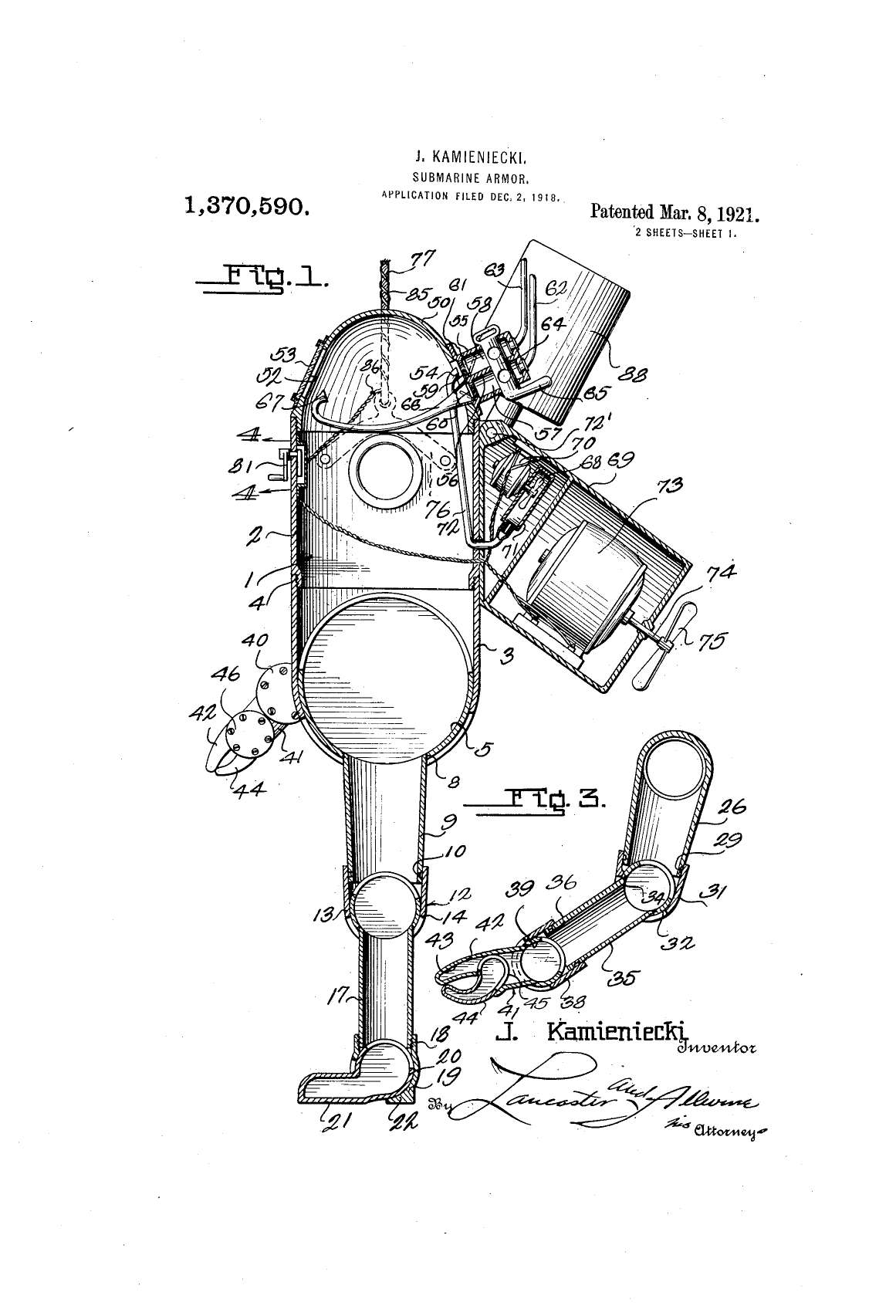
    Josef Kamieniecki, a Russian immigrant and American inventor residing in Chicago, Illinois, patented an armoured suit with an electrically driven fan that recirculated air and an electrically driven propeller/thruster to propel the suit …

  81. Maximillian Charles Schweinert
    1922

    Maximillian Charles Schweinert

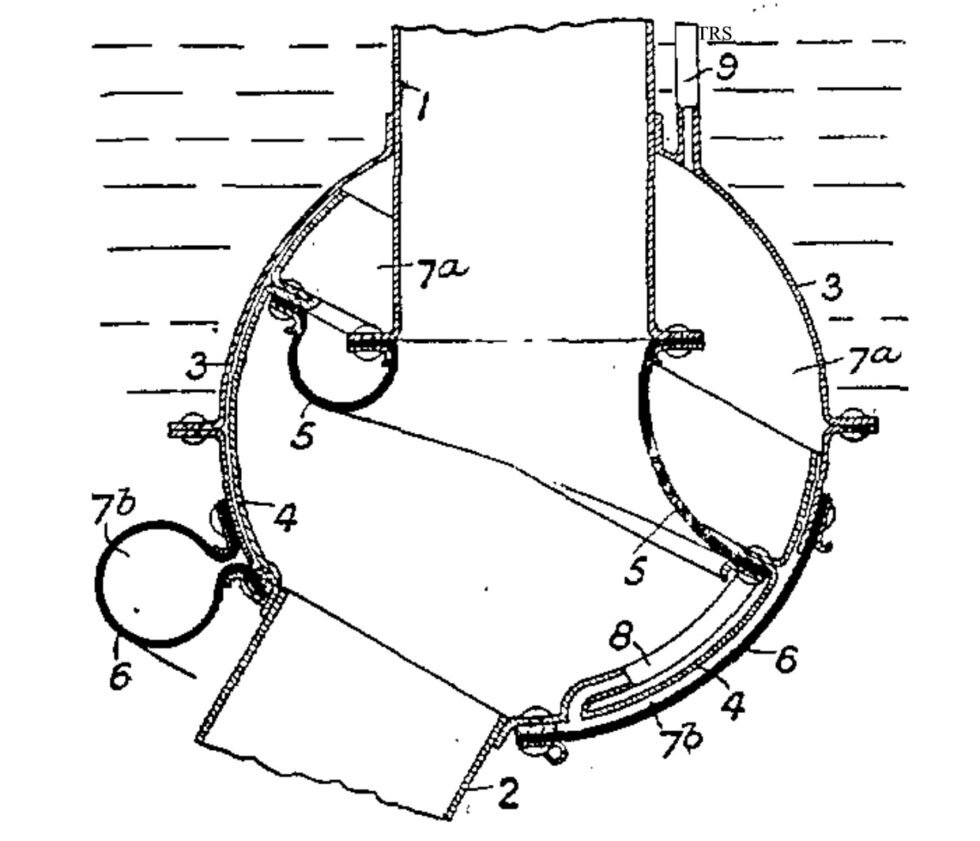
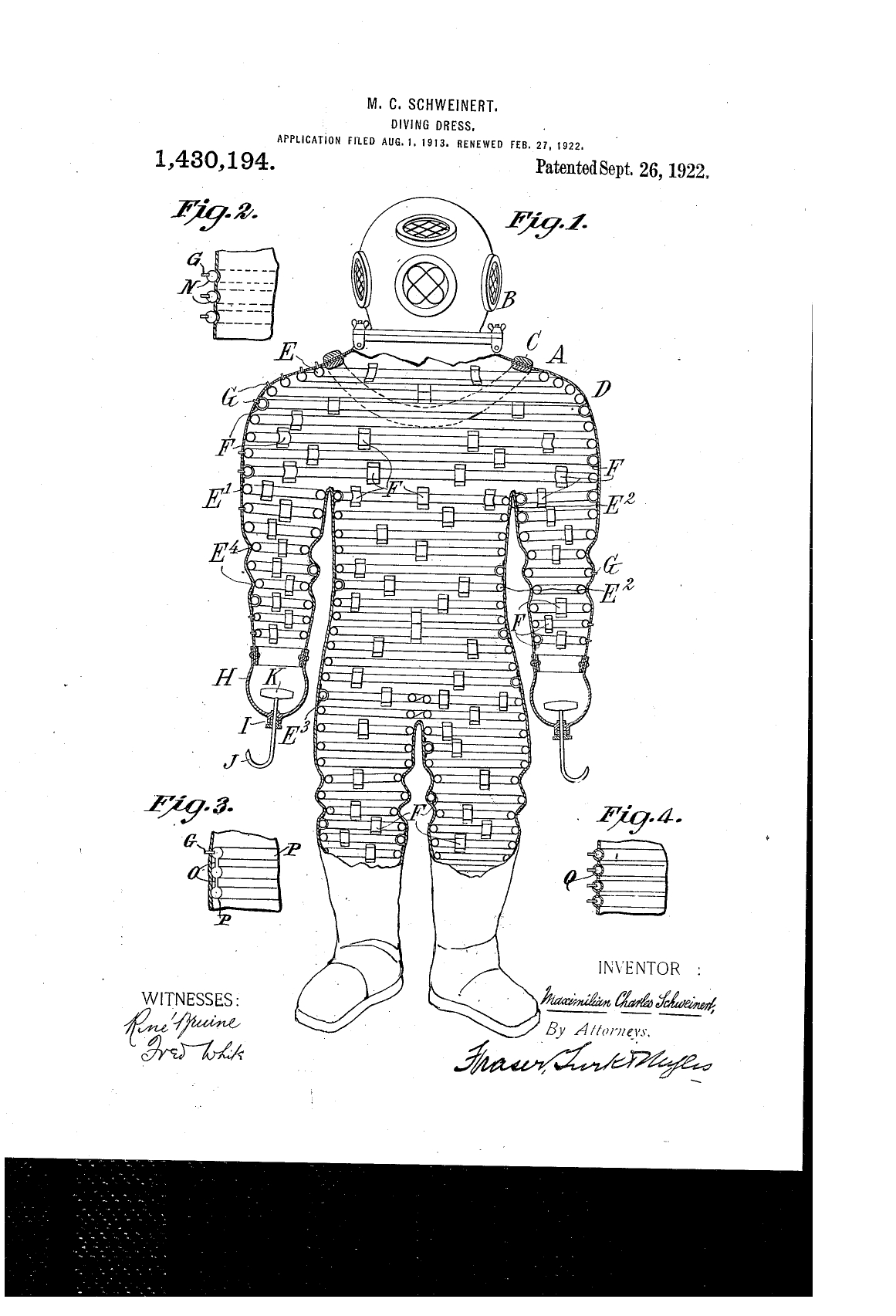
    Maximillian Charles Schweinert, an American residing in New York, designed and patented a suit featuring inflatable rings to resist water pressure, thereby reducing the pressure of the supplied breathing air.

  82. Joseph de Saint Martin
    1922

    Joseph de Saint Martin

    Joseph de Saint Martin, a Frenchman, proposed the idea of cushioning the water pressure by putting a skeleton-like construction around the diver.

  83. Walter Carlitscheck and Otto Zander
    1922

    Walter Carlitscheck and Otto Zander

    Walter Carlitscheck and Otto Zander, both Germans, designed a system whereby divers could expel exhaled air outside the suit via an ejector, eliminating the return hose that had to be routed from the suit to the surface to vent exhaled air.

  84. Victor Armijo Campos
    1922

    Victor Armijo Campos

    Victor Armijo Campos, a Mexican national residing in New York, United States, designed, built and patented an atmospheric diving suit with oil-filled rotary joints, which were not pressure-compensated.

  85. Giuseppe Gabanna
    1922-1925

    Giuseppe Gabanna

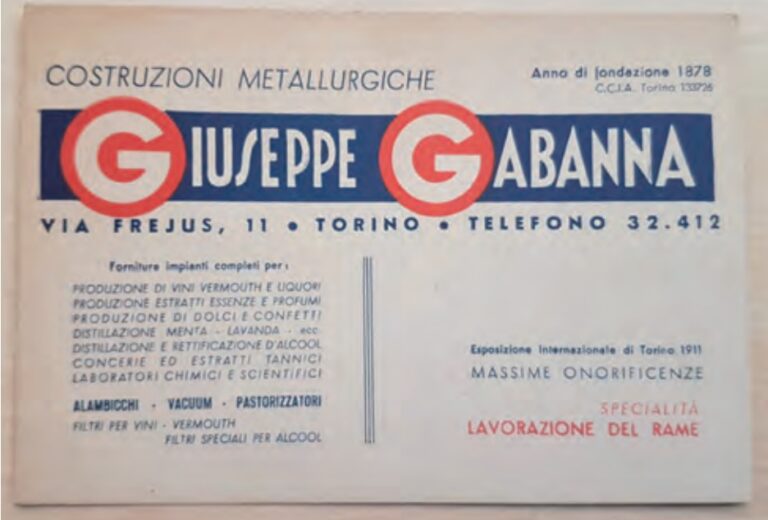
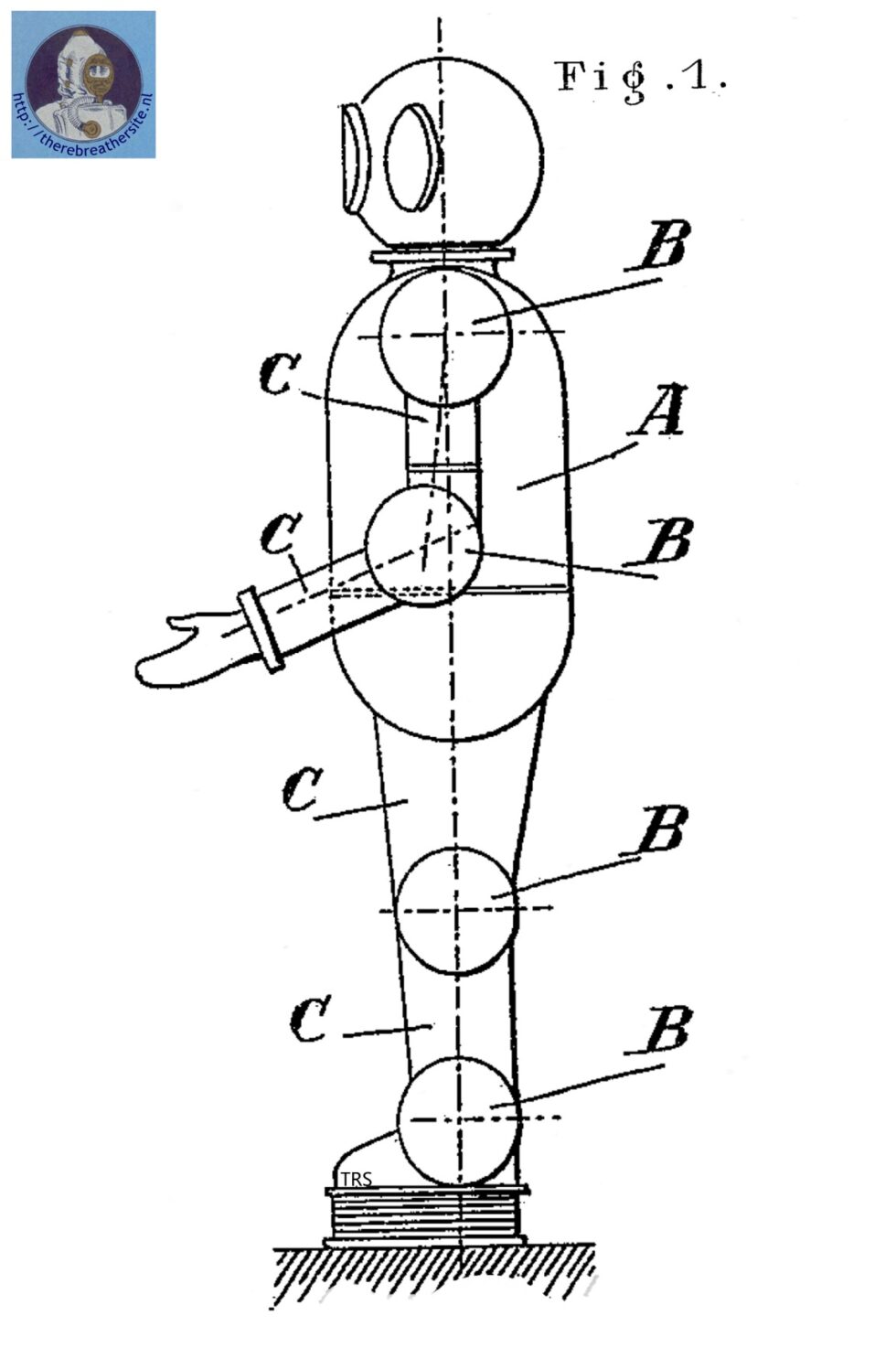
    Giuseppe Gabanna, an Italian self-taught coppersmith, metalworker and inventor residing in Via Massena 70, Turin, designed an atmospheric diving suit (Per Emulare I Pesci/To Emulate the Fish).

  86. Octave Quenault and Gabriel Roux
    1923

    Octave Quenault and Gabriel Roux

    Octave Quenault and Gabriel Roux, two Frenchmen residing in France, redesigned a metal diving suit under a rubber outer suit.

  87. Maxwell McGuinness and Herbert Tasman Davies
    1924

    Maxwell McGuinness and Herbert Tasman Davies

    Maxwell McGuinness and Herbert Tasman Davies, two Englishmen living in London, designed a pneumatically operated atmospheric diving suit, which received a patent in 1926.

  88. Verena Winifred Holmes
    1925

    Verena Winifred Holmes

    Verena Winifred Holmes, an English mechanical engineer and inventor from Ashford, Kent, patented an improved rigid Diving Suit or Diving Armour with excellent design qualities.

  89. Bernhard Dräger
    1926

    Bernhard Dräger

    Bernhard Dräger, a German from Lübeck, patented a cardan-type joint that formed a seal with two diaphragms.

  90. Hermann Ahrens
    1926

    Hermann Ahrens

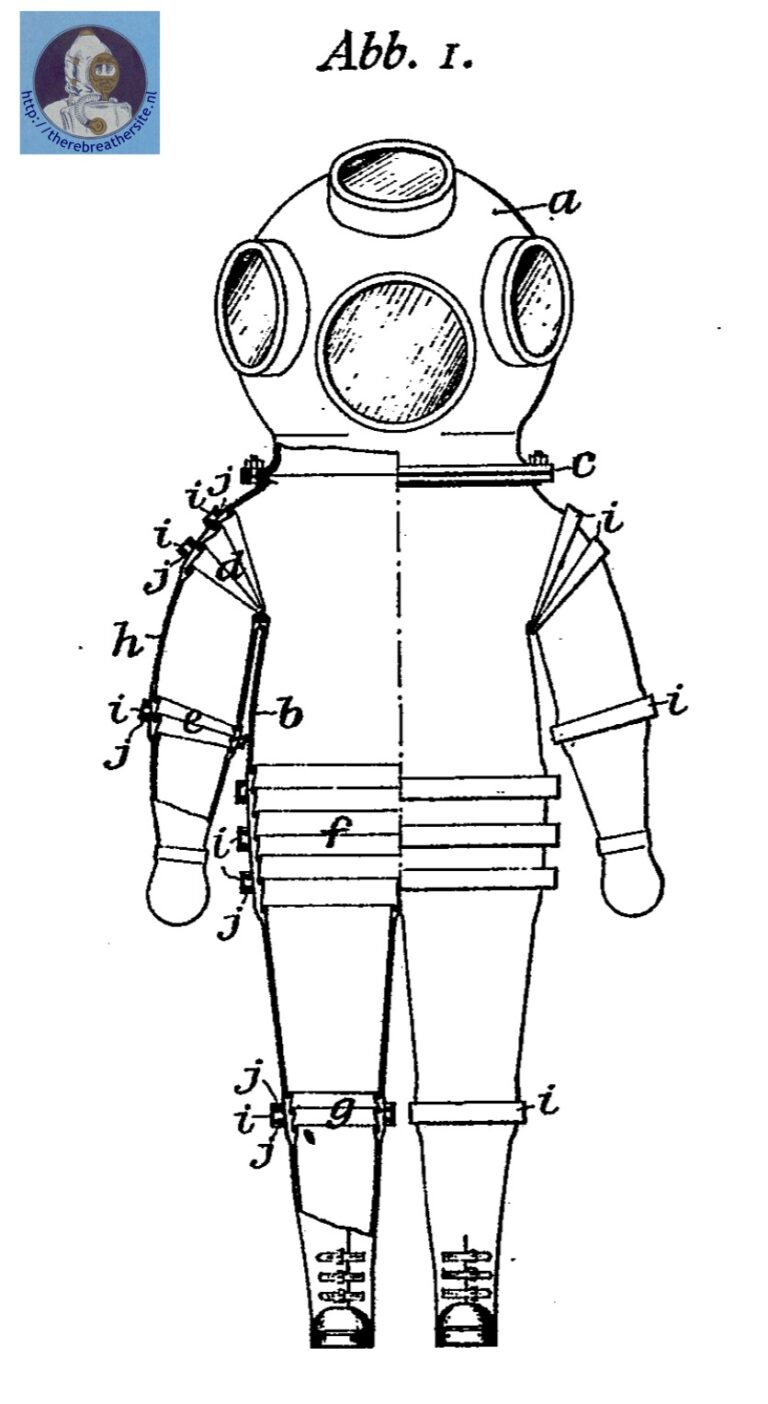
    Hermann Ahrens, a German from Stuvenborn, Holstein, patented an armoured diving suit with movable articulated links enclosed in a waterproof, airtight elastic fabric casing, characterised in that the casing maintained a certain distance …

  91. Karl Hipssich
    1927

    Karl Hipssich

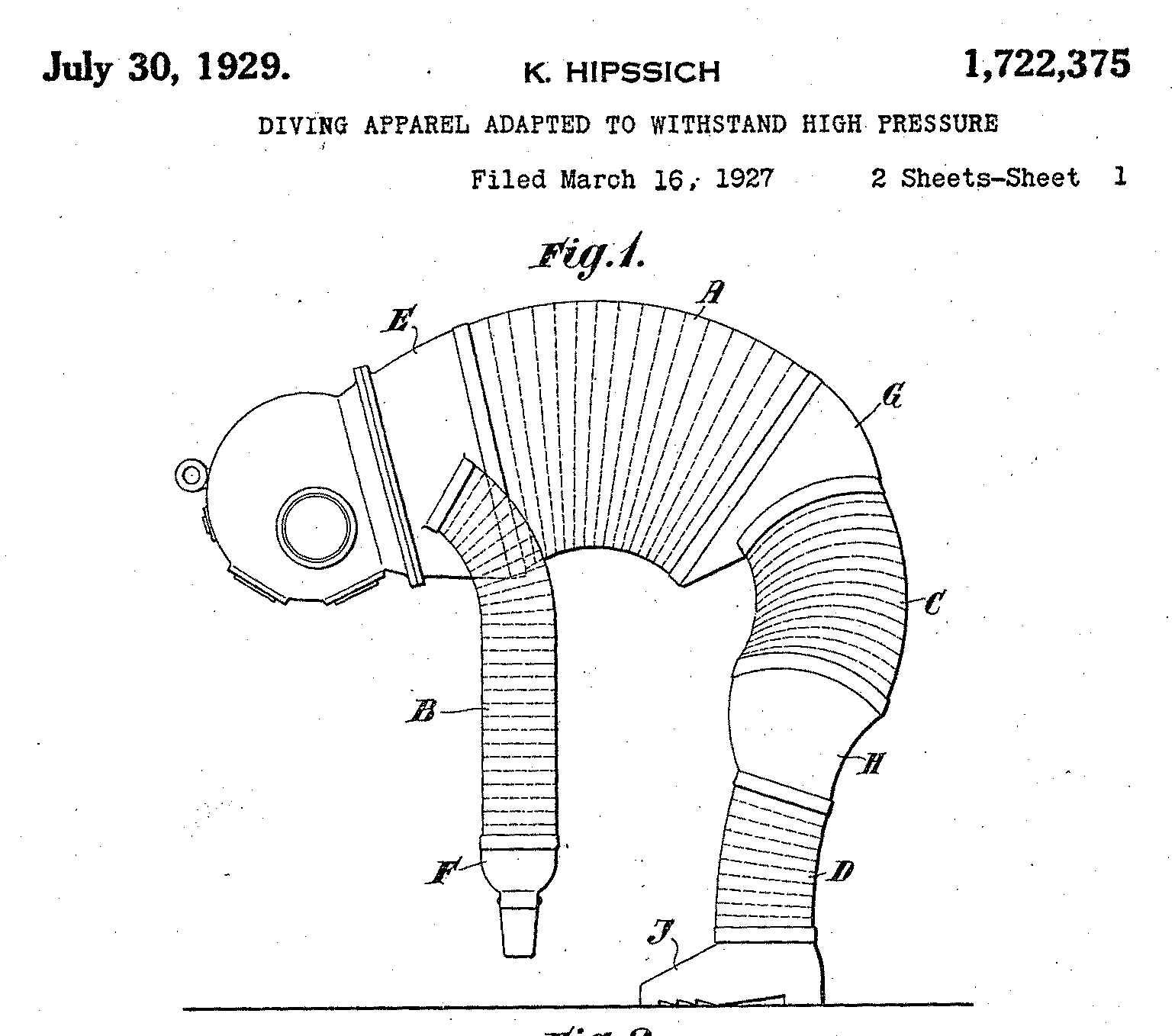
    Karl Hipssich, a German from Hamburg, designed a novel form of diving apparel (French patent published in 1927) (US patent published in 1929) in the form of a diving suit and adapted to withstand high external pressure, comprising, in …

  92. Ernest Reginald Clifford
    1928

    Ernest Reginald Clifford

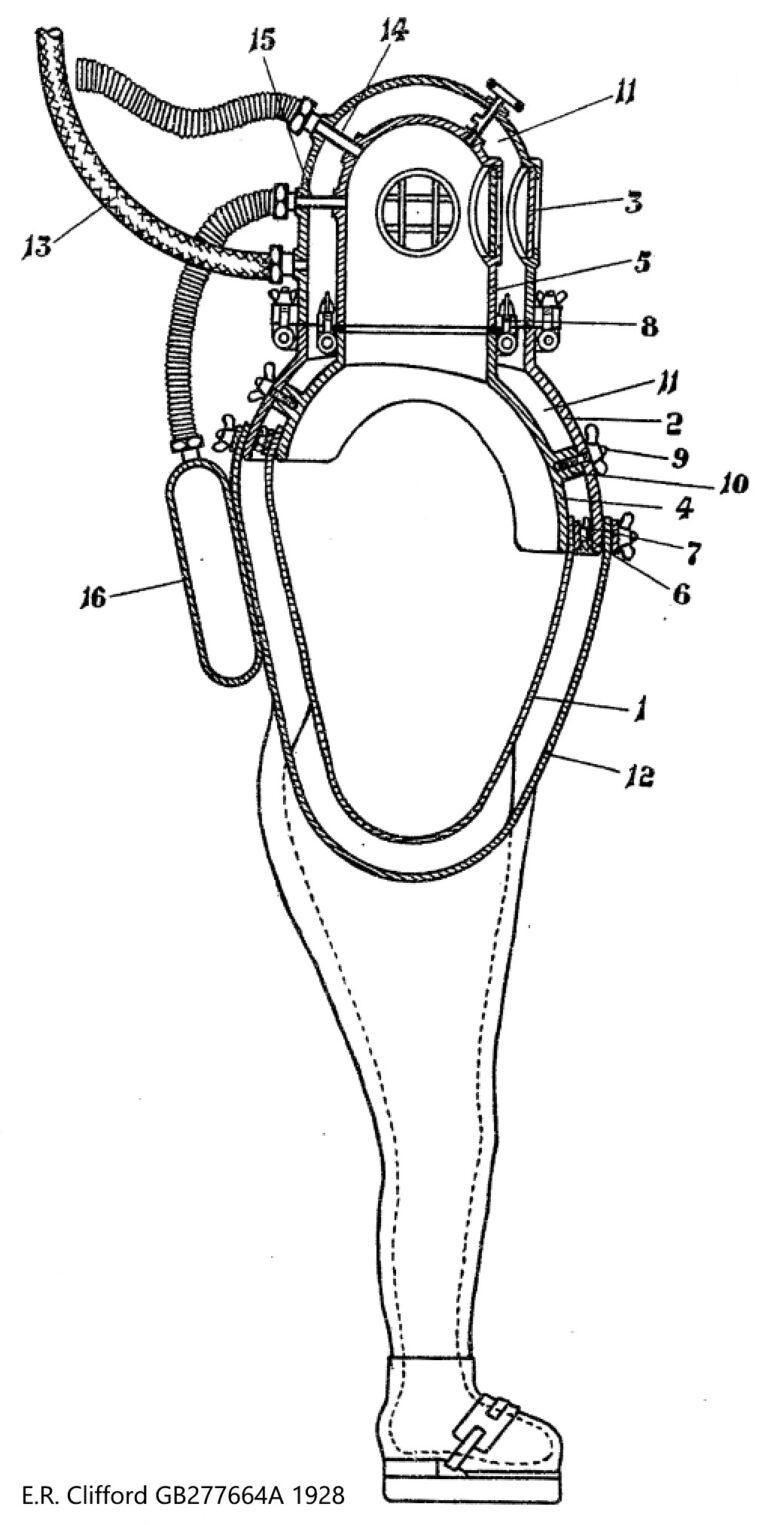
    Ernest Reginald Clifford, an Australian from Victoria, patented a divers' dress comprising an inner and outer rigid corselet and an inner and outer rigid helmet, the space between forming an outer high-pressure zone to support external …

  93. Merritt - Chapman & Scott Corporation, California, USA
    1929

    Merritt - Chapman & Scott Corporation, California, USA

    Diver Rigden Crawford conducted the first offshore oil exploration dive. (California, USA).

  94. Royal Navy
    June 1929

    Royal Navy

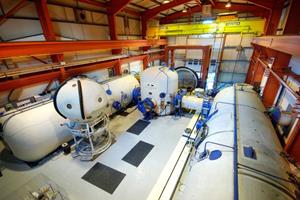
    The third key evolutionary step in the development of today's diving technology. The Admiralty tested a new submersible decompression chamber (diving bell) operated from HMS Tedworth in Loch Long, Scotland.
  95. Vivian Roy McBride
    1930

    Vivian Roy McBride

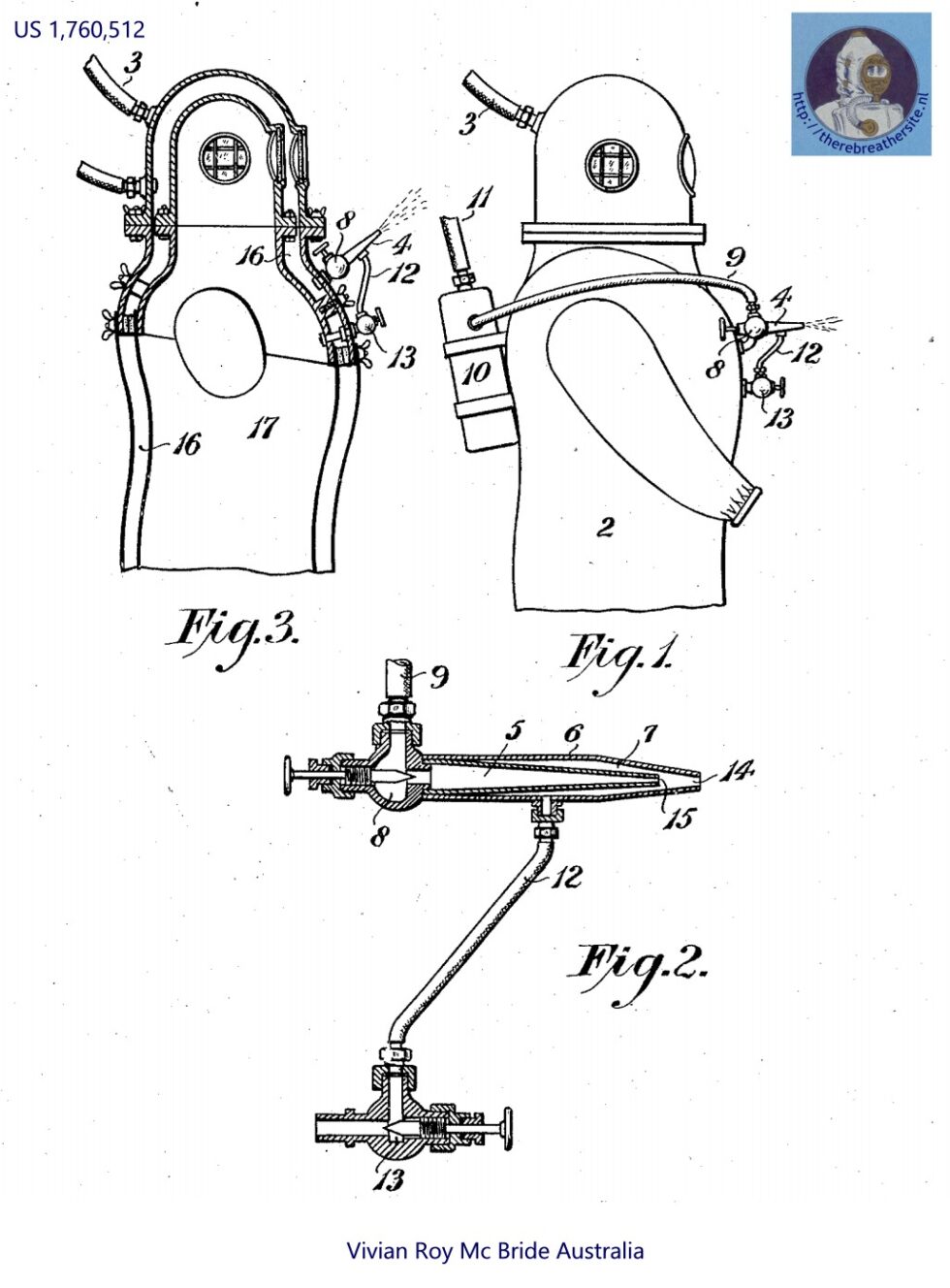
    Vivian Roy McBride, an Australian inventor from Melbourne, Victoria, along with co-inventor Harry Richard Ward, also from Melbourne, invented an injector-type air pump that increased the low pressure of exhaled air in a diver's inner suit …

  96. Royal Navy
    June 1930

    Royal Navy

    Royal Navy divers T. Bell, W.H Davidson and L.S. Oliver dived to 100 metres (328 ft).

  97. Carl Haven Wiley and Elbert H. Wiley — Wiley Diving Bell
    1931 – 1934

    Carl Haven Wiley and Elbert H. Wiley — Wiley Diving Bell

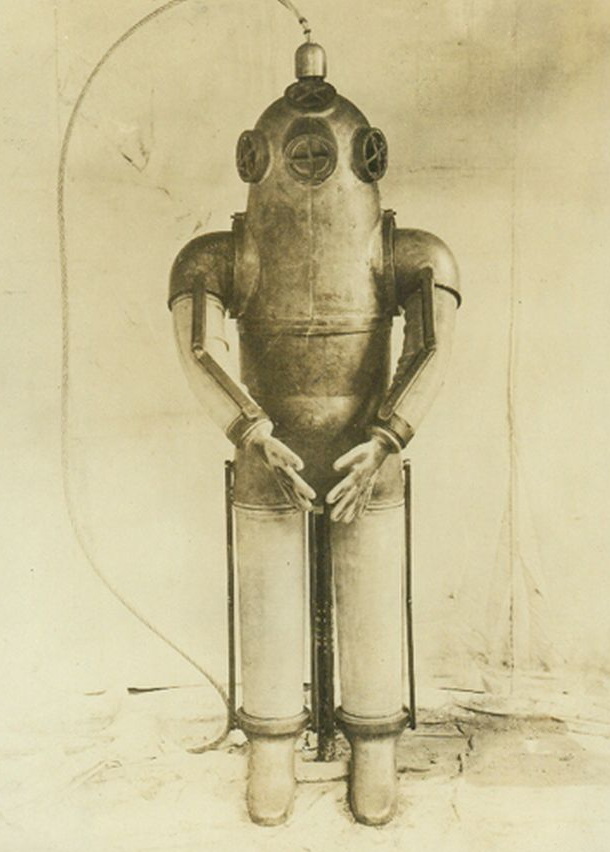
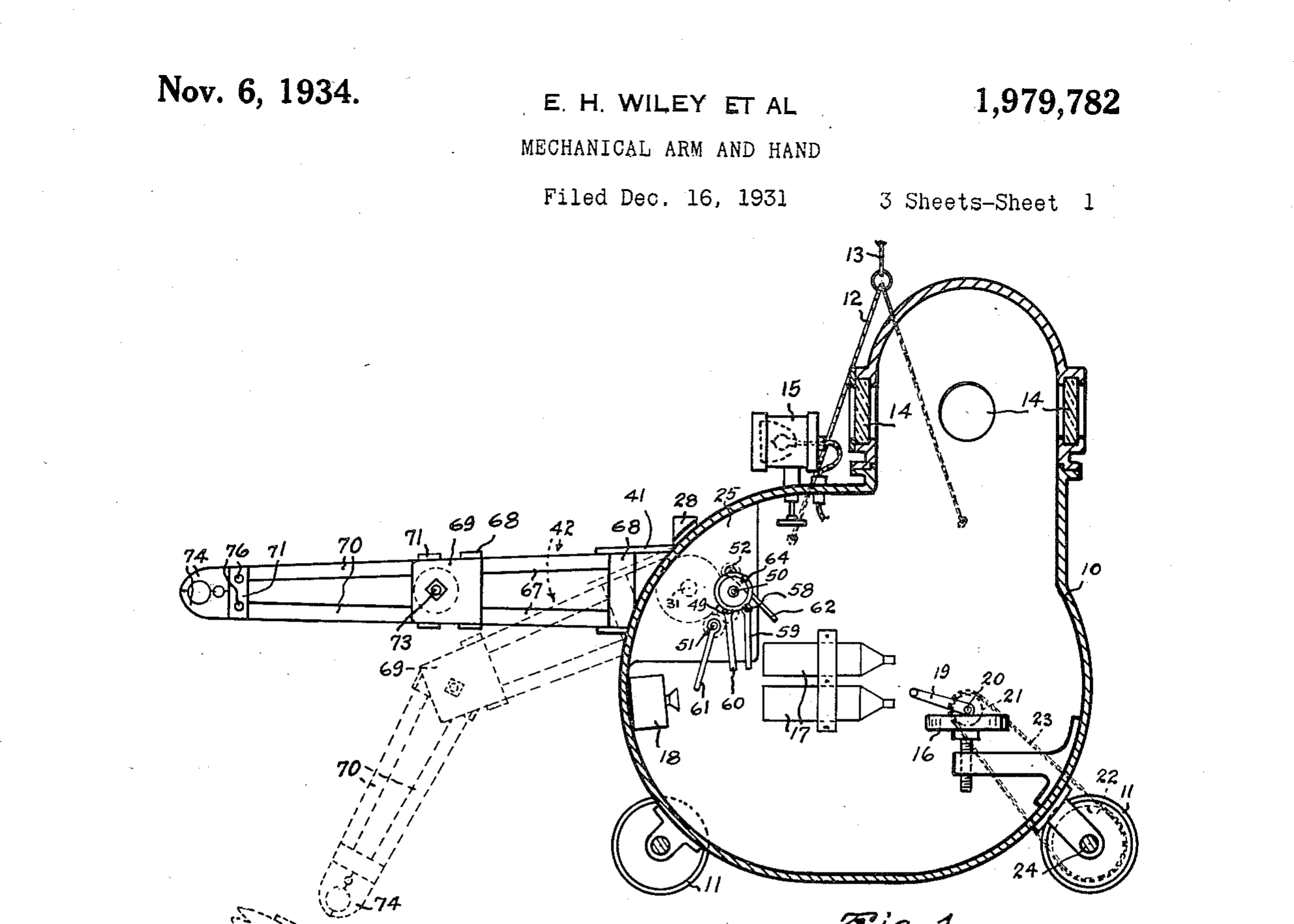
    Carl Haven Wiley and Elbert H. Wiley, of Seattle, Washington, inventors and owners of the Curtis-Wiley Marine Salvors, designed and built the fascinating functional Wiley Diving Bell, which was not actually a bell.

  98. Royal Navy
    1932

    Royal Navy

    The Cold & the Bold. Royal Navy diver Hilton reached 105 metres (344.5 ft).
  99. The Second Admiralty
    1933

    The Second Admiralty

    Committee on Deep Water Diving Report confirmed that the Royal Navy had produced decompression tables for diving to 91 metres (298.6 ft) on air using the flexible dress in conjunction with their Submersible Decompression Chamber (SDC), and …

  100. Empire Marine Salvage — Iron Mike
    1934

    Empire Marine Salvage — Iron Mike

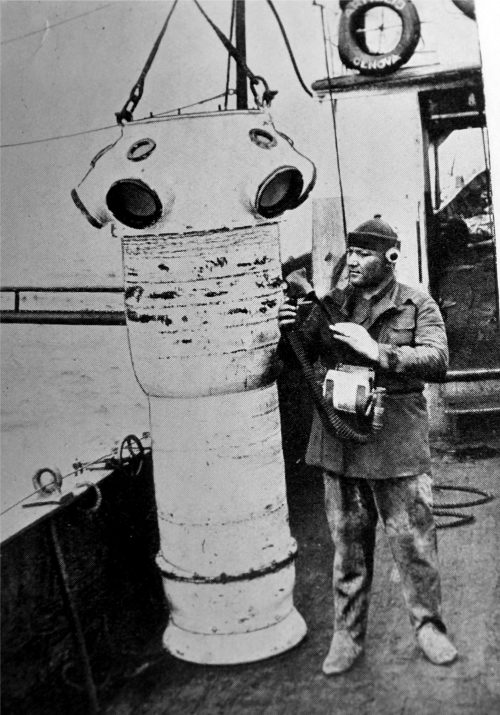
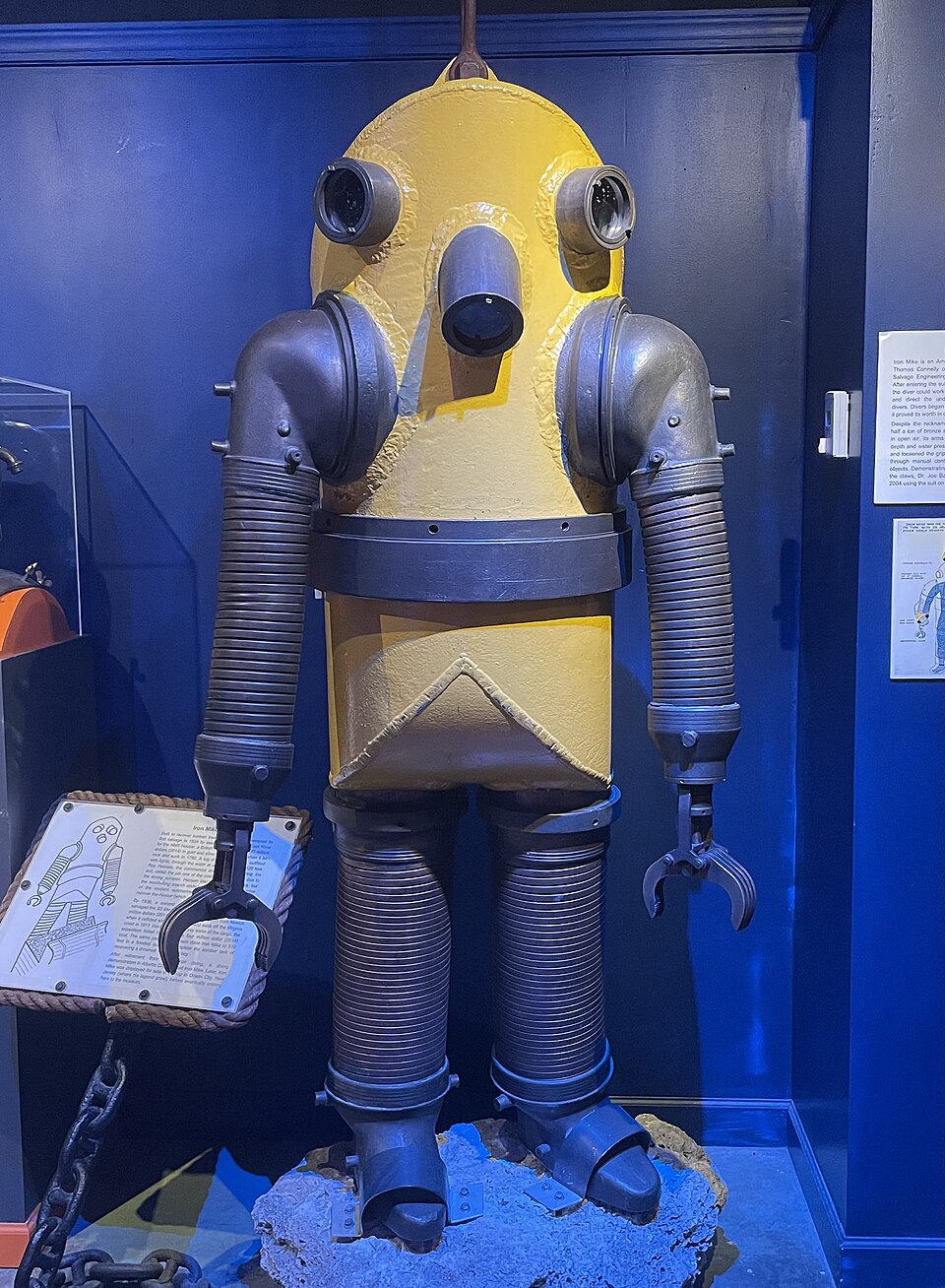
    The Empire Marine Salvage and Engineering Corporation of New York City, headed by Thomas P. Connelly, built the Iron Mike in the early 1930s.

  101. USA
    01 December 1937

    USA

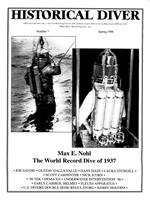
    The fourth key evolutionary step in the development of today's diving technology.

  102. USN
    1945

    USN

    United States Navy divers reached 160 metres (525 ft) using a breathing mixture of oxygen and hydrogen.

  103. Jacques-Yves Cousteau and Émile Gagnan — the Aqua-Lung
    1945

    Jacques-Yves Cousteau and Émile Gagnan — the Aqua-Lung

    During World War II, Jacques-Yves Cousteau and Émile Gagnan transformed underwater exploration by inventing and refining the Aqua-Lung, the first reliable commercially successful

  104. Soviet Union
    April 1945

    Soviet Union

    Naval divers successfully reached 200 metres (656.2 ft) breathing mixed gas. This was unknown to the Western nations because it was classified as a state secret.

  105. Royal Swedish Navy (HYDROX)
    07 August 1945

    Royal Swedish Navy (HYDROX)

    Arne Zetterstrom carried out a dive using a flexible dress from the vessel HMS Belos of the Royal Swedish Navy in the Baltic Sea.

  106. Royal Navy diver
    1948

    Royal Navy diver

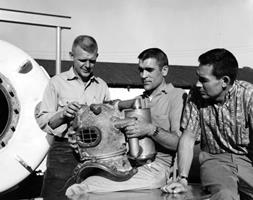
    On Saturday, 28 August 1948, within three months of HMS Reclaim commissioning, Petty Officer (D2) Wilfred Bollard dived to 163 metres (534.8 ft) in Osterfjorden.

  107. USN
    1949

    USN

    Eleven U.S. Navy divers are reported to have dived to 170 metres (557.7 ft) for a "few minutes," breathing a mixture of hydrogen, helium and oxygen using a semi-open circuit hard hat.

  108. Bev Morgan made his first demand-regulated diving mask.
    1949

    Bev Morgan made his first demand-regulated diving mask.

    He made his first prototype demand-regulated full-face diving mask, the Morgan Mask Experimental 2 (MMX-2), in 1961, by modifying his 1961 fibreglass free-flow prototype (MMX-1) and adding a Sportsways regulator second stage.

  109. Robert Kirby made his first demand-regulated diving mask.
    1950 – 1956

    Robert Kirby made his first demand-regulated diving mask.

    The mask Kirby designed had been inspired by a mask made of stainless steel made by a Henry Hanson. After the first mask appeared to be working well, he made ten more of them.

  110. Alfred A. (“Al”) Mikalow
    1952

    Alfred A. (“Al”) Mikalow

    Alfred A. ("Al") Mikalow constructed a surface-supported diving suit utilising ball-and-socket joint designs.

  111. US Navy Experimental Diving Unit (NEDU)
    1956

    US Navy Experimental Diving Unit (NEDU)

    Published the USN Standard compression Tables.

  112. Charles Isbell and Murray Black
    1956

    Charles Isbell and Murray Black

    Started Associated Divers Inc.

  113. Soviet Navy
    1956

    Soviet Navy

    In the Caspian Sea near the city of Baku, a naval expedition led by N.K. Krivosheenko, N.T. Koval, S.E., and Bulenkov conducted experimental descents from the MV Zangezur.

  114. Lt. George Wookey of the Royal Navy
    12 October 1956

    Lt. George Wookey of the Royal Navy

    In a Norwegian fjord, established a new depth record for a surface-supplied diver wearing an oxy-helium helmet (essentially a surface supplied rebreather) with a dive to a depth of 183-metres approx from the deep diving vessel, HMS …

  115. 12 October 1956

    (Continued)

    One of diving's true legends, George Wookey left the Royal Navy in 1967 and, having bought an old motor fishing vessel, sailed to Western Australia where he made his home.

  116. Royal Navy
    1957

    Royal Navy

    The fifth key evolutionary step in arriving at today's diving technical advancement.

  117. Al Warriner
    September 1957

    Al Warriner

    Incorporated his small diving operation in New Orleans USA as “Underwater Services” (The first formal diving company in the Gulf of Mexico).

  118. Sanford Brothers Diving Company formed
    January 1960

    Sanford Brothers Diving Company formed

    Founded in 1958 in Morgan City, Louisiana, by Thomas and Joe Sanford.

  119. “Stanford Brothers” diving company formed
    January 1960

    “Stanford Brothers” diving company formed

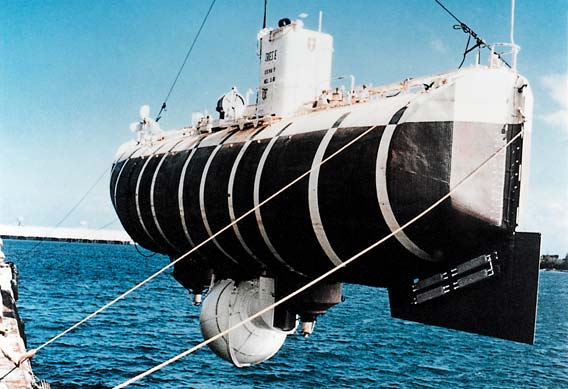
    On 23 January 1960, the bathyscaphe Trieste, piloted by Jacques Piccard and U.S. Navy Lieutenant Don Walsh, descended to the Challenger Deep, at a depth of approximately 10,916 metres (35,814 ft).

  120. Hannes Keller and Kenneth MacLeish dived to 222 metres (728 ft)
    28 June 1961

    Hannes Keller and Kenneth MacLeish dived to 222 metres (728 ft)

    Off Locarno in Lake Maggiore, Italy. They did not use a diving bell.

  121. 1962

    Dan Wilson, with partners Lad Handelman, Walter Stefens and Kenny Elmes, formed General Offshore Divers Inc

    Shortly after Hugh “Dan” Wilson’s pioneering 122-metre (400 ft) heliox demonstration dive on 03 November 1962, Wilson, Ken “Kenny” Elmes, Lad Handelman and Walter “Whitey” Stefens formed General Offshore Divers Inc.

  122. Hannes Keller & Peter Small
    03 December 1962

    Hannes Keller & Peter Small

    The sixth key evolutionary step in the development of modern diving technology occurred on 3 December 1962, when Swiss diver Hannes Keller and British diver and journalist Peter Small descended in the Atlantis diving bell from the support …

  123. Murry Black, Bud Swain, Walt Thompson, Gene Mogus and Barney Clancy
    1963

    Murry Black, Bud Swain, Walt Thompson, Gene Mogus and Barney Clancy

    Founded Divcon Inc (Diving Contractors). (Walt Thompson, Murray Black & Hugh Hobbs with the Divcon Integral Canister Helmet).

  124. First helium dives in the Gulf of Mexico by DivCon
    1963

    First helium dives in the Gulf of Mexico by DivCon

    On 20 October 1963, freelance divers Norman Ketchman and Norman Knutsen of Gulf Coast Diving Services performed the first two surface-supplied Helium/Oxygen dives to respectively 102 metres (334.6 ft) and 104 metres (341.2 ft), from the …

  125. 1963 – 1964

    Robert Kirby

    An American commercial diver named Robert Kirby developed a mixed gas recirculating helmet. He mounted an absorbent canister and venturi pump system on the back of the bonnet.

  126. Nordive A/S
    1963

    Nordive A/S

    Founded in Tromsø, Northern Norway. Operating in Northern Norway, primarily with ex-naval divers. The company was closed down in 1992.

  127. The Birth of Saturation Diving - Stenuit and Lindberg
    1964

    The Birth of Saturation Diving - Stenuit and Lindberg

    The seventh key evolutionary step in the development of today's diving technology. It was apparent that diving to depth for short durations on "bounce" dives, followed by extended decompression, was not economical.

  128. Global Divers established by Dick Evans
    1964

    Global Divers established by Dick Evans

    In approximately 1965–1966, J. Ray McDermott & Co., Inc. acquired Dick Evans’s principal diving company, which continued operating under the Dick Evans name as McDermott’s diving subsidiary.

  129. Union Carbide Corporation
    1964

    Union Carbide Corporation

    General Offshore Divers Inc. bought out the American Diving Company Inc. In late summer 1964, Union Carbide acquired General Offshore Divers, Inc.

  130. Murray Black of Divcon
    March 1964

    Murray Black of Divcon

    Murray Black of Divcon obtained a contract in Libya on the Drillship "Glomar V", drilling in the Gulf of Sirte for Libyan Atlantic in 160 metres (525 ft) of water.

  131. Divcon (Divcon International UK Ltd)
    October 1964

    Divcon (Divcon International UK Ltd)

    First dive on Jack-up barge drilling rig “Mister Cap” in the North Sea UK sector (Malcolm Williams joined in 1965 and left in 1972 to join COMEX)

  132. Formation of Kirby Morgan Partnership
    1965

    Formation of Kirby Morgan Partnership

    By Robert Kirby and Bev Morgan.

  133. Formation of Kirby Morgan corporation
    1965

    Formation of Kirby Morgan corporation

    By Robert Kirby and Bev Morgan. All Kirby Morgan designs are manufactured and marketed exclusively by Diving Systems International (Robert Kirby sold his interest in Kirby Morgan to Bev Morgan in 1967)

  134. California Divers Inc.
    May 1965

    California Divers Inc.

    Incorporated in Santa Barbara, California, in 1965 by Lad Handelman, Gene Handelman, Kevin Lengyel and Robert Ratcliffe.

  135. J. Ray McDermott & Co., Inc.
    1966

    J. Ray McDermott & Co., Inc.

    Bought Dick Evans Inc and Underwater Services Inc.

  136. Ocean Systems International Inc
    1966

    Ocean Systems International Inc

    First diving company to dive from the Drilling Rig MODU "Ocean Traveler" on the Norwegian sector of the North Sea.

  137. Sanford Brothers Inc
    1966

    Sanford Brothers Inc

    Purchased by Westinghouse Electric Corporation and renamed Sanford Brothers Inc as Sanford Marine Services Inc.

  138. Stanford Marine Services Inc
    1967

    Stanford Marine Services Inc

    First diving company to dive from the Drilling Rig MODU "Ocean Viking" in the Norwegian Sector of the North Sea.

  139. Ocean Systems International Inc
    1967

    Ocean Systems International Inc

    Undertake first Hyperbaric welding contract offshore.

  140. International Utilities
    1967

    International Utilities

    Purchased 30 per cent and then the remaining 70 per cent of Divcon Inc.

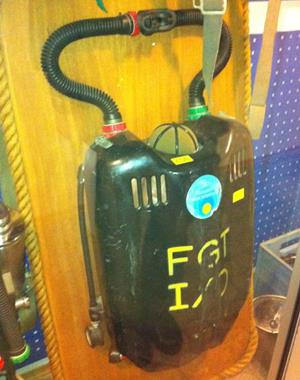
  141. FG III rebreather
    1968

    FG III rebreather

    Used from saturation bell on the MODU "Ocean Prince" in the Norwegian sector.

  142. Oceaneering International
    June 1969

    Oceaneering International

    Oceaneering International was formed in 1969 through the merger of World Wide Divers, California Divers Inc and Can-Dive Services Ltd, with Matt Simmons of Simmons & Associates, a venture capital group, putting up US dollars 350,000 in …

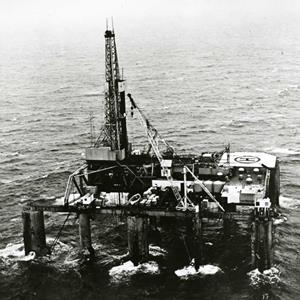
  143. After 26 dry wells drilled
    November 1969

    After 26 dry wells drilled

    MODU "Ocean Viking" hits oil on the Ekofisk Field offshore Norway. Phillips Petroleum’s well 2/4-2 confirmed the Ekofisk discovery.

  144. World Wide Divers
    December 1969

    World Wide Divers

    Merged with Oceaneering International Inc.

  145. Dr. Peter Bennett
    March 1970

    Dr. Peter Bennett

    The eighth key evolutionary step in arriving at today's diving technical advancement. Drawing on experimental results from earlier, deep chamber dives, Bennet reasoned that there was a way of breaking through the helium barrier.

  146. Oceaneering Inc
    1971

    Oceaneering Inc

    Bought Divcon from International Utilities, the parent company of Divcon. Negotiations were well underway between French-owned COMEX and International Utilities when Lad Handelman and Oceaneering scooped COMEX.

  147. 1972

    Pro Dive

    Founded and established in Stavanger, Norway, in 1972 as one of Norway’s early commercial-diving companies during the initial development of the Norwegian North Sea petroleum industry.

  148. June 1972

    Nordive A/S

    Was a commercial diving company operating primarily in northern Norway, employing ex-naval frogmen. Based in Tromsø, Northern Norway, it opened an office in Stavanger to provide ex-naval divers for saturation diving in the North Sea.

  149. Louisiana native William Doré
    1973

    Louisiana native William Doré

    Buys Global Divers from Ebb Lemaster and founded Global Industries Corporation.

  150. Global Industries Corporation
    1973

    Global Industries Corporation

    Traces its founding back to 1973 when Louisiana native William Doré bought a small business, Global Divers, from Ebb Lemaster.

  151. 1974

    Scandive A/S

    Scandive A/S was founded in Stavanger, Norway and provided Air and Saturation Divers to DSV Arctic Surveyor and later DSV Arctic Seal.

  152. Odd Berg - Berg-Ship A/S
    1974 – 1977

    Odd Berg - Berg-Ship A/S

    Had DSV Arctic Surveyor and DSV Arctic Seal operating in the North Sea.

  153. USN
    1975

    USN

    The United States Navy carried out a successful open-sea dive to 350 metres (1,148.4 ft) in the Gulf of Mexico and used its Mk I system out of EDU, Panama City.

  154. NUTEC (NUI)
    1976

    NUTEC (NUI)

    A hyperbaric test facility close to Bergen, Norway, opened.

  155. Oceaneering
    1978

    Oceaneering

    Handelman left Oceaneering, and less than a year later, Handelman and ex-Oceaneering diving executives resurrected Cal-Dive before selling it to Diversified Energies Inc.

  156. Divers at Duke University
    1979

    Divers at Duke University

    Reached 686 metres (2,250.7 ft) in a dry chamber dive

  157. Experimental dive AEDU & HMS Reclaim divers
    October 1980

    Experimental dive AEDU & HMS Reclaim divers

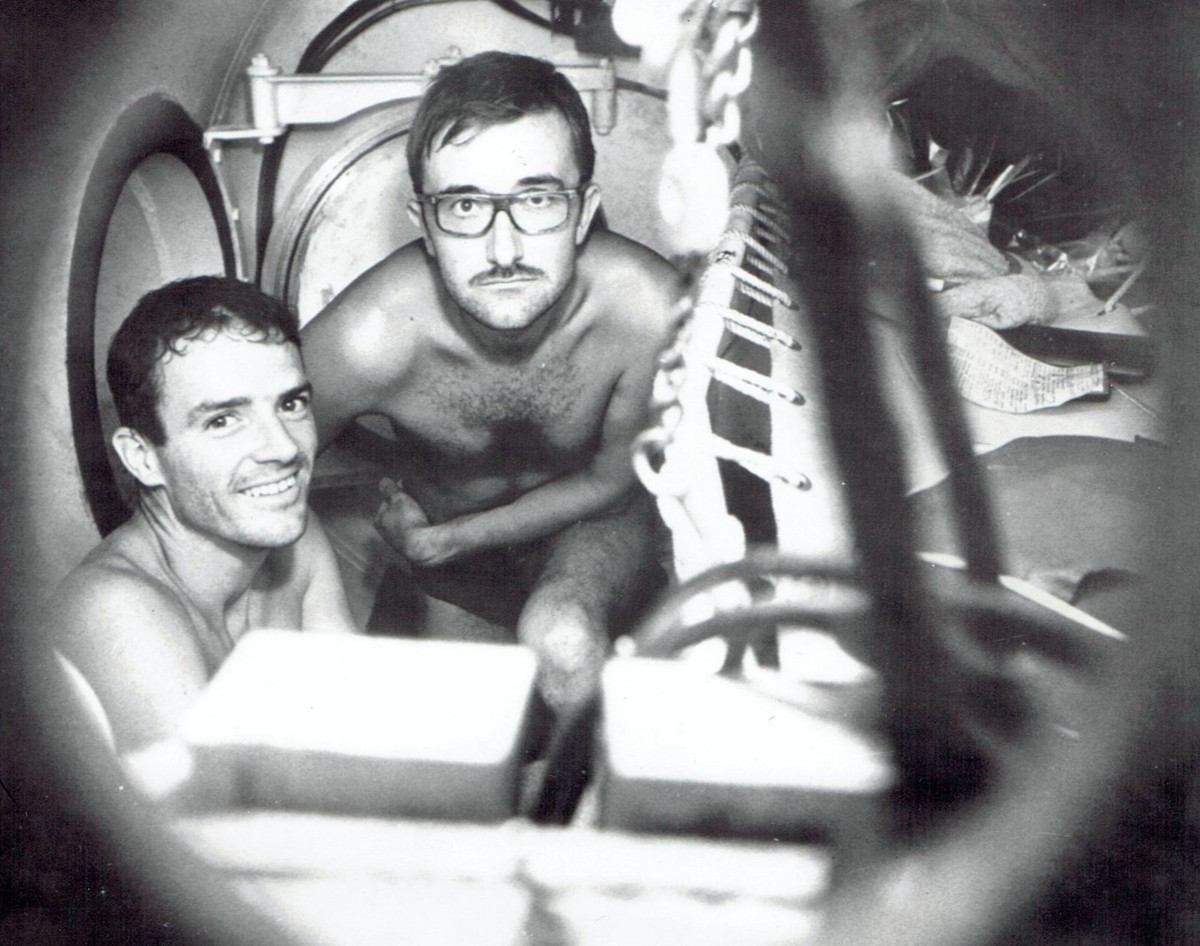
    Oct-Dec 1980 Two young volunteer scientists, Martin Garrard and Mark English, achieved a world first by men living and returning from a simulated depth of 660 metres (2,165.4 ft) using Trimix (Oxygen/Nitrogen/Helium) at the Royal Navy …

  158. The National Hyperbaric Centre
    1987

    The National Hyperbaric Centre

    Opened in Aberdeen, Scotland.
  159. Coflexip S.A.
    1994

    Coflexip S.A.

    Purchased Stena Offshore N.V. (a corporate entity registered in the Netherlands as a unit of the Swedish Stena AB conglomerate), renamed "Coflexip Stena Offshore".

  160. Global Industries Ltd purchased assets and vessels from Sub Sea International
    1997

    Global Industries Ltd purchased assets and vessels from Sub Sea International

    Global acquires some assets of Sub Sea International from Dresser Industries Inc.

  161. Cal Dive International
    August 2005

    Cal Dive International

    Changed name to Helix Energy Solutions.

  162. Deepest ADS Dive Ever Recorded:
    January 2006

    Deepest ADS Dive Ever Recorded:

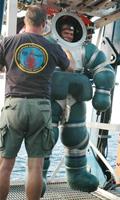
    A Navy diver submerged 610 metres (2,001.3 ft), setting a record using the Atmospheric Diving System (ADS) suit, off the coast of La Jolla, Calif., Aug.

  163. Technip
    2011

    Technip

    Technip was established in Paris on April 21, 1958, by the French Petroleum Institute (IFP) as an engineering firm named Compagnie française d'études et de construction Technip.

  164. Canadian film director James Cameron
    March 2012

    Canadian film director James Cameron

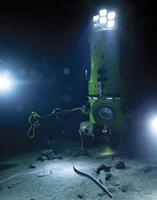
    Solo piloted the Deepsea Challenger to 10,898.4 metres to the bottom of the Challenger Deep, the deepest known point in the ocean.

  165. Technip and FMC merged
    2017

    Technip and FMC merged

    The unified company that formed on 17 January 2017 was named TechnipFMC pic.

  166. First hyperbaric weld
    May 2019

    First hyperbaric weld

    Completed using Equinor’s fully automated remote PRS (Pipeline Repair System) offshore Norway by Deep Ocean.

Caveat emptor

This chronology is continually revised. Names, dates and attributions are drawn from patents, contemporary press, Bech’s research and personal communications. Corrections and additions are welcomed.
The Norwegian

A four-volume autobiographical work spanning continents, disciplines, and decades. Editorial edition, published in print and online.